2026 Best Courier Bag Types for Global Buyers
Global parcel networks are growing fast, but no single bag suits every route. Pitney Bowes’ 2023 Parcel Shipping Index reported about 161 billion parcels shipped worldwide in 2022, and projected 256 billion by 2027. That forecast describes parcel volume, not Courier Bag sales. Still, it signals why buyers need packaging that handles frequent sorting, tight vehicle space, and changing delivery conditions.
Small details matter. A padded mailer may protect a compact item, while a reinforced, reusable courier bag can better suit repeated handling. Rain on a loading dock. Abrasion at a conveyor edge. A weak closure can turn either into a costly problem. Industrial-design authority Dieter Rams offered a useful principle: “Good design is as little design as possible.” For courier bags, that means adding protection and features where they solve a real need—not simply adding layers.
This guide compares Courier Bag types for global buyers by material, closure, durability, capacity, and practical use. It also considers branding and reuse, while recognizing that sustainability claims depend on local collection and recycling systems. The best choice is not always the most advanced one. Sometimes, a simpler bag performs better. Buyers should still test samples under their own packing and shipping conditions; published specifications cannot reveal every weak seam or awkward loading step.
What Courier Bags Are and How They Are Used
A courier bag is a flexible container used to move documents, clothing, small goods, and other parcels between senders and recipients. It may be made from paper, plastic film, woven fabric, or layered materials. Unlike a rigid box, it can often be folded and stored flat. That matters in busy dispatch rooms. A secure closure helps keep contents contained during sorting and transport, while a writable or printable surface can carry delivery details.
In everyday use, staff place an item inside, remove excess air when appropriate, and seal the opening before handoff. A padded bag may help cushion a small electronic accessory, while a moisture-resistant mailer can offer basic protection from rain. Neither replaces suitable inner packaging for fragile goods. Size matters, too: a bag that is too tight can strain its seams, while excess space lets contents shift. Not every route is gentle.
Buyers should consider the item’s weight, shape, handling steps, and expected storage conditions before choosing a type. A courier bag may pass through several hands and sorting points, so closure quality and clear labeling deserve attention. Test samples with typical shipments, not just empty bags. A sample test cannot predict every delivery condition, but it can reveal weak seals, awkward sizing, or hard-to-read surfaces. Sometimes the simplest option works; sometimes it does not.
2026 Best Courier Bag Types for Global Buyers
What courier bags are and how they are used
Courier bags are outer packaging used to protect and contain items during shipping. This chart shows common, typical applications—not sales data or a universal performance rating. A value of 1 means the bag type is commonly suited to that use; 0 means it is not generally suitable without additional packaging. Add suitable cushioning for fragile products, and check destination-country requirements before shipping.
Which Courier Bag Types Suit Different Delivery Needs
2026 Best Courier Bag Types for Global Buyers
Which Courier Bag Types Suit Different Delivery Needs
Choose a courier bag by parcel shape, protection needs, and delivery route. Pitney Bowes’ 2024 Parcel Shipping Index reported 161 billion parcels shipped globally in 2023. It projected 256 billion parcels by 2029. That scale makes packaging fit and handling important. Small details matter.
Poly mailers suit soft goods such as clothing because they are lightweight and resist light rain. They offer little protection against crushing, though. Padded mailers add cushioning for books, small accessories, or non-fragile items. For glassware, electronics, or irregular products, a corrugated box with fitted cushioning is usually a safer choice. Measure the packed item, not just the product; an oversized box can shift during transit and needlessly increase parcel dimensions.
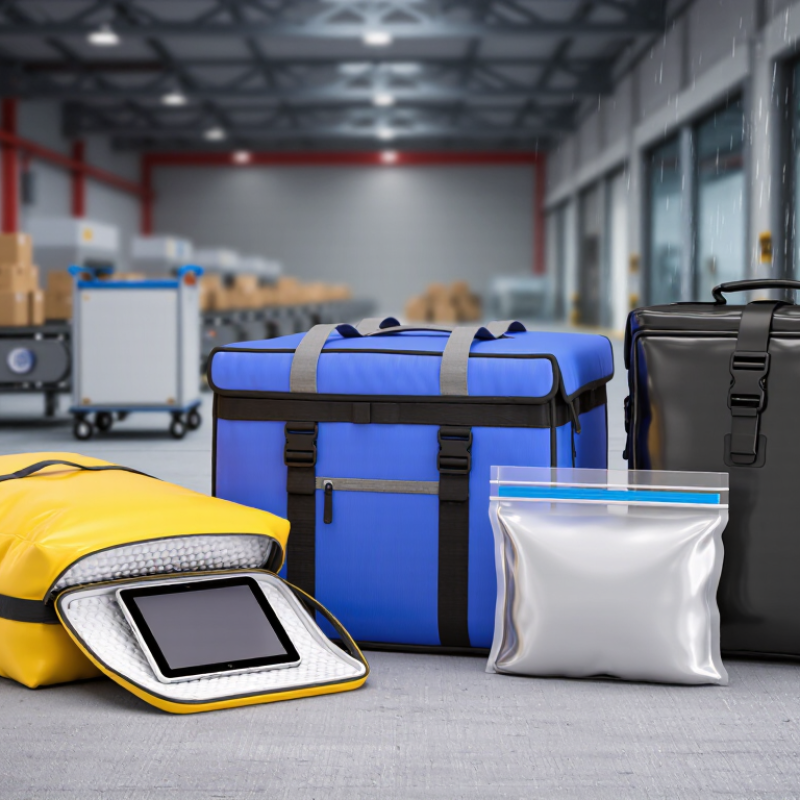
Insulated courier bags help maintain temperatures for chilled food or other temperature-sensitive deliveries, but the bag alone cannot verify safe temperature control. Use validated packing procedures and suitable temperature monitoring for the route. Reusable courier bags can work well for scheduled business-to-business transfers, especially when return collection is reliable. That last condition is easy to underestimate. A bag that never comes back is not a reusable system. Consider rain exposure, drop handling, delivery time, and whether recipients can open and reseal the package without tearing it.
How Materials and Construction Affect Bag Performance
A courier bag’s fabric determines more than its appearance. Dense woven nylon or polyester can resist everyday scuffs, while a coated surface helps shed light rain. Check the fabric weight and coating together; a heavy fabric can still leak through weak seams. Small details matter.
Construction decides how well those materials handle daily loads. Reinforced stitching at strap anchors and corners helps reduce stress where a bag is pulled or dropped. A padded base protects a laptop from hard floors, but it also adds weight. Test the bag with a realistic load, not just an empty sample. It should hang evenly.
Closures need attention, too. A covered zipper can limit water entry, though it does not make a bag fully waterproof. For buyers serving varied climates, inspect seam finishing and zipper movement after repeated opening. That takes time. A stiff new bag may loosen with use, but an awkward strap rarely becomes comfortable. I would compare performance under ordinary handling, then record what still feels uncertain.
How Global Buyers Can Compare Sizes, Features, and Costs
Global courier bag buyers should compare usable capacity, not just outer dimensions. A 35-liter bag may hold less when thick padding, stiff seams, or curved panels take space. Measure common parcels, then check the main compartment’s length, width, and depth. Leave room for closures and easy packing. Too tight? Staff may force zippers. This can slow dispatch and wear the closure sooner. For mixed routes, a medium rectangular bag often handles documents and small cartons better than a narrow, tall shape. But route data matters more than appearance.
Compare features against daily handling: reinforced grab points, smooth-running zippers, adjustable straps, and water-resistant fabric can reduce hassles. Ask suppliers for fabric weight, seam construction, load-test method, and care instructions; request a sample before a large order. Test it with a typical parcel, not an empty bag. Check whether labels remain visible and whether the bag sits securely on a vehicle or trolley. Costs include more than unit price: freight, import duties, warranty, replacement rates, packing volume, and expected service life. Compare landed cost and expected service life. A cheaper bag can cost more if seams split early. Still, numbers are not perfect; handling varies by team and climate. Track trial results for a few weeks before finalizing specifications.
What to Check When Sourcing Courier Bags Internationally
When sourcing courier bags internationally, compare construction before comparing unit price. Poly mailers are light and water-resistant; paper mailers may suit some packaging plans, while padded bags add cushioning. Choose based on shipment weight, moisture exposure, and handling route—not appearance alone. Small details matter.
Ask suppliers for written specifications covering material thickness, dimensions, closure type, and print placement. Request a pre-production sample and check its seams, adhesive strip, and fit around a typical parcel. A simple hand-pull check can reveal weak sealing, but it cannot replace documented testing. Ask how production batches are inspected, and request clear answers about acceptable defects. Vague replies are a warning sign.
Confirm minimum order quantities, sample fees, production lead times, and payment terms before approving an order. Clarify whether the quote includes packaging, inland transport, and international freight; these costs can change the comparison. Request recent production photos and agree on how changes will be approved. Check destination-market material and labeling requirements with qualified local sources. Leave room for delays. A spreadsheet will not catch every issue, and one sample may not represent a full production run.


