en
Get in touch

2026 Best Pulp Making Machine for Global Buyers

Global pulp markets are entering 2026 with stronger expectations for efficiency, traceability, and stable production. FAO’s Global Forest Products Facts and Figures 2023 places worldwide wood-pulp production at roughly 190 million tonnes. This scale shows why machinery selection now affects energy use, fiber yield, water consumption, and product consistency. A modern pulp making machine must perform beyond its nameplate capacity.

Buyers should examine the complete process line, not only the main equipment. Key checkpoints include chip screening, cooking control, washing efficiency, bleaching chemistry, drying performance, and automation reliability. CEPI’s Key Statistics 2024 highlights the European industry’s continued focus on resource efficiency and process modernization. The International Energy Agency also identifies industrial energy efficiency as essential for reducing emissions across energy-intensive manufacturing. These findings support practical purchasing decisions, especially where electricity, steam, water, and maintenance costs vary sharply between regions.

Numbers need context.

A machine producing 500 tonnes daily may appear attractive, yet unsuitable fiber preparation can reduce actual output. A supplier’s brochure may show ideal laboratory results, not a humid mill site with inconsistent chips. Buyers should request audited performance data, reference installations, spare-parts plans, operator training, and lifecycle energy figures. ISO 9001 quality systems and documented testing can improve confidence, but certification alone proves little. That point deserves careful reflection. The best 2026 solution is not always the largest machine; it is the system that matches raw materials, local utilities, workforce capability, environmental targets, and long-term service support. This guide evaluates those factors for global buyers seeking dependable pulp production equipment.

2026 Best Pulp Making Machine for Global Buyers

Pulp Making Machines: Definition, Purpose, and Core Production Principles

2026 Best Pulp Making Machine for Global Buyers

Pulp making machines convert wood, bamboo, agricultural residue, or recovered paper into usable fiber. Their purpose is simple: separate fibers, remove contaminants, and prepare a stable pulp stream for papermaking. FAO’s FAOSTAT Forestry Production and Trade database recorded global wood-pulp production at nearly 190 million tonnes in 2022. This scale shows why equipment reliability matters to buyers.

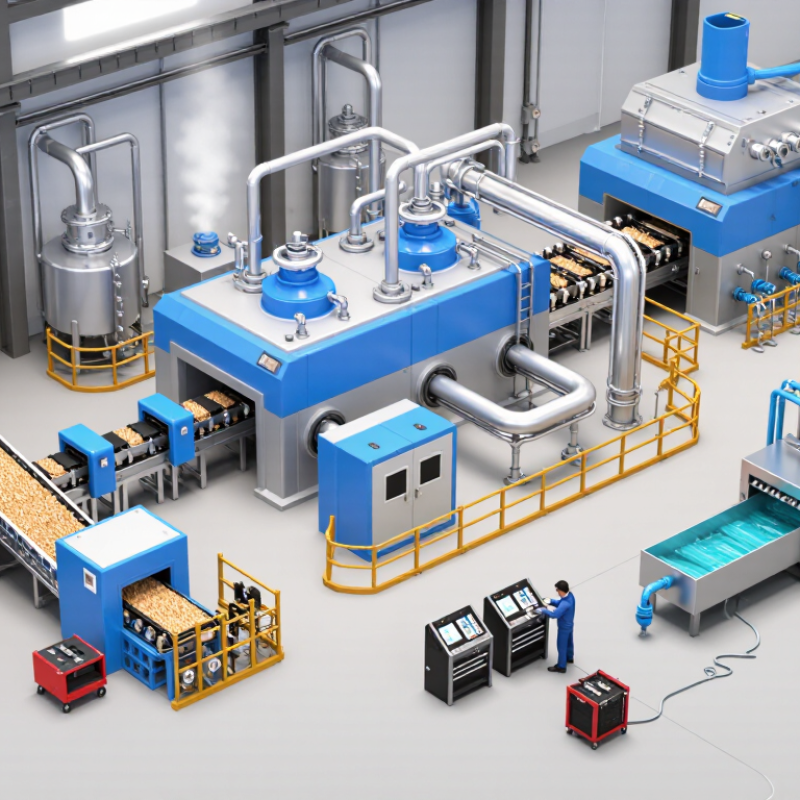
The core process begins with raw-material preparation. Chippers or shredders create consistent pieces. A digester may use heat and chemicals to loosen lignin from wood fibers. Mechanical refiners separate fibers through controlled grinding. Screens remove knots, plastics, and oversized particles. Washers reduce dissolved impurities, while thickening equipment controls moisture before storage or sheet formation. The exact line depends on fiber type, capacity, energy prices, and water limits. CEPI’s industry statistics also highlight the continuing importance of recovered paper in European fiber supply. Yet recycled fiber often needs stronger screening and contaminant control. That detail is easy to underestimate.

Tips: Ask for verified throughput data, not only motor power. Check fiber loss, water consumption, maintenance access, and noise levels. Request test results using your actual raw material. A machine performing well in a laboratory may behave differently with wet straw or mixed paper. Data definitions can vary between reports, so compare tonnes per day on the same moisture basis. Keep room for adjustment. Real factories rarely run perfectly.

Main Machine Types and Their Suitable Pulp Applications

2026 Best Pulp Making Machine for Global Buyers

Machine selection should follow the final pulp application, not only production capacity. FAO’s Global Forest Products Facts and Figures 2023 reported more than 400 million tonnes of global paper and paperboard production in 2022. This scale increases demand for stable fiber preparation, energy control, and dependable water management. Kraft pulp lines suit strong bags, cartons, and shipping papers. They require digesters, washing systems, oxygen delignification, and bleaching equipment. The process is powerful, but chemical recovery and wastewater control cannot be treated as secondary details.

Recycled pulp systems fit newspapers, tissue, molded packaging, and many carton grades. They typically combine pulpers, coarse screens, fine screens, cleaners, and deinking units. A small screen gap can remove unwanted plastic pieces, but it may also reduce throughput. That trade-off is often underestimated. The European Paper Recycling Council reported a paper recycling rate near 80% in Europe in 2022, showing why recovered-fiber machinery remains commercially important. Yet recycled furnish varies by region. Operators should test local waste paper before fixing equipment specifications.

Mechanical pulp machines are suitable for publication papers and selected lightweight grades. They offer high fiber yield, although brightness and energy use need careful evaluation. Thermomechanical systems can consume substantial electricity, especially with demanding refining targets. Smithers’ packaging market analyses continue to identify fiber-based packaging as a major growth area. Bagasse and wheat-straw lines can support molded tableware and protective inserts where agricultural residue is available. These systems need reliable cleaning and moisture control. In practice, the “best” machine may be the less impressive one: easier to maintain, easier to monitor, and better matched to the feedstock.

Key Specifications for Comparing Pulp Making Machines in 2026

For global buyers, machine comparison should begin with measurable output, not glossy capacity claims. FAO’s Global Forest Products Facts and Figures 2023 reports global wood pulp production at roughly 190 million tonnes. That scale makes stable performance essential. Check rated capacity, feedstock tolerance, pulp consistency, fiber yield, and reject percentage. A machine producing 5% more pulp may still waste more water and energy.

Energy and water deserve equal attention. The International Energy Agency identifies pulp and paper as an energy-intensive manufacturing sector. Request energy use per air-dried tonne, steam demand, motor efficiency, and heat-recovery performance. CEPI’s 2023 statistics place European pulp production near 35 million tonnes, showing why regional operating conditions matter. Test results from tropical hardwood, recycled fiber, or agricultural residue may differ sharply. Ask for trial data using your actual raw material.

Automation should include consistency control, vibration monitoring, alarm records, and remote diagnostics. Maintenance access is practical evidence of engineering quality. Measure screen life, blade replacement time, lubrication points, and spare-part availability. I have seen impressive throughput figures lose value when cleaning takes hours. That is easy to overlook. Certification for electrical safety, pressure systems, emissions, and wastewater handling should match the installation country. A lower purchase price can hide higher lifecycle costs. Compare five-year energy, labor, maintenance, and downtime estimates, then challenge every assumption. Some figures will remain uncertain. That uncertainty should be documented, not disguised.

2026 Best Pulp Making Machine for Global Buyers

Key specifications for comparing pulp making machines in 2026

How to read this chart: Continuous pulp systems generally provide higher daily output and lower specific energy consumption than small batch systems. Water demand depends on furnish quality, stock consistency, process-water circulation, and the level of water treatment and reuse.

Indicative industry ranges: The figures show representative engineering values for recycled-paper and virgin-fiber pulp preparation lines. Actual specifications should be verified against raw-material type, target production, pulp consistency, motor efficiency, screening technology, and local utility conditions.

Step-by-Step Pulp Production Workflow and Machine Operation

Global buyers need more than a powerful pulp making machine. They need a controlled production workflow. Begin by checking raw material moisture, contamination, and fiber type. Remove metal, stones, plastic, and oversized scraps before feeding. This protects the pulper and improves fiber quality. Load material gradually, then add clean process water according to the machine manual. Excess water can reduce production efficiency.

During pulping, monitor motor current, temperature, vibration, and slurry consistency. Experienced operators listen for unusual grinding sounds. Stop the machine before inspecting internal parts.

After pulping, screening removes knots, plastic pieces, and coarse fibers. Refining then adjusts fiber development for the intended paper product. Operators should record screen pressure, refining time, and output consistency.

Small records prevent large mistakes. However, every raw material behaves differently, so fixed settings should not replace testing.

Tips:

Keep a moisture meter and spare screen parts nearby. Clean the vat, pipes, and pumps after each shift. Confirm emergency stops before production begins. Use protective equipment and follow local electrical and wastewater requirements. A practical trial should run before full-scale purchasing. Ask suppliers for capacity data based on your actual material, not ideal laboratory fiber. Some buyers overlook maintenance access. That is a costly oversight.

Global Buyer Checklist: Quality, Compliance, Costs, and After-Sales Support

2026 Best Pulp Making Machine for Global Buyers

Global buyers should test quality before comparing prices. The FAO reported global paper and paperboard production above 400 million tonnes in 2023. This scale increases pressure on reliable pulp equipment. Request production records, fiber consistency data, and factory acceptance test results. Inspect welds, seals, screens, and emergency stops directly. A machine that looks efficient may still waste water during unstable operation.

Compliance needs documented evidence, not verbal promises. Check risk assessments against ISO 12100 and electrical design against IEC 60204-1. Confirm required conformity documents for the destination market. The EU Machinery Regulation will apply broadly from January 2027, so 2026 purchases need careful transition planning. Ask for noise, emissions, and wastewater data. Missing documents can delay customs clearance or installation.

Cost comparisons should include energy, spare parts, installation, and operator training. The International Energy Agency identifies pulp and paper as a major industrial energy user. Therefore, motor efficiency and heat recovery deserve measured attention. Request five-year operating estimates using your electricity and water prices. After-sales support matters in practice. Confirm response times, remote diagnostics, local technicians, and critical-part inventories. A low purchase price can become expensive after one failed seal or unplanned shutdown. We often overlook this. Some buyer assumptions also need testing. References and reports help, but site conditions decide performance.

2026 Best Pulp Making Machine for Global Buyers - Global Buyer Checklist: Quality, Compliance, Costs, and After-Sales Support

Indicative 2026 buyer comparison for small- to medium-scale molded-pulp and paper-pulp production lines. Actual performance depends on raw material, product design, operating conditions, and local regulations.

Machine Category Typical Raw Material Typical Finished Products Practical Capacity Range Typical Electrical Load Water-System Requirement Typical Machine Footprint Quality Checkpoints Key Compliance Documents Indicative Equipment Cost* Typical Lead Time Warranty & After-Sales Checklist
Small Semi-Automatic Molded-Pulp Line Recycled paper, cardboard, office paper, and clean agricultural fibers Trays, cartons, cup carriers, protective packaging, and simple inserts 80–300 kg of finished product per hour Approximately 80–180 kW, depending on dryer and forming equipment Closed-loop water circulation recommended; process-water tank commonly 5–15 m³ Approximately 300–700 m², excluding raw-material and finished-goods storage Uniform wall thickness, stable forming vacuum, controlled moisture, smooth mold surfaces, and repeatable product weight CE or applicable local conformity file
Electrical drawings, risk assessment, operating manual, and spare-parts list
Approximately US$80,000–250,000, excluding freight, installation, civil works, and taxes Approximately 3–6 months after technical approval and deposit At least 12 months for manufacturing defects; verify remote commissioning, operator training, response time, and critical spare-parts availability
Automatic Molded-Pulp Packaging Line Recycled fiber pulp, blended recovered paper, and selected virgin fiber Egg trays, fruit trays, industrial packaging, and food-service items 300–1,000 kg of finished product per hour Approximately 180–500 kW; thermal dryer energy is a major operating-cost factor Water recirculation, fiber recovery, white-water clarification, and controlled discharge system Approximately 800–2,000 m², depending on dryer type and automation level Automatic basis-weight control, mold-change repeatability, reject-rate monitoring, dryer temperature uniformity, and stable cycle time CE / machinery-safety compliance where applicable
EMC documentation, pressure-equipment records if relevant, and food-contact declarations when required
Approximately US$250,000–900,000, excluding building utilities and logistics Approximately 5–9 months, including fabrication, factory testing, and shipment preparation Confirm 12–24 month warranty options, installation supervision, PLC backup, software access, preventive-maintenance schedule, and service-level commitments
High-Speed Thermoformed Fiber Line Refined recycled pulp, bleached fiber, or approved virgin pulp blends Premium food containers, lids, bowls, plates, and smooth-surface packaging 500–1,500 kg of finished product per hour Approximately 350–900 kW, with substantial demand from hot pressing and drying Advanced process-water filtration and recirculation; discharge limits must be checked locally Approximately 1,200–3,500 m², including automated handling and quality-control areas Surface smoothness, dimensional tolerance, moisture distribution, edge quality, hot-press temperature, and food-contact cleanliness Machinery conformity assessment
Food-contact test reports, migration testing where required, electrical safety records, and material declarations
Approximately US$700,000–2,000,000, excluding molds, building upgrades, and commissioning travel Approximately 7–12 months, depending on mold complexity and automation scope Require documented acceptance tests, production guarantees with defined conditions, rapid-response technical support, and stocked wear parts for forming and pressing systems
Paper Pulping and Stock-Preparation System Waste paper, cardboard, pulp sheets, recycled office paper, and process broke Prepared pulp slurry for trays, molded fiber, paperboard, or other downstream products 1–10 tonnes of air-dry pulp per hour, depending on pulper size and contaminant load Approximately 150–1,200 kW, including pulper, screening, refining, and pumping equipment Process-water storage, dilution control, coarse and fine screening, and reject handling are required Approximately 500–2,500 m², depending on storage, screening, and stock-tank capacity Consistent freeness, fiber dispersion, contaminant removal, slurry consistency, screen performance, and energy consumption per tonne Machinery safety file, motor and electrical certificates, material certificates for wetted components, and environmental permits where applicable Approximately US$150,000–1,200,000, depending on throughput and cleaning/screening stages Approximately 4–10 months, depending on equipment size and process integration Check rotor and screen spare-parts life, wear-liner availability, remote vibration support, maintenance training, and documented commissioning parameters
Laboratory or Pilot-Scale Pulp Forming Machine Small batches of recycled pulp, virgin pulp, or experimental fiber blends Prototype trays, sample packaging, test sheets, and product-development samples 5–50 kg of finished product per hour Approximately 10–60 kW Small recirculation tank or controlled manual water supply; laboratory drainage must be suitable Approximately 30–120 m² Fast mold change, measurement repeatability, controllable vacuum, accurate moisture measurement, and easy sample collection Electrical safety declaration, user manual, risk assessment, and laboratory or workplace safety documentation Approximately US$15,000–100,000 Approximately 1–4 months Verify calibration support, consumable availability, training materials, replacement vacuum components, and software or data-export capability
Buyer verification checklist: Request a witnessed factory acceptance test using representative raw material; compare guaranteed output on an air-dry basis; confirm power consumption, moisture content, reject rate, and product dimensions; obtain the full utility list; check import duties and electrical standards; define installation boundaries; and include spare parts, training, commissioning, warranty terms, and response times in the purchase contract. *Cost figures are indicative market ranges in USD and should be validated through competitive quotations.
We value your privacy.

By using this site you agree to the use of cookies by the company in accordance with the Privacy Policy

Have a questions or want to know more about our company? We'll be expecting you.