en
Get in touch

What Are the 2026 Top Puff Pastry Machine Types?

The 2026 Puff Pastry Machine market is becoming more specialized, not simply larger. Bakeries now compare dough consistency, production speed, footprint, energy use, and cleaning time. PMMI’s 2024 report, Shaping the Future of Packaging, identifies labor pressure, automation, and flexible production as continuing equipment priorities. These pressures are visible beside the bakery line, where uneven lamination can mean wasted butter, torn layers, and rejected trays.

The leading machine types include compact tabletop sheeters, semi-automatic laminators, continuous industrial lines, and servo-controlled modular systems. Compact machines suit cafés, hotels, and small artisan bakeries. Semi-automatic models offer better repeatability without demanding a complete factory redesign. Continuous lines support high-volume frozen and retail production. Servo systems provide tighter control over thickness, folding intervals, and conveyor timing. Mordor Intelligence’s Bakery Processing Equipment Market analysis also links bakery investment with automation, efficiency, and expanding processed-food demand.

John Brodie, a bakery-equipment specialist and president of Gemini Bakery Equipment, has emphasized this practical principle: “The right equipment must match the baker’s process, not force the process to change.” That idea deserves attention. A faster Puff Pastry Machine is not always the best machine. Butter temperature, dough hydration, operator skill, and available floor space still matter. The categories overlap. Real purchasing decisions are messier than product brochures suggest. This guide compares the top 2026 types through operating capacity, control quality, maintenance demands, and return on investment. Some conclusions may remain imperfect, because published market reports often group puff pastry equipment with broader bakery machinery. That limitation should be acknowledged, not hidden.

What Are the 2026 Top Puff Pastry Machine Types?

Puff Pastry Machine Types Classified by Processing Stage in 2026

What Are the 2026 Top Puff Pastry Machine Types?

In 2026, puff pastry machines are best classified by processing stage, not by appearance. Mixing machines combine flour, water, fat, and salt with controlled speed. Spiral mixers suit firm dough, while planetary mixers support smaller, flexible batches. Operators should check dough temperature after mixing. A cool dough usually layers more reliably. Still, mixing settings need adjustment because flour absorbs water differently each season.

Dough sheeters and laminating machines handle the critical layering stage. A sheeter reduces dough thickness through calibrated rollers. A laminator folds dough around a fat layer and repeats the sequence consistently. Modern systems may use sensors to monitor thickness, belt speed, and alignment. These controls reduce uneven layers, but they do not replace skilled inspection. I have found that a thin edge can still damage an entire batch.

Resting and chilling equipment stabilizes the dough before cutting. Continuous cooling tunnels support high-volume production, while batch chillers suit changing recipes. Cutting and forming machines then create squares, shells, strips, or filled shapes. Guillotine cutters provide clean edges, and rotary systems produce repeated patterns quickly. Cleaning access, food-contact materials, emergency stops, and documented temperature records deserve equal attention. Speed looks impressive. Product consistency matters more.

Dough Sheeters: 0.5–50 mm Gap Ranges for Controlled Layering

What Are the 2026 Top Puff Pastry Machine Types?

Dough sheeters remain central to puff pastry production in 2026. Their adjustable 0.5–50 mm gap range supports precise, repeatable layering. Thin settings help create delicate pastry sheets. Wider gaps reduce stress during initial dough reduction. In practical use, operators should change the gap gradually. A sudden reduction can tear cold dough or force butter outward.

The 2024 Grand View Research bakery equipment report valued the global market at more than USD 15 billion and forecasts continued growth through 2030. PMMI industry reporting also identifies labor availability, consistency, and throughput as major equipment concerns. These findings explain the demand for programmable sheeters with digital gap controls. However, automation does not remove process judgment. Room temperature, dough hydration, and butter plasticity still affect the final lift. A perfect setting on paper may fail during a humid morning shift.

Tips: Measure sheet thickness with a calibrated gauge, not appearance alone. Keep dough below 20°C when possible, and rest it briefly after repeated passes. Record gap settings beside each recipe. This makes troubleshooting easier. Operators should also inspect roller alignment weekly. Small deviations can create uneven layers, and the defect may appear only after baking. That is easy to miss.

Continuous Laminators: 500–1,500 kg/h Industrial Throughput

Continuous laminators are among the strongest 2026 choices for large puff pastry production. They can process approximately 500–1,500 kg of dough per hour, depending on dough design, product size, and line configuration. The numbers look impressive.

A continuous laminator gradually reduces the dough sheet through calibrated rollers. It then applies fat layers, folds the sheet, and controls the final thickness. Operators should monitor dough temperature closely. Warm dough can weaken the layers and reduce lift during baking. Cold dough may crack during folding. Production managers also need stable flour dusting, accurate belt alignment, and synchronized conveyor speeds.

In plant trials, throughput estimates can appear too optimistic. Actual output often falls when changeovers, cleaning, trimming, or recipe adjustments are included. This is where practical experience matters. A reliable system should provide accessible inspection points, clear thickness controls, and documented sanitation procedures. Sensors can track pressure, speed, and temperature, but skilled operators still notice uneven edges first. That human check remains valuable.

For factories targeting 500–1,500 kg/h, floor space and feeding consistency deserve careful planning. The mixer, resting section, laminator, cutter, and oven must work as one process. A fast laminator cannot correct weak dough preparation. Buyers should request trial data using their own flour, fat, hydration, and target thickness. That evidence is more useful than a headline capacity figure.

Servo Cutting and Forming Machines: ±1 mm Positioning Accuracy

Servo cutting and forming machines are becoming a serious 2026 choice for laminated pastry production. Their key advantage is positioning accuracy of approximately ±1 mm. This matters when dough sheets, fillings, and fold lines must meet precisely. A small offset can create uneven layers, exposed filling, or irregular croissants. Servo motors adjust cutting speed and forming pressure in real time. Operators can also store recipes for different dough weights and shapes.

Industry data supports this direction. The International Federation of Robotics reported 541,000 industrial robots installed worldwide in 2023, showing continued investment in automated production. A 2024 Allied Market Research report estimated the global bakery processing equipment market at about USD 13.2 billion in 2022, with strong growth expected through 2032. These figures do not guarantee that every pastry line needs servo technology. Product volume, dough temperature, and staff skill still influence the decision.

In practical use, a ±1 mm system can reduce trimming waste around a 100 mm pastry blank. That improvement sounds modest. Across thousands of pieces, it becomes measurable. However, accuracy may decline when dough hydration changes or rollers are poorly calibrated. This is where experience matters. Technicians should verify dimensions during each shift, not trust the screen alone. The best machines combine servo control, stainless-steel contact surfaces, quick recipe changes, and accessible inspection points. Even advanced equipment needs human judgment.

What Are the 2026 Top Puff Pastry Machine Types? - Servo Cutting and Forming Machines: ±1 mm Positioning Accuracy

A practical comparison of common automated puff pastry cutting and forming machine configurations

Machine Type Primary Function Typical Product Formats Typical Capacity Range Positioning Accuracy Production Advantages Key Limitations Best-Fit Applications
Servo Rotary Cutting Machine Continuously cuts laminated dough with rotary dies or cutting rollers. Turnovers, Danish pieces, strips, squares and triangles Approximately 40–120 cuts per minute, depending on product size and layout Up to ±1 mm under stable operating conditions High repeatability, continuous operation, reduced dough waste and fast die changes Cutting tools must be matched carefully to dough thickness and product geometry. High-volume production of consistently shaped pieces
Servo Guillotine Cutting Machine Uses a synchronized blade to make straight, indexed cuts across a dough sheet. Rectangles, bars, strips, fingers and filled pastry blanks Approximately 20–80 cutting cycles per minute Typically ±1 mm to ±2 mm, depending on dough condition and conveyor control Flexible cutting lengths, simple changeover and good control of rectangular portions Less suitable for complex shapes unless combined with a downstream die or forming unit. Products requiring accurate length and width control
Servo Die-Cutting and Forming Machine Cuts and shapes dough in a synchronized press cycle using interchangeable tooling. Vol-au-vents, shells, tart bases, rounds and decorative shapes Approximately 15–60 strokes per minute Commonly ±1 mm positioning repeatability with calibrated tooling Precise shape definition, repeatable thickness control and broad tooling flexibility Tooling costs and setup time increase when many product shapes are required. Premium products with defined contours or layered shapes
Servo Laminated-Dough Sheeting and Cross-Cutting Line Reduces dough thickness through calibrated rollers and performs synchronized cross-cutting. Pastry sheets, croissant triangles, Danish strips and layered dough blanks Approximately 10–40 m/min dough-line speed, depending on recipe and process design About ±1 mm for indexed cutting; thickness tolerance depends on roller calibration Integrates sheeting, gauging, cutting and conveying into one controlled workflow Requires careful control of dough temperature, relaxation time and roller pressure. Continuous lines processing laminated dough at industrial scale
Servo Croissant Forming Machine Rolls or curls pre-cut triangular dough pieces into uniform crescent-shaped products. Plain croissants, filled croissants and mini croissants Approximately 2,000–12,000 pieces per hour, depending on model and product size Cut-piece positioning can reach approximately ±1 mm; rolling uniformity depends on dough properties Consistent rolling direction, shape uniformity and reduced manual handling Product geometry and filling quantity must remain within the machine’s design range. Medium- to high-volume croissant production
Filled Pastry Depositing and Forming Machine Deposits a controlled filling dose and folds, presses or forms the dough around it. Filled turnovers, pockets, puffs and sealed pastry parcels Approximately 20–80 pieces per minute, depending on filling viscosity and product size Typically ±1 mm to ±2 mm for indexed forming; filling-dose accuracy varies by pump type Improves portion consistency, sealing repeatability and hygienic handling Very fluid, fibrous or temperature-sensitive fillings may require specialized dosing equipment. Filled pastry products with repeatable portion sizes
Servo Folding and Sealing Machine Folds dough panels and applies controlled pressure to create a sealed product edge. Turnovers, envelopes, pockets and layered filled pastries Approximately 25–100 pieces per minute Approximately ±1 mm for fold registration when dough dimensions are consistent Accurate fold alignment, adjustable sealing pressure and reduced leakage risk Requires consistent dough elasticity and correct flouring to prevent sticking. Products where seal quality and fold symmetry are critical
Multi-Function Servo Cutting and Forming Line Combines dough feeding, gauging, cutting, filling, folding and forming in a synchronized line. Multiple puff pastry shapes, filled pastries and assorted seasonal products Approximately 30–150 pieces per minute, depending on configuration Designed for approximately ±1 mm indexed positioning with suitable calibration High automation, quick recipe selection, reduced labor requirements and centralized process control Higher capital cost, greater maintenance complexity and more demanding line integration. Large bakeries requiring flexible, repeatable multi-product production

Selection note: Actual speed and ±1 mm positioning performance depend on dough temperature, hydration, relaxation time, sheet thickness, tooling condition, conveyor synchronization and machine calibration.

Integrated Puff Pastry Lines: 3–5 Stages from Sheeting to Packaging

What Are the 2026 Top Puff Pastry Machine Types?

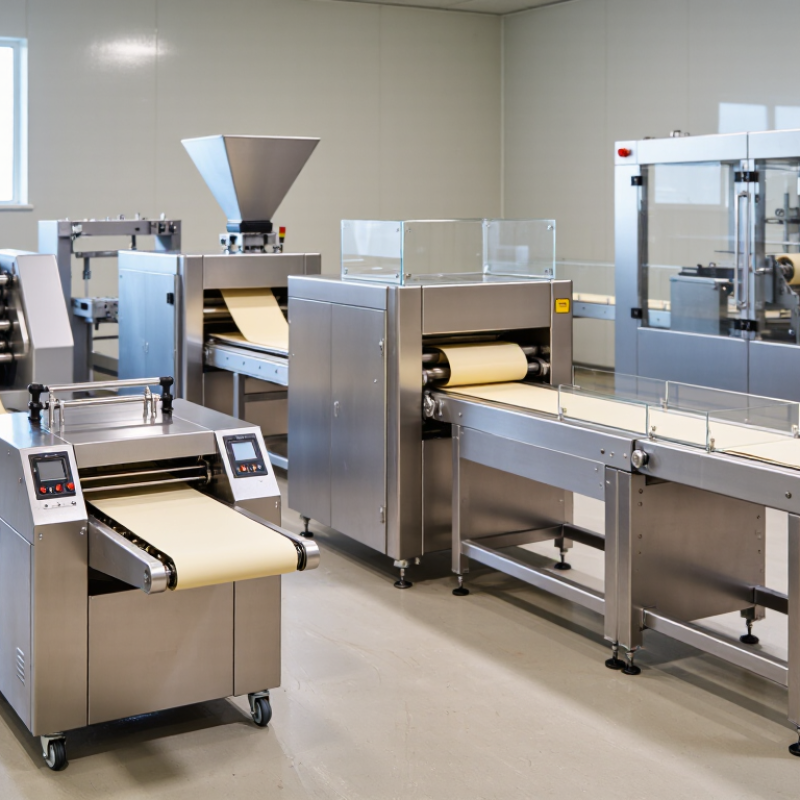
Integrated puff pastry lines are becoming the practical choice for consistent, high-volume production. These systems usually combine three to five stages, from dough sheeting to final packaging. A typical three-stage line includes sheeting, folding, and cutting. A five-stage line may add filling and flow wrapping. The sequence reduces manual transfers and protects delicate butter layers.

Research and Markets projects steady growth in the global bakery processing equipment market through 2028, with automation as a major driver. PMMI industry reports also identify labor shortages and production flexibility as key packaging concerns. These findings explain why processors increasingly specify servo-controlled rollers, adjustable laminators, and automatic tray loading. Small details matter. Uneven dough pressure can distort hundreds of pastries within minutes.

The strongest 2026 machine type may be the modular integrated line. It allows a processor to begin with three stages and add filling or packaging later. This design suits changing product sizes and seasonal demand. Sensors can monitor thickness, temperature, and belt speed. Packaging units then reduce direct handling before distribution. However, integration is not automatically better. Cleaning access, changeover time, and operator training can still limit performance. I have seen technically advanced layouts fail when maintenance space was treated as an afterthought. That weakness deserves more attention.

What Are the 2026 Top Puff Pastry Machine Types?

Integrated puff pastry lines are commonly grouped by the number of connected production stages, from dough sheeting and laminating to cutting, forming, and packaging.

Three-stage lines cover core dough preparation and cutting. Four-stage lines add product forming, while five-stage lines extend the process through automated packaging.

We value your privacy.

By using this site you agree to the use of cookies by the company in accordance with the Privacy Policy

Have a questions or want to know more about our company? We'll be expecting you.