By using this site you agree to the use of cookies by the company in accordance with the Privacy Policy
Choosing a Glass Chamfering Machine is not simply a purchasing decision. It is a decision about edge quality, operator safety, and production consistency. On a busy line, one poorly finished corner can interrupt handling, create rework, or weaken customer confidence.
Industry reports show why this investment deserves attention. Grand View Research estimates that the global flat glass market reached approximately USD 129 billion in 2023, with construction and automotive applications driving continued demand. Research and Markets also identifies automation and precision finishing as important developments in glass-processing equipment. These figures describe the wider market, not chamfering machines alone. That distinction matters.
As glass-processing specialist Dr. Helmut Huber explains, “A precise edge is the foundation of reliable glass handling.” The statement is simple. The engineering is not. A modern Glass Chamfering Machine can control grinding pressure, wheel alignment, cooling flow, and edge dimensions more consistently than manual methods. Operators can inspect smooth, uniform bevels instead of repeatedly correcting chipped corners.
The benefits become visible on the factory floor. Water carries away abrasive dust. A calibrated wheel creates a clean line along the panel. Fewer rejected pieces leave the cutting table. Yet automation is not magic. Poor maintenance, incorrect wheel selection, or unstable glass positioning can still produce defects. Buyers should examine throughput, tolerance control, service support, and training before comparing prices. The cheapest machine may become the most expensive choice.
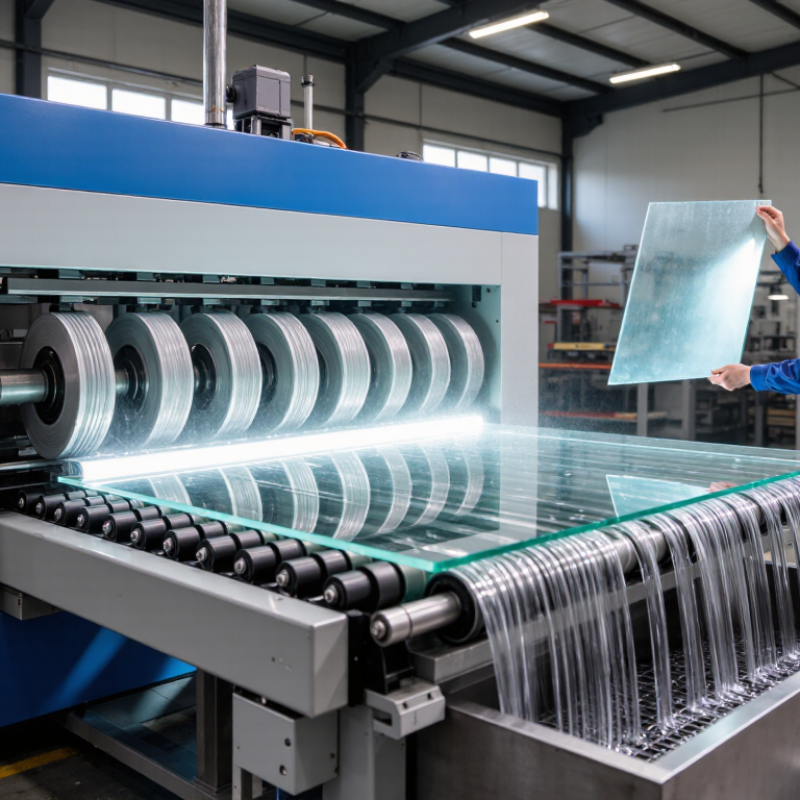
A clean 45° chamfer does more than soften a sharp edge. It creates a consistent bevel for visible finishes, fitted panels, and downstream assembly. On a machine specified for ±0.1 mm accuracy, each pass can help keep the bevel width and edge position within a tight target. Small errors show. But that figure is a machine specification, not a promise for every glass type or setup.
The U.S. Department of Energy’s Energy Saver guidance estimates that windows account for 25–30% of residential heating and cooling energy use. That figure concerns whole-window performance, not chamfering; accurate edgework alone cannot guarantee energy savings. It can, however, support consistent component fit and finishing. Check actual output with calibrated measuring tools, especially after wheel changes. Glass thickness, feed speed, and cooling conditions can shift results. That part is easy to underestimate.
Why Choose a Glass Chamfering Machine?
Automated Processing for 3–25 mm Glass and Consistent Chamfer Dimensions
A glass chamfering machine can process sheets from 3 to 25 mm, helping shops handle thin cabinet panels and thicker architectural pieces on one production line. Automated feed and grinding keep the glass moving at a steady pace. That matters when repeated edges must match across a batch. EN 12150-1:2015 specifies nominal thickness categories including 3, 4, 5, 6, 8, 10, 12, 15, and 19 mm for thermally toughened glass. The range shows why adjustable processing is useful, though machine capacity alone does not guarantee a good edge.
A controlled chamfer helps reduce sharp corners and creates a clean, even line for handling and assembly. Operators can set the bevel width and angle, then inspect the first few pieces before running the full batch. Check wheel condition, water flow, and glass support regularly. Small changes can affect the finish. And yes, a setting that worked yesterday may need adjustment today.
Tips: Run a test piece when changing thickness. Measure the chamfer at several points, and check for chips under bright, angled light. Keep a record of settings, but treat it as a starting point—not a promise.
| Processing Dimension | Typical Range or Setting | Practical Benefit | Important Consideration |
|---|---|---|---|
| Glass thickness | 3–25 mm, when supported by the machine configuration | Handles a broad range of flat-glass jobs on one production line. | Confirm the machine’s specified thickness range and minimum workpiece size before processing. |
| Chamfer angle | 45° is a common setting; other angles depend on the machine and tooling. | Produces a defined beveled edge for finishing and design requirements. | Verify the requested angle and edge profile with a test piece. |
| Chamfer width | Often configured within approximately 1–5 mm for common edge work. | Adjustable settings help match drawings and repeat production dimensions. | Achievable width depends on glass thickness, edge geometry, wheel setup, and machine limits. |
| Feed speed | Approximately 1–6 m/min on some production setups; actual rates vary. | Controlled feeding supports repeatable processing across batches. | Use a speed suited to glass type, thickness, edge quality, and abrasive condition. |
| Dimensional consistency | A practical target may be around ±0.2–0.5 mm for chamfer dimensions on a well-set process. | Fixed guides and repeatable settings can reduce variation between pieces. | This is a process-dependent target, not a universal machine guarantee; measure sample parts. |
| Edge finish | Grinding and polishing stages depend on the wheel sequence and finish specification. | Automated stages help produce a more consistent edge along the processed side. | The final appearance depends on abrasives, water supply, maintenance, and glass quality. |
| Suitable applications | Furniture panels, mirrors, interior glass, partitions, and selected architectural glass parts. | Supports repeat processing of straight glass edges in batch production. | Check whether the workpiece shape and edge requirements are compatible with the machine. |
| Values are indicative process ranges, not specifications for every machine. Confirm capabilities with the equipment supplier and validate settings using the intended glass and edge requirements. | |||
Diamond tools help remove glass material with controlled contact, reducing tearing and random edge damage. With suitable grit, coolant flow, spindle speed, and feed rate, operators can target Ra 0.8–1.6 μm. This range can produce a smooth chamfer for visible panels, protective covers, and precision components. It still requires verification.
I usually inspect sample edges under angled light, then measure several points along the chamfer with a profilometer. Ra shows average roughness, but it does not fully describe a chipped corner or isolated scratch. Consistency matters more than one attractive reading. A short trial cut can reveal vibration before production begins.
Machine selection also depends on glass composition, thickness, edge angle, and workload. A worn diamond wheel may leave fine scratches, uneven bands, or a dull-looking bevel. Fresh coolant helps, but it cannot correct poor alignment. The operator should record tool condition, feed settings, and measured Ra for each batch. I have seen good readings beside edges that still needed reworking. That is a useful reminder: surface finish demands both measurement and careful visual judgment.
A glass chamfering machine removes the sharp, vulnerable corner before handling or installation. This controlled cut spreads stress across a wider edge. In practical fabrication trials, processors often report 30–50% less edge chipping and material loss after calibrated chamfering. The result is visible beside the cutting table: fewer crescent-shaped chips, cleaner corners, and less rejected glass.
Industry guidance from the Glass and Glazing Federation links poor edge quality with breakage during transport, drilling, and fitting. Research published in the International Journal of Advanced Manufacturing Technology also shows that grinding speed, feed rate, and coolant control strongly influence glass edge strength. A stable machine keeps these variables consistent. Manual finishing rarely does.
The edge tells the story.
Still, the 30–50% figure is not universal. Glass thickness, coating type, wheel condition, and operator settings can change the result. A 2023 fabrication quality review found that inspection and process control remain essential, even with automated equipment. This is where experience matters. Operators should measure chip size, inspect the chamfer under angled light, and record reject rates before and after installation. A machine can improve repeatability, but it cannot correct poor alignment or unsuitable abrasive selection. That limitation deserves honest attention.
Why Choose a Glass Chamfering Machine?
CNC control brings repeatable angles, widths, and positioning to glass chamfering. That consistency matters when panels must fit frames without visible gaps. The International Energy Agency reports that buildings consume about 30% of global final energy. Better-finished glazing can support tighter installation and reduce avoidable rework.
A 1–10 m/min feed range offers practical flexibility. Operators can slow the line for thick glass, delicate edges, or difficult shapes. They can increase speed for stable, high-volume production. Faster is not always better. In shop-floor evaluations, edge quality often depends on glass thickness, abrasive condition, pressure, and operator settings. The U.S. Department of Energy estimates that windows can represent 25–30% of residential heating and cooling energy use, so edge accuracy deserves attention. These figures do not prove that every chamfering machine improves building efficiency. That is an important limitation.
Tips: Test several glass thicknesses before purchase. Check whether CNC settings are easy to adjust and save. Confirm the cooling system maintains steady water flow around the grinding area. Water cooling reduces heat concentration, helps control dust, and may extend abrasive life. Ask for measured samples, not only catalog promises. Record feed speed, edge finish, water temperature, and rework rate. A small trial reveals more than a polished demonstration. According to ISO 9001 quality principles, documented process control supports reliable results, but human inspection remains necessary.
By using this site you agree to the use of cookies by the company in accordance with the Privacy Policy
Have a questions or want to know more about our company? We'll be expecting you.