
By using this site you agree to the use of cookies by the company in accordance with the Privacy Policy

Choosing a Lithium Ion Car Battery is not simply a matter of selecting the largest capacity.
Global buyers face different climates, vehicle systems, charging standards, and warranty conditions. A battery that performs well in California may behave differently in Norway’s winter or India’s summer heat. Temperature matters.
This guide examines ten leading options for international drivers and fleet owners. It considers usable capacity, cycle life, charging speed, weight, thermal management, battery-management systems, safety certifications, and manufacturer support. Real-world range is also important, because laboratory figures can appear more generous than daily driving results.
Jeff Dahn, a respected lithium-ion battery researcher, has often stated, “There is no such thing as a free lunch” in battery technology. His point reflects a central purchasing reality: higher energy density may involve different compromises in cost, longevity, or thermal control. Buyers should examine the complete specification, not one impressive number.
Our evaluation also considers installation requirements and regional service access. A technically excellent battery can become a poor purchase when replacement parts are unavailable. Warranty language deserves careful reading, especially for imported vehicles and commercial use.
No list fits every garage. That limitation matters.
Some rankings remain difficult because manufacturers publish inconsistent test data. Independent verification is not always available, and advertised performance may change with age. This article therefore treats each battery as a practical option, not a universal winner. The strongest choice depends on your vehicle, climate, driving pattern, budget, and willingness to accept trade-offs.
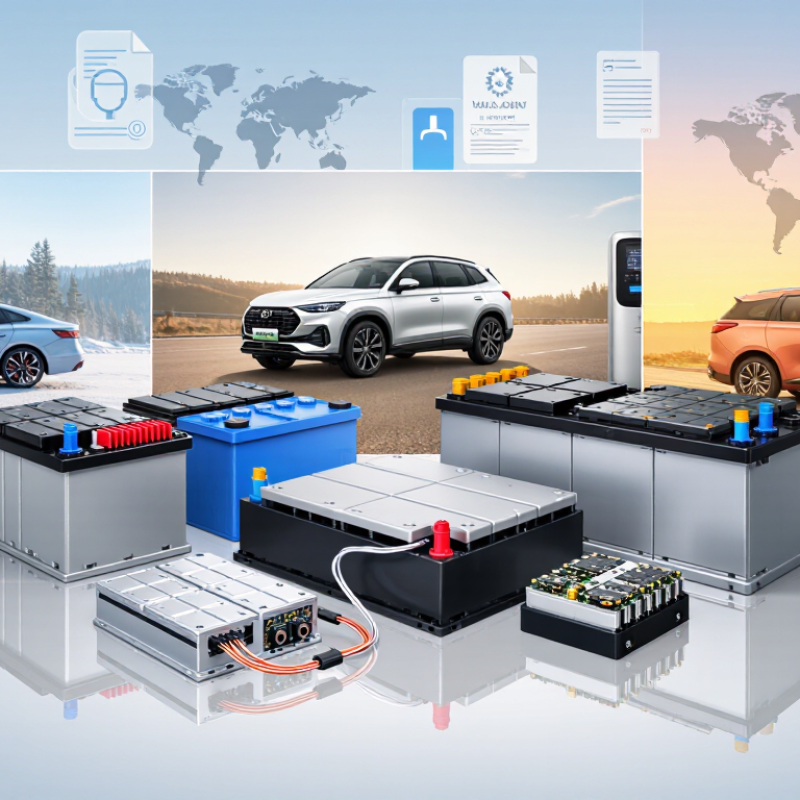
A suitable lithium-ion car battery must fit more than the vehicle’s battery tray. It must match the vehicle’s voltage, terminal layout, dimensions, and starting requirements. A 12-volt system needs a compatible 12-volt battery. Small differences can prevent installation.
Global buyers also face extreme weather. A battery used in northern Canada may need low-temperature charging protection. A battery used in a hot desert needs strong thermal monitoring. Look for a battery management system that controls overcharging, deep discharge, temperature, and short-circuit risks. Cold-cranking performance matters during winter starts, while heat resistance protects performance during long traffic delays.
Capacity is not the only measure of quality. Check amp-hour capacity, starting current, cycle life, and recharge speed together. Confirm that the vehicle’s alternator and charging system support the battery chemistry. Some lithium batteries are not true drop-in replacements. Professional installation is safer when the vehicle uses sensitive electronics or start-stop technology.
Testing evidence adds confidence. Buyers should request clear data, warranty terms, transport documents, and relevant safety testing. Requirements can differ between countries, so local compliance should be checked before purchase. Practical inspections often reveal loose terminals, confusing labels, or missing instructions. These details matter.
A perfect battery does not exist. A lighter battery may offer less reserve capacity. A high-capacity model may cost more or require stronger charging controls. Choose according to climate, driving habits, vehicle design, and available technical support.
| Rank | Reference Battery Configuration | Typical Vehicle Application | Chemistry | Nominal Voltage | Capacity | Nominal Energy | Recommended Operating Temperature | Typical Cycle Life | Ingress Protection Target | International Transport Readiness | Key Global-Buyer Advantage |
|---|---|---|---|---|---|---|---|---|---|---|---|
| 1 | 12.8 V / 50 Ah compact pack | Auxiliary power, compact cars and motorcycles | LiFePO4 | 12.8 V | 50 Ah | 0.64 kWh | -20°C to 60°C | Approximately 2,000–4,000 cycles | IP65 or higher | UN 38.3 test summary, safety data sheet and certified packaging required | Low weight, stable chemistry and broad compatibility with 12 V electrical systems |
| 2 | 12.8 V / 100 Ah standard pack | Passenger-car auxiliary battery and recreational vehicles | LiFePO4 | 12.8 V | 100 Ah | 1.28 kWh | -20°C to 60°C | Approximately 2,000–4,000 cycles | IP65 or higher | UN 38.3 certification and compliant shipping documentation | Good energy reserve, long service life and widely understood 12 V architecture |
| 3 | 12.8 V / 200 Ah high-capacity pack | Large auxiliary loads, vans and off-road vehicles | LiFePO4 | 12.8 V | 200 Ah | 2.56 kWh | -20°C to 60°C | Approximately 2,000–4,000 cycles | IP65 or higher | UN 38.3, safe-state shipping and region-specific import documentation | High usable energy without the maintenance requirements of lead-acid batteries |
| 4 | 25.6 V / 100 Ah medium-voltage pack | Specialty electric vehicles and light commercial platforms | LiFePO4 | 25.6 V | 100 Ah | 2.56 kWh | -20°C to 60°C | Approximately 2,000–4,000 cycles | IP65 or higher | UN 38.3 documentation plus local electrical-safety compliance | Lower current than an equivalent 12 V system and easier integration with medium-voltage drives |
| 5 | 51.2 V / 100 Ah modular pack | Low-speed electric vehicles and commercial utility vehicles | LiFePO4 | 51.2 V | 100 Ah | 5.12 kWh | -20°C to 60°C | Approximately 2,000–4,000 cycles | IP65 or higher | UN 38.3, battery-management documentation and regional EMC testing | Modular design, reduced cable current and strong thermal stability |
| 6 | 51.2 V / 200 Ah commercial pack | Electric vans, carts and fleet utility vehicles | LiFePO4 | 51.2 V | 200 Ah | 10.24 kWh | -20°C to 60°C | Approximately 2,000–4,000 cycles | IP65 or higher | UN 38.3, EMC evidence and applicable vehicle-system approvals | Suitable for frequent daily operation and predictable fleet charging schedules |
| 7 | 350 V / 100 Ah traction pack | Compact battery-electric passenger vehicles | High-nickel lithium-ion or LFP, depending on design | 350 V | 100 Ah | 35 kWh | Approximately -30°C to 55°C; active thermal management recommended | Approximately 1,500–3,000 cycles | IP67 for the sealed pack enclosure | UN 38.3, vehicle battery safety testing and high-voltage transport controls | Compact traction-system voltage with manageable charging and service requirements |
| 8 | 400 V / 150 Ah traction pack | Mid-size electric passenger vehicles | High-nickel lithium-ion or LFP | 400 V | 150 Ah | 60 kWh | Approximately -30°C to 55°C; liquid cooling commonly used | Approximately 1,500–3,000 cycles | IP67 for the sealed pack enclosure | UN 38.3, high-voltage isolation verification and regional vehicle certification | Balanced range, charging compatibility and established global service practices |
| 9 | 400 V / 200 Ah long-range pack | Large passenger vehicles and light commercial vehicles | High-nickel lithium-ion or LFP | 400 V | 200 Ah | 80 kWh | Approximately -30°C to 55°C; active liquid thermal management recommended | Approximately 1,500–3,000 cycles | IP67 for the sealed pack enclosure | UN 38.3, high-voltage safety compliance and country-specific vehicle approval | Extended driving range and broad compatibility with 400 V charging infrastructure |
| 10 | 800 V / 125 Ah fast-charging pack | Premium electric vehicles and heavy-duty applications | High-nickel lithium-ion or LFP | 800 V | 125 Ah | 100 kWh | Approximately -30°C to 55°C; advanced liquid cooling required | Approximately 1,500–3,000 cycles | IP67 for the sealed pack enclosure | UN 38.3, high-voltage isolation testing and complete vehicle-system certification | Lower charging current at high power and strong suitability for rapid-charging networks |
Note: The specifications above are representative engineering values for commonly used lithium-ion vehicle battery configurations. Actual voltage, capacity, cycle life, temperature limits, ingress protection and regulatory requirements vary by cell design, battery-management system, enclosure and vehicle platform. Always verify the manufacturer’s current technical datasheet and the destination country’s transport and vehicle-safety regulations.
Have a questions or want to know more about our company? We'll be expecting you.
