By using this site you agree to the use of cookies by the company in accordance with the Privacy Policy
In 2026, choosing the best Process Calibrators requires more than comparing accuracy figures on a product page. Global buyers need dependable measurements, documented traceability, and practical field performance. A calibrator may look impressive in a laboratory yet struggle beside a vibrating pump, inside a humid plant, or during a twelve-hour maintenance shift. Experience matters here. So does evidence.
Industry research supports this broader view. Grand View Research’s calibration services market analysis identifies rising demand for reliable measurement across manufacturing, energy, pharmaceuticals, and process industries. MarketsandMarkets reports continued investment in process instrumentation, automation, and digital maintenance systems. These trends increase the need for calibrators that support pressure, temperature, electrical signals, HART communication, and loop testing. However, market reports use different definitions and methods. Their figures should guide research, not replace technical verification.
A credible 2026 buying decision should examine uncertainty specifications, calibration certificates, adjustment capability, battery endurance, display readability, ingress protection, and software compatibility. ISO/IEC 17025 principles remain important when buyers require technically valid calibration results. NIST guidance on measurement uncertainty also reminds users that a low stated error does not automatically guarantee a reliable process decision. Small details matter. Can technicians operate the unit with gloves? Can records be exported without proprietary barriers? Is local service available after the warranty ends?
No single model is best everywhere. That is the uncomfortable part. The right choice depends on application risk, regional support, existing instrumentation, and total ownership cost. This guide compares leading Process Calibrators through those practical criteria, while recognizing that specifications alone never tell the whole story.
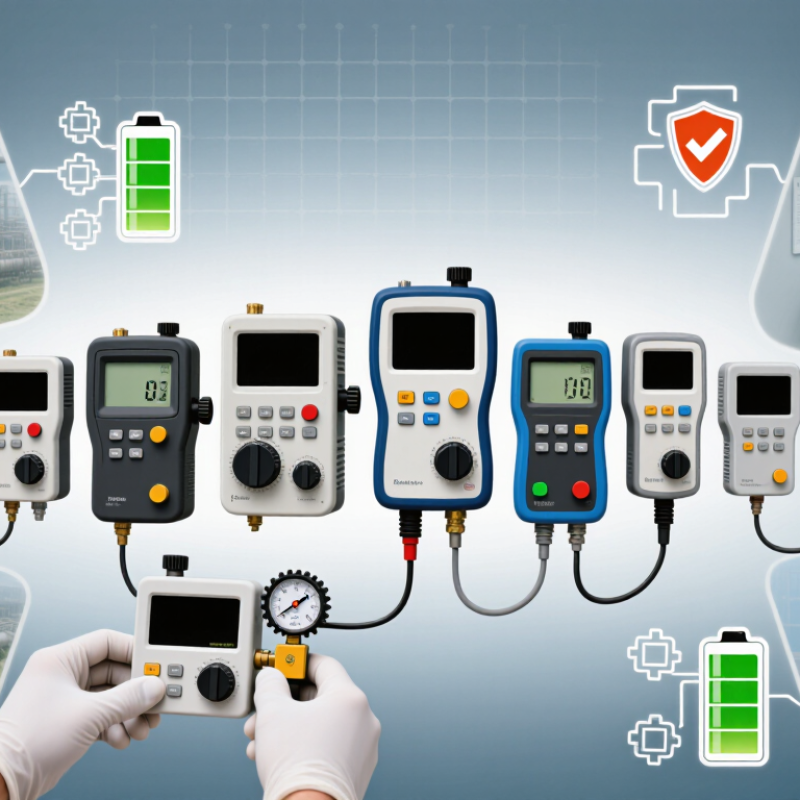
2026 Best Process Calibrators for Global Buyers?
What Process Calibrators Are and Why Global Buyers Need Them
A process calibrator is a portable instrument for checking measurement devices in industrial systems. It can source or measure signals such as pressure, temperature, voltage, current, and frequency. Technicians use it to test transmitters, sensors, switches, and control loops. A clear display matters when readings must be verified beside a hot pipe or crowded control cabinet.
In practical commissioning work, buyers should examine accuracy, stability, input ranges, battery life, and documentation. A calibrator with poor readability can create mistakes in low light. Traceable calibration certificates also support quality audits and maintenance records. Global buyers need instruments that match local electrical requirements, measurement standards, and language needs. Service access matters too. Shipping a faulty unit across borders can delay production for weeks.
No instrument fits every site. A compact model may sacrifice advanced functions. A highly capable unit may feel heavy during daily inspections. This trade-off is easy to underestimate. Buyers should compare actual field tasks instead of choosing the longest feature list. Test leads, protective cases, replacement batteries, and software support deserve attention. Sometimes, the simplest calibrator is safer for a busy technician, though that assumption should be tested against real operating conditions.
Process calibrators are portable instruments used to generate and measure industrial signals such as 4–20 mA, 0–10 V, frequency, resistance, and temperature sensor outputs. The waveform below represents a practical 4–20 mA calibration sequence used in instrumentation and control systems: 4 mA equals 0% of the measured range, 12 mA equals 50%, and 20 mA equals 100%.
The 4–20 mA current loop remains widely used because it supports long cable runs, offers a live-zero value for fault detection, and represents a normalized 0–100% process signal. Global buyers should confirm whether a calibrator supports sourcing, measuring, loop power, and the required sensor or signal standards.
2026 Best Process Calibrators for Global Buyers?
Key Specifications for Comparing Process Calibrator Performance
A capable process calibrator should match the signals used in your plant. Check voltage, current, resistance, frequency, pressure, and temperature functions. Accuracy matters, but stability matters too. A 0.05% specification may look impressive, yet poor temperature compensation can weaken field results. Review the measurement range, resolution, repeatability, and drift over time. Look for traceable calibration certificates from competent laboratories. This supports reliable audit records and maintenance decisions. For pressure work, compare sensor modules, overpressure limits, pressure units, and leak-test performance. Small details matter.
Tips: Test the calibrator against a reference source before purchase. Record readings at low, mid, and high points. Do not rely on one headline accuracy figure.
Daily usability also affects performance. A bright display helps inside crowded cabinets. Long battery life reduces interruptions during plant rounds. Built-in loop power, data logging, USB transfer, and automatic step functions can save valuable minutes. Check whether the instrument supports local electrical standards and the units used by your technicians. Safety ratings should suit the working area, not merely appear on a brochure. I would also inspect the case, leads, connectors, and menu logic. These parts receive hard treatment. Even experienced teams can overlook them. A calibrator that is technically strong but confusing may produce avoidable errors. Reliable service, clear manuals, regional support, and accessible replacement parts deserve equal attention.
2026 Best Process Calibrators for Global Buyers?
Leading Process Calibrator Types and Their Typical Applications
Process calibrators support accurate measurement across factories, laboratories, utilities, and energy facilities. The right type depends on the signal, range, accuracy, and working environment.
Pressure calibrators test transmitters, gauges, switches, and control valves. They combine a pressure source with a reference sensor. Temperature calibrators use dry-block wells or liquid baths for probes, RTDs, and thermocouples. They are useful near production lines, where stable temperature control matters.
Electrical calibrators generate or measure voltage, current, resistance, and frequency. Technicians use them for multimeters, signal conditioners, and control-system inputs. Loop calibrators focus on 4–20 mA circuits. Multifunction calibrators handle several signal types in one unit. They save space, but their wider capability may reduce simplicity during troubleshooting. More functions are not always better.
Tips: Match the calibrator’s range to real process conditions, not only the sensor’s label. Check measurement uncertainty, calibration certificates, connector compatibility, and battery performance. Review local service support before purchasing. A low purchase price can become expensive when repairs require overseas shipping.
Documenting calibrators can store readings, operator details, and test conditions. This improves traceability during audits. However, software is not automatically reliable. Data should be reviewed, backed up, and linked to a clear procedure. Environmental conditions also matter. Dust, vibration, humidity, and unstable power can affect results, even when the instrument appears suitable.
| Calibrator Type | Primary Signals or Parameters | Typical Measurement / Source Capability | Representative Accuracy | Typical Applications | Key Selection Factors |
|---|---|---|---|---|---|
| Loop Calibrator | DC current, voltage, loop power, HART-compatible communication on selected models | 0–24 mA measurement and sourcing; commonly 0–10 V; 24 V loop supply on many units | Approximately ±0.02% to ±0.05% of reading for current functions, depending on range and model | Testing transmitters, control valves, I/P converters, signal isolators, and analog input/output loops | Source and simulate modes, loop power, HART access, mA resolution, battery life, and field ruggedness |
| Multifunction Process Calibrator | Voltage, current, frequency, pulse, resistance, RTD, thermocouple, and switch signals | Supports common thermocouple types, Pt100 and other RTDs, resistance, frequency, and process I/O | Electrical functions often about ±0.02% to ±0.05% of reading; sensor accuracy varies by input type | General commissioning, troubleshooting, maintenance, and calibration of transmitters and control systems | Number of supported sensor types, simultaneous measure/source, display readability, documentation, and certification |
| Documenting Process Calibrator | Electrical, temperature, pressure, loop, and calibration-management data | Measures and sources process signals while storing as-found/as-left results and calibration records | Typically similar to the integrated measurement modules; overall uncertainty depends on the selected function | Regulated plants, pharmaceutical production, food processing, utilities, and asset-management programs | Internal memory, audit trail, downloadable reports, user permissions, calibration procedures, and software compatibility |
| Pressure Calibrator | Gauge, absolute, differential, and vacuum pressure; often includes mA and voltage measurement | Typical ranges from low-pressure differential measurement to hundreds of bar, depending on sensor or external module | Common pressure accuracy classes range from approximately ±0.025% to ±0.1% of full scale | Pressure transmitters, switches, gauges, safety systems, hydraulic equipment, and pneumatic control loops | Pressure range, medium compatibility, overpressure protection, process connections, temperature effects, and external modules |
| Temperature Calibrator | RTD, thermocouple, resistance, temperature switches, and temperature transmitters | Sources or measures temperature signals; dry-block and liquid-bath systems may provide controlled physical temperature | Electrical simulation accuracy may be better than ±0.05%; dry-block system accuracy is commonly about ±0.2°C to ±0.5°C | RTD and thermocouple verification, furnace monitoring, environmental systems, laboratories, and process control | Temperature range, stability, uniformity, insert compatibility, reference sensor input, ramp time, and portability |
| Handheld Pressure Pump and Calibrator | Pressure generation plus pressure measurement; optional current, voltage, or switch testing | Manual pneumatic or hydraulic generation; typical field ranges include vacuum, low pressure, and high-pressure service | Pump-generated pressure is generally verified by an integrated or external reference sensor | On-site calibration of gauges, pressure switches, transmitters, and relief or alarm devices | Pressure medium, achievable range, fine adjustment, leakage control, portability, and contamination prevention |
| Intrinsically Safe Process Calibrator | Usually current, voltage, resistance, frequency, temperature, and selected pressure functions | Designed for use in classified hazardous areas when approved for the applicable zone, division, gas, and dust requirements | Accuracy is comparable to the underlying function but may be limited by safety-approved circuit design | Oil and gas, petrochemical, chemical processing, mining, and other hazardous-location maintenance work | ATEX, IECEx, or local approval, temperature class, equipment group, ingress protection, permitted accessories, and service rules |
| Portable Multifunction Calibrator with Data Connectivity | Process electrical signals, temperature, pressure modules, wireless data transfer, and digital records | Combines several calibration functions with mobile work orders, asset identification, and electronic result transfer | Function-specific accuracy; connectivity does not replace traceable measurement performance | Large multi-site maintenance teams, centralized quality systems, predictive maintenance, and paperless workflows | Cybersecurity, supported protocols, offline operation, battery endurance, data ownership, and integration with maintenance software |
Choosing the best process calibrator in 2026 starts with measurement evidence, not a crowded feature list. In field audits, I compare stated accuracy with uncertainty, resolution, and stability across the full operating range. A calibrator that reads perfectly at room temperature may drift beside a hot pipeline. Look for current calibration certificates, traceable standards, and clear adjustment records. Small print matters. Global buyers should also confirm local service support, power requirements, and documentation standards.
Compatibility deserves equal attention. Verify pressure ranges, thermocouple types, RTD wiring, loop power, and communication protocols before purchase. Check connector styles and source-measure limits against actual transmitters. I also test menu logic with gloves, outdoor glare, and a low battery. A beautiful screen is not enough. If data export requires awkward software, technicians may skip documentation. That weakness is easy to miss during a short demonstration.
Safety should be practical, not decorative. Confirm electrical category, ingress protection, overload behavior, fuse access, and certification for the intended work area. Isolation between channels can prevent a wiring error from damaging equipment or startling a technician. Carry weight and battery replacement affect daily use more than brochures suggest. I once favored a lighter unit, then regretted its cramped terminals during a winter shutdown. That judgment was incomplete.
For global buyers, a process calibrator is only as reliable as its evidence trail. Request ISO/IEC 17025-accredited calibration certificates, traceability records, and stated uncertainty values. IEC 61010 compliance also matters when equipment enters different industrial sites. The certificate should show serial number, test points, environmental conditions, and due date. Missing details create expensive questions later. In my purchasing reviews, suppliers with clear documents usually shorten technical approval.
Support can matter more than a small price difference. Ask for response times, remote troubleshooting, repair procedures, and local training options. The World Bank’s Logistics Performance Index 2023 reported that international shipments averaged about 44 days from port entry to final destination. That delay can stop commissioning work. Pricing should include calibration intervals, spare cables, software access, duties, insurance, and return shipping. A low quotation is not always low cost. I still sometimes underestimate training needs.
Tips: Compare three landed-cost scenarios. Check whether certificates are accepted in your destination market. Request a sample report before ordering. Confirm battery availability and service coverage in writing. Review the warranty exclusions carefully. UNCTAD’s Review of Maritime Transport 2024 notes that more than 80% of global merchandise trade moves by sea, so route disruption deserves a backup plan. Keep one qualified alternative supplier, even if the initial price looks less attractive. 恒一
By using this site you agree to the use of cookies by the company in accordance with the Privacy Policy
Have a questions or want to know more about our company? We'll be expecting you.