By using this site you agree to the use of cookies by the company in accordance with the Privacy Policy
Choosing the best Range Exhaust Hood in 2026 means looking beyond a large airflow number. A hood must capture smoke and grease where they rise, then move them outdoors effectively. Noise, installation, duct size, and everyday usability matter too. A powerful fan that stays switched off is not a useful solution.
Research shows why specifications deserve a closer look. In “Performance of Installed Cooking Exhaust Devices,” published in Atmospheric Environment, Lawrence Berkeley National Laboratory researchers reported capture efficiencies ranging roughly from 15% to 98%. Results varied with hood design and cooking conditions. That is a wide gap. It suggests that airflow ratings alone cannot predict how well a hood performs over a sizzling pan.
Berkeley Lab researcher Brett Singer has offered a practical reminder: “Use your range hood whenever you cook.” The advice is simple, but easy to ignore when a fan rattles or drowns out conversation. This guide compares hood types, verified performance details, noise levels, and installation needs to identify strong options for different kitchens. It also considers what product pages often leave unclear: whether a hood can capture fumes from the front burners, where many cooks actually work. No single model fits every home. A careful choice starts with your cooktop, duct route, and habits—not a flashy airflow claim.
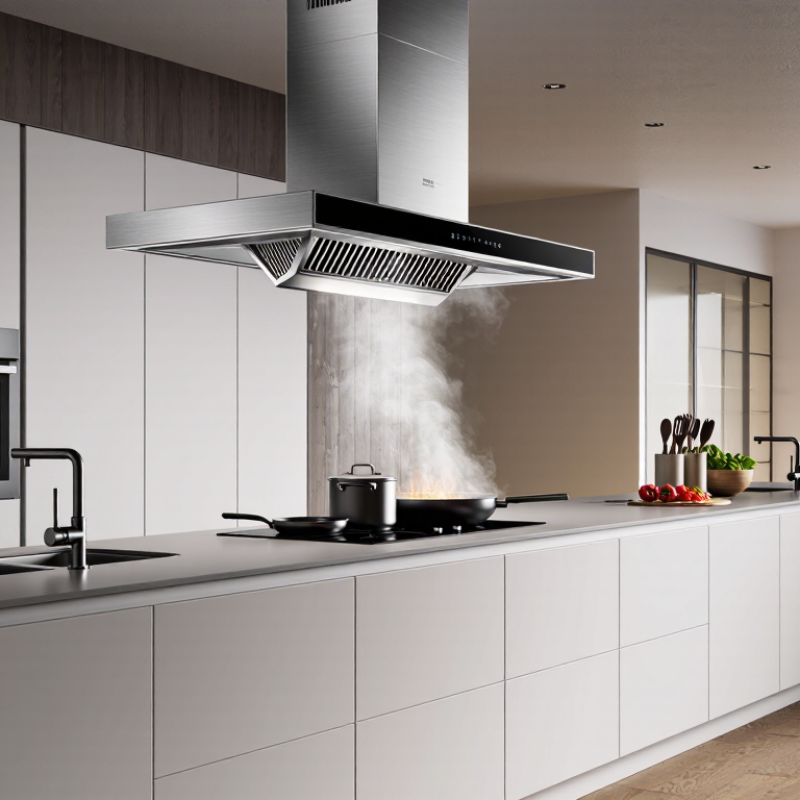
A range exhaust hood works by capturing the warm plume that rises from a pan. That plume carries smoke, grease particles, moisture, and cooking odors. The hood’s fan pulls it through a metal grease filter, which traps much of the airborne oil before it coats cabinets and walls. The filter needs regular washing. A neglected one can restrict airflow.
With a ducted system, the fan sends captured air outdoors through a duct. A recirculating hood passes air through grease and charcoal filters, then returns it to the kitchen. Charcoal can reduce some odors, but it does not remove heat or moisture from the room. Not magic.
Capture depends on more than fan power. A hood should cover the cooking area, sit at the recommended height, and use a suitable duct route. Long or sharply bent ducts can reduce airflow. I’ve found that people often run a hood only after smoke appears; switching it on before cooking gives it time to establish airflow. Use a higher setting for searing, then keep the fan running briefly afterward. Noise may make that easy to forget. A well-matched hood helps, but it cannot compensate for poor installation or a clogged filter.
In 2026, a useful range hood is one that captures cooking fumes without making the kitchen unpleasant to use. Airflow matters, but the highest CFM number is not automatically best. Match the hood’s capacity to your range, cooking habits, and duct layout. A long, narrow duct with several bends can reduce real-world performance. Check whether the unit can vent outdoors or only recirculates air; those options handle smoke and odors differently.
Capture area deserves close attention. The hood should cover the active burners, with extra depth helpful for front-burner cooking. Measure your available space before comparing models, including cabinet width and mounting height. Noise matters too. A loud fan may discourage regular use, even when its performance looks impressive on paper. Noise ratings can be difficult to compare across products, so listen in person if possible. Not always an option.
Also inspect the filters and controls. Removable metal filters should be simple to take out and clean, especially if you often fry or sear food. Look for clear fan settings and lighting that reaches the cooktop without casting harsh shadows. Installation details can change the total cost: ductwork, electrical access, and cabinet modifications may all matter. Read the specifications carefully, then compare them with your kitchen rather than relying on a single headline number.
What Is the Best Range Exhaust Hood in 2026?
The best hood depends on your kitchen layout, cooking habits, and whether outdoor venting is possible. A ducted hood carries cooking exhaust outside, making it a strong choice for frequent frying or searing. But poor duct design can undermine performance. Long, narrow ducts may add noise and reduce airflow. Details matter.
Ductless models filter and recirculate air, so they are easier to install where exterior venting is impractical. Their carbon filters can reduce odors, but they do not remove heat or moisture from the room. Filter replacement is easy to postpone—and that weakens performance. Wall-mount hoods suit ranges on open walls, while under-cabinet models fit neatly beneath existing cabinetry. Check the actual capture area, not just the fan’s advertised airflow.
ASHRAE Standard 62.2-2022 sets a kitchen exhaust benchmark of 100 cubic feet per minute for intermittent operation, or five air changes per hour for continuous operation. EPA guidance also identifies cooking as a source of indoor particles and gases, supporting ventilation near the cooktop. A quieter hood may get used more often. That counts. I would compare tested airflow and sound ratings, then check that the hood covers the burners; even a well-rated unit can miss rising smoke if it is too shallow or mounted too high.
| Comparison | Ducted Hood | Ductless Hood | Wall-Mount Hood | Under-Cabinet Hood |
|---|---|---|---|---|
| What the term describes | A ventilation setup that carries cooking exhaust through ductwork to the outdoors. | A ventilation setup that filters air and returns it to the kitchen rather than exhausting it outdoors. | A hood mounted on the wall above the cooking surface. It may be ducted or ductless. | A hood installed beneath a cabinet above the cooking surface. It may be ducted or ductless. |
| Best suited to | Homes where an outdoor exhaust route is available and regular cooking produces smoke, heat, or strong odors. | Kitchens where exterior ducting is impractical or not permitted, and lighter cooking needs are typical. | Kitchens without cabinets directly above the range, or designs where the hood is intended to be a visible feature. | Kitchens with overhead cabinetry and limited room for a larger or more prominent hood. |
| How it handles cooking exhaust | Can discharge smoke, moisture, heat, and cooking odors outside when properly installed and operated. | Typically captures grease with a metal filter; an optional or replaceable charcoal filter can reduce some odors. It does not vent moisture or heat outdoors. | Performance depends on its ventilation setup, hood coverage, airflow, and installation—not simply on its wall-mounted design. | Performance depends on its ventilation setup, hood coverage, airflow, and installation—not simply on its under-cabinet design. |
| Installation considerations | Requires a suitable duct route and exterior termination. Short, direct duct runs generally support better airflow than long, restrictive runs. | Usually avoids exterior ductwork, but needs the correct recirculation filters and adequate clearance above the cooking surface. | Requires a suitable wall, mounting height, and space; ducted versions also need a route to the exterior. | Must fit the available cabinet width and mounting space; ducted versions need compatible ductwork and a suitable exhaust route. |
| Maintenance | Clean grease filters regularly and keep the duct and exterior outlet unobstructed. | Clean grease filters regularly and replace charcoal filters according to the manufacturer’s instructions. | Clean grease filters regularly; maintenance of any additional filters depends on whether the unit is ducted or ductless. | Clean grease filters regularly; maintenance of any additional filters depends on whether the unit is ducted or ductless. |
| Main trade-off | Often the more effective choice for removing cooking by-products, but duct routing can add installation work and cost. | Easier to place where ducting is unavailable, but recirculation does not remove humidity or heat from the kitchen. | Can provide a prominent focal point, but may require open wall space and careful planning for ducting or recirculation. | Uses existing cabinet space efficiently, but the cabinet can limit hood size, depth, and design options. |
| What to check before buying | Hood width and depth, required airflow for the cooking setup, duct diameter and route, noise ratings, and local installation requirements. | Availability and cost of replacement filters, recirculation-kit compatibility, hood coverage, noise ratings, and realistic odor-control expectations. | Cooking-surface width, mounting clearance, capture area, duct or recirculation configuration, and compatibility with the kitchen layout. | Cabinet dimensions, cooking-surface width, capture area, duct outlet position, recirculation options, and filter access. |
| Practical verdict | A strong general choice when properly installed outdoor venting is possible. | A reasonable alternative when ducting is not feasible, especially for lighter cooking and with consistent filter maintenance. | A mounting style to choose for layout and appearance; confirm whether the specific unit is ducted or ductless. | A space-saving mounting style; confirm cabinet fit and whether the specific unit is ducted or ductless. |
Important: Ducted versus ductless describes where the air goes; wall-mount versus under-cabinet describes how the hood is installed. These categories overlap, so a wall-mount or under-cabinet hood may use either ventilation method. Follow the hood and cooking-appliance manufacturers’ installation clearances and local codes.
A range hood performs well only when it captures cooking fumes before they spread. Home Ventilating Institute guidance suggests about 100 CFM per linear foot for wall-mounted hoods, and 150 CFM per linear foot for island models. Treat these figures as starting points, not guarantees. Long ducts and sharp bends can weaken airflow. A powerful motor cannot fix poor installation.
Noise matters because a loud hood often gets switched off. ENERGY STAR’s range-hood criteria include a maximum of 2.0 sones at 200 CFM and minimum efficacy of 2.8 CFM per watt. Compare noise at matching airflow levels. Check that grease filters are easy to remove and clean; clogged filters can restrict performance. Recirculating charcoal filters reduce some odors, but they do not vent moisture outdoors. Controls should be simple enough to use while cooking, with a low setting and useful delay shutoff. A spec sheet can still hide real-world shortcomings.
Tips: Ask an installer to check duct size, length, and exit path before choosing a hood. Test the controls in person, if possible. If the fan sounds harsh, you may leave it off. That trade-off deserves a second look.
Choosing the best range hood starts with how you cook, not a headline airflow number. Frequent frying, searing, or wok cooking sends more grease and heat into the air than occasional simmering. Match the hood’s width to your cooktop, and consider a model that extends beyond the burners when space allows. That extra coverage can help catch smoke rising at the edges. A powerful fan cannot compensate for a hood that misses the cooking area.
Check whether your kitchen can support ducted venting. A ducted hood sends air outdoors, while a recirculating model filters it and returns it to the room. The second option may be easier to install, but it does not remove heat or moisture in the same way. Duct length, bends, and the outlet size can affect performance, so follow installation guidance rather than choosing solely by a large airflow rating. Details matter.
Noise deserves a place in the decision. If conversation or an open-plan living area matters, look for clear sound ratings and usable lower fan speeds. In everyday cooking, a quiet setting you actually use may help more than a loud maximum setting you avoid. Not always. Also check that filters are easy to remove and clean; a greasy filter can become an overlooked chore. One imperfect part of choosing a hood is that product specifications cannot predict your kitchen’s exact airflow. Consider your cooking habits, room layout, and installation constraints together.
Typical airflow planning ranges by cooking style (CFM)
These are approximate planning ranges, not universal requirements. The right hood also depends on cooktop size, hood placement, duct length and layout, and local ventilation rules. Choose a hood that captures cooking fumes effectively, and check its airflow rating under your installation conditions.
By using this site you agree to the use of cookies by the company in accordance with the Privacy Policy
Have a questions or want to know more about our company? We'll be expecting you.