By using this site you agree to the use of cookies by the company in accordance with the Privacy Policy
Buying a Blue-Cut Lens sounds simple until sample cards, coating claims, and tint differences reach your desk. For buyers comparing China’s leading manufacturers, the real question is not who makes the boldest promise. It is who can document optical performance, production consistency, and after-sales support.
A clear specification matters. Ask for measured blue-light transmission across stated wavelengths, not a single vague percentage. Check visible-light transmission, color neutrality, lens material, coating adhesion, and available prescriptions. Request recent test reports and confirm that the tested model matches the quotation. Small details matter. A slightly warm sample may look acceptable indoors, then distort colors under retail lighting. That practical mismatch deserves attention. Ophthalmologist Dr. Rahul Khurana, an American Academy of Ophthalmology spokesperson, has offered a useful caution: “There is no scientific evidence that blue light from digital devices causes damage to the eye.” That caution is relevant. A lens may reduce selected wavelengths, but that alone does not prove health benefits.
This guide compares ten China-based manufacturers through product options, quality controls, customization, certifications, and buyer communication. Treat the list as a starting point, not a substitute for checking current documents and samples. Supplier claims deserve scrutiny. Even this comparison has limits: factory information changes, and one buyer’s preferred tint may not suit another market. Use the outline to form sharper questions before requesting quotations.
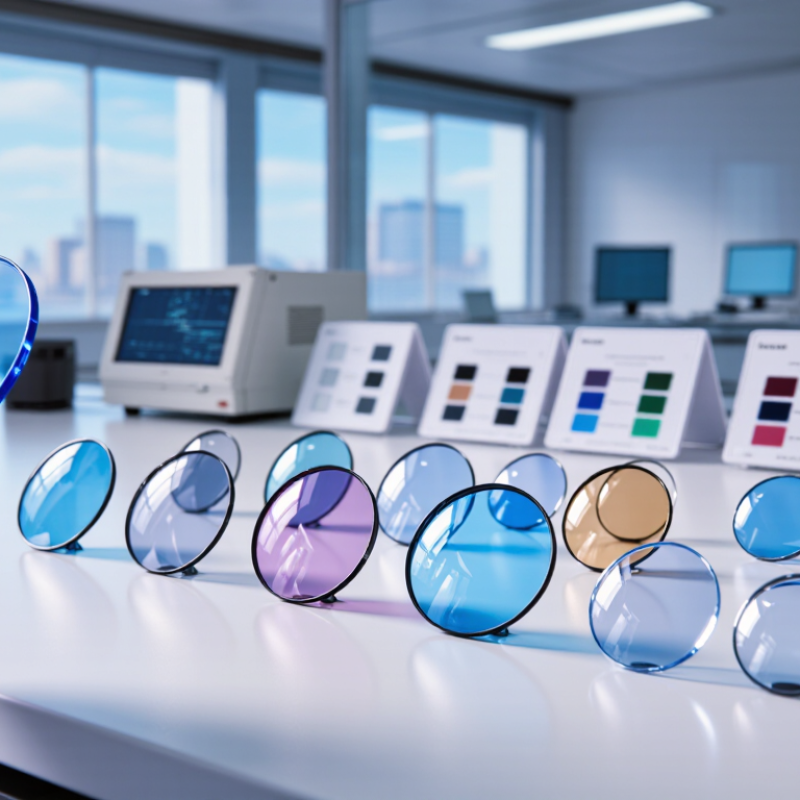
Blue cut lenses are designed to filter some short-wavelength visible light, but their performance varies by lens material and coating. Buyers may consider them for long hours at a computer, tablet, or phone, especially when bright screens feel uncomfortable. A warm screen tint can make evening viewing feel gentler. Still, it does not fix every cause of tired eyes. Glare from a window, dry air, and long stretches without blinking can matter too. Small details count.
Evidence calls for measured claims. A 2023 Cochrane systematic review assessed 17 randomized trials involving 619 adults. It found that blue-light-filtering lenses may make little or no difference to short-term computer-related eye strain compared with regular lenses; evidence on sleep effects remained uncertain. This is useful context for buyers comparing lens specifications. Blue cut lenses are an option, not a proven treatment for eye disease or a guarantee of better sleep. Ask about the tested wavelength range and visible-light transmission, then check whether the tint changes screen colors. That last point can be inconvenient for design work, and it is easy to overlook.
Approximate wavelength bands commonly used to describe blue-violet and blue-cyan visible light. Blue-cut lens transmission varies by product; these ranges do not indicate a guaranteed health benefit.
Buyers may compare lens transmission data for everyday screen use, office work, and outdoor wear. Check each lens specification, since filtering performance differs across products.
When assessing Chinese blue cut lens manufacturers, look beyond a sales page or a single transmission figure. Ask for a clear spectral transmission curve and confirm how the lens performs across the visible-light range. “Blue cut” can describe different filtering levels, so compare measured data rather than relying on the label. Request samples in the exact material, power, and coating you plan to order. Then inspect color tint, reflections, surface marks, and edge quality under consistent lighting. Small details matter.
Check how the factory controls production. Ask how incoming materials, coating thickness, and finished lenses are inspected, and whether batch records can be shared. A dependable supplier should explain its test methods in plain language and provide recent, relevant reports. Verify that the tested sample matches the product specification. It is an easy point to miss.
Communication is part of quality assessment. Send a few technical questions and note whether answers are specific, timely, and consistent across staff. Discuss minimum order quantities, lead times, packaging, remake handling, and capacity for repeat orders before approving a trial run. A polished sample does not guarantee stable production. Compare samples from more than one supplier, keep written specifications, and review trial results before scaling up. Even careful buyers can overlook a detail, so leave room to revise assumptions.
A “top ten” list is most useful as a starting point, not a final ranking. Buyers should compare manufacturers by product range, production capacity, and documented quality controls. Ask whether they support single-vision and progressive lenses, and which materials and refractive indexes they offer. Details matter. A clear product sheet is more useful than broad claims about performance.
For blue-cut lenses, request a measured transmission curve and ask how the coating affects visible light, reflections, and color perception. Compare samples under the same indoor lighting; a slight warm tint may be noticeable against a white page. Ask how batches are checked and whether test records can be matched to orders. Verify sample quality before discussing large quantities. This takes time, but it can reveal inconsistencies early.
Buyers should also confirm customization options, packaging, lead times, and communication procedures. A capable supplier will explain what its measurements mean and where the product has limitations. Be cautious when answers rely only on general assurances. Not every lens suits every wearer or use case, and blue-cut performance alone does not establish overall lens quality. Clear specifications make supplier comparisons more practical.
Buyers comparing China’s blue cut lens manufacturers should look beyond a high filtering percentage. Ask for the claimed wavelength range, spectral transmission data, and results for the finished lens. Two lenses may look equally clear under a shop lamp yet transmit different amounts of blue-violet light. Request samples in the intended prescription and coating; reflections and tint can vary with lens design. Small details matter.
Quality is easier to assess when a supplier shares written inspection criteria, batch traceability, and current test reports. Check optical power, prism, surface defects, coating adhesion, and UV performance separately. Blue-light filtering alone does not establish UV protection. Confirm test methods and sample sizes instead of relying on one headline figure. Be cautious with broad claims. An independent lab report can help, but its scope should match the product being purchased.
Service affects daily production, too. Ask about minimum order quantities, sample lead times, prescription range, packaging, and how defects are handled. A clear response with realistic dates is more useful than a quick promise. Compare written quotations line by line, including coating options and replacement terms. One weakness in this process is that samples cannot reveal every batch variation, so buyers should also request ongoing inspection records.
An anonymized buyer-comparison template. Supplier-specific capabilities are marked for verification rather than presented as independently confirmed facts.
| Supplier slot | Blue-filter product details to request | Quality documents to verify | Production and customization checks | Service and delivery checks |
|---|---|---|---|---|
| Supplier 01 | Request the spectral-transmittance curve, stated filtering range, lens material, refractive index, available powers, and sample lenses. Confirm whether filtering is achieved by coating, material, or both. | Ask for applicable test reports and confirm the product category and test methods. ISO 8980-3 covers transmittance specifications and test methods for spectacle lenses; confirm the applicable edition and scope. | Confirm prescription range, coating options, edging support, sample lead time, and production capacity in writing. | Confirm quotation validity, minimum order quantity, packaging, shipping terms, warranty, and defect-resolution process. |
| Supplier 02 | Compare clear and tinted options using measured spectral-transmittance data; do not rely on a “blue cut” label alone. Ask how the filtering claim is measured and reported. | Request reports traceable to the supplied lens type and production lot. ISO 8980-1 addresses specifications for uncut finished single-vision and multifocal spectacle lenses; verify applicability to the order. | Check available base curves, diameter, prescription range, coating combinations, and tolerance documentation against the buyer’s specification. | Ask for a named technical contact, response-time expectations, sample approval procedure, and written replacement terms. |
| Supplier 03 | Request separate data for each material and coating combination. Check visible light transmittance, color appearance, reflections, and any effect on lens clarity. | ISO 14889 specifies fundamental requirements for spectacle lenses. Ask which requirements are claimed for the finished product and obtain supporting documentation. | Verify whether the supplier supports custom powers, stock lenses, private-label packaging, and pre-shipment inspection. | Confirm whether samples are production-equivalent, who pays sample and freight costs, and how transit damage is handled. |
| Supplier 04 | Ask for data on UV protection separately from blue-light filtering. Request the measurement method and avoid treating these as interchangeable claims. | Check that any conformity or test report identifies the actual model, material, coating, and relevant market requirements; a certificate alone may not establish product performance. | Confirm available lens designs, power range, coating durability test information, and lot-level traceability. | Ask for production milestones, order-change deadlines, export packaging details, and escalation contacts. |
| Supplier 05 | Compare the supplier’s stated filtering curve with the buyer’s target wavelength range. There is no single universally applicable blue-light cutoff for all spectacle lenses. | Request the full report, laboratory identity, test date, test conditions, and report number; independently confirm the report where practical. | Verify color consistency, coating options, lens marking requirements, and the supplier’s process for handling nonconforming lots. | Compare payment terms, delivery estimates, tracking support, and the documented procedure for claims and returns. |
| Supplier 06 | Request samples in the intended prescription and coating where possible. Check transmitted color and appearance under consistent lighting conditions. | Confirm that reports cover the ordered lens configuration, not merely a different material or uncoated sample. | Ask for documented inspection criteria for power, cylinder, axis, prism, cosmetic defects, and coating defects as relevant to the order. | Check the process for sample approval, repeat orders, urgent orders, and corrective action after a quality issue. |
| Supplier 07 | Ask whether filtering performance is specified as a curve or a single percentage, and request the underlying measurement data for meaningful comparison. | Check standards and regulatory requirements for the destination market and intended use. Sunglass standards such as ISO 12312-1 apply to sunglasses, not automatically to ordinary clear spectacle lenses. | Confirm compatibility with the buyer’s frame and edging requirements, plus stock availability and stated production lead times. | Ask how shipping dates are calculated, what export documents are provided, and whether shipment insurance is available. |
| Supplier 08 | Request evidence supporting any claims about glare reduction, visual comfort, or screen use; distinguish measured product properties from health or outcome claims. | Verify whether the quality system certificate is current and applies to the manufacturing site and scope relevant to the ordered product. | Ask about lot coding, retention samples, in-process checks, and whether independent pre-shipment inspection is permitted. | Confirm label and packaging customization, artwork approval, language options, and any associated setup charges. |
| Supplier 09 | Compare materials, refractive indices, lens designs, and coating choices against the buyer’s intended price and performance requirements. | Request a product specification sheet and verify that stated values and tolerances match the purchase order and inspection plan. | Check order capacity, production scheduling, process change notification, and written controls for substitutions. | Compare communication quality, quotation detail, order confirmation accuracy, and support after delivery. |
| Supplier 10 | Use a buyer-defined specification for filtering, material, prescription range, appearance, and packaging; require written confirmation before ordering. | Validate the applicable standards, destination-market rules, and test evidence for the precise product. Do not infer compliance from marketing language. | Agree on acceptance criteria, inspection sampling, traceability, and a corrective-action process before production begins. | Compare total landed cost, confirmed lead time, after-sales commitments, and remedies for late, damaged, or nonconforming goods. |
Buyer note: Supplier slots are placeholders, not ranked or verified companies. Obtain current, product-specific evidence directly from each prospective supplier before making a purchasing decision.
Choosing a blue cut lens manufacturer starts with clear product requirements. Define the lens material, prescription range, coating, tint, and target market before comparing suppliers. Ask for technical data showing how the lens filters light across relevant wavelengths. A single “blue light blocking” percentage may hide important differences. Request sample lenses and inspect color, reflections, edge finish, and coating consistency under ordinary indoor lighting. Small details matter.
Check how the manufacturer controls quality between production batches. Ask about inspection steps, acceptable tolerances, defect handling, and lead times. Request written specifications and sample test reports, then compare them with the delivered samples. Be cautious of broad health promises; filtering light does not guarantee relief from eye strain. It is also worth discussing packaging and replacement procedures before placing a large order. Communication is part of the product. A supplier may offer strong pricing but respond slowly when a coating issue appears. No checklist removes every risk, and samples may not reveal long-term wear. Start with a manageable order, record the results, and use that experience to refine your requirements.
By using this site you agree to the use of cookies by the company in accordance with the Privacy Policy
Have a questions or want to know more about our company? We'll be expecting you.