How to Choose the Right DTH Boring Machine?
Choosing the right Dth Boring Machine begins with the ground, not the brochure. Rock strength, fracture patterns, hole diameter, depth, and water conditions determine suitable equipment. A compact rig may perform well in fractured granite but struggle in deep, abrasive formations. That difference can affect penetration speed, bit life, fuel use, and worker safety.
Industry demand makes this decision increasingly important. The Global Infrastructure Hub estimates that global infrastructure investment could require about USD 94 trillion by 2040, with a significant financing gap. Mining also faces changing material requirements. The International Energy Agency’s Global Critical Minerals Outlook 2024 reports strong growth in demand for minerals supporting energy technologies. More exploration and construction work may increase demand for dependable drilling systems. However, market growth does not make every machine suitable.
A reliable evaluation should compare compressor pressure, air consumption, feed force, rotary torque, drilling angle, dust control, and maintenance access. The USGS Mineral Commodity Summaries 2024 highlights the continuing importance of minerals such as copper, iron ore, and lithium. These projects often involve hard, variable rock. Machine selection must therefore match actual site conditions, not only rated power. A practical trial on representative rock can reveal weaknesses hidden by specifications. Small details matter. Hose routing, rod handling, spare-part availability, and operator visibility can decide daily productivity.
No machine is perfect. A higher-powered model may create unnecessary fuel and maintenance costs. A cheaper model may lose time through frequent bit changes. The first specification is often wrong. Careful site data, supplier evidence, lifecycle costing, and honest operator feedback provide a more defensible choice.
What Is a DTH Boring Machine and How Does It Work?
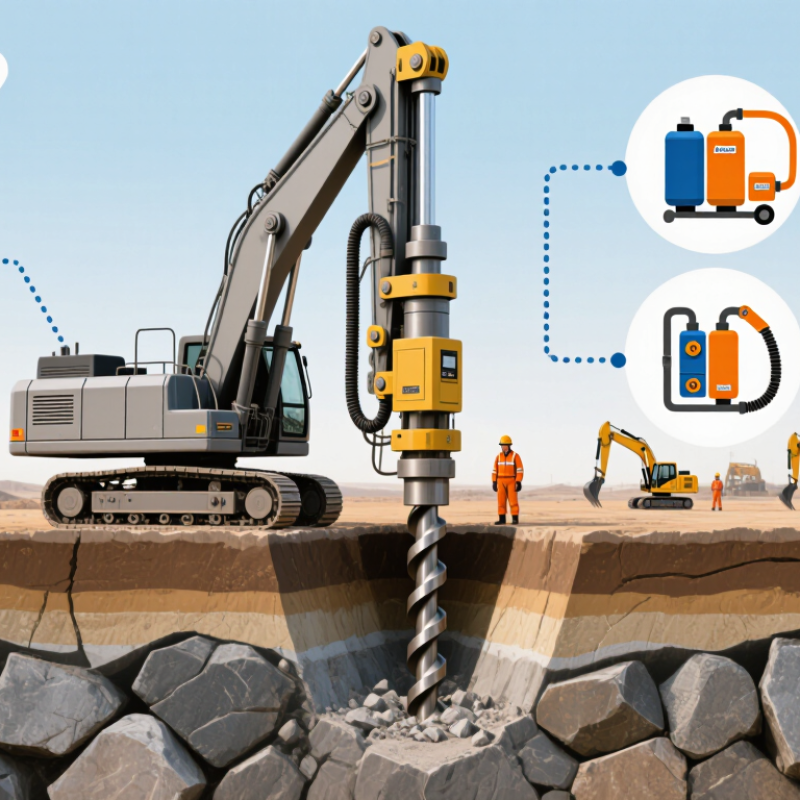
A DTH boring machine is a rock-drilling system that places its hammer directly behind the drill bit. DTH means “down the hole.” Unlike top-hammer equipment, it delivers impact energy inside the borehole. Compressed air travels through the drill string and powers a piston. The piston repeatedly strikes the bit, breaking hard rock into chips. The same air pushes loose material back to the surface. It works below ground.
During drilling, air also cools the hammer and clears the hole. Water injection can reduce dust in dry formations, although too much water may affect hole cleaning. In fractured ground, the borehole may lose air and slow production. Operators should monitor air pressure, penetration speed, vibration, and cuttings. Noise matters too. A specification sheet never tells the whole story. Field conditions often challenge the original plan.
Choosing the right machine requires matching its feed force, torque, air volume, and working pressure to the rock. Hole diameter and drilling depth also influence hammer and bit selection. A compact rig may suit restricted access, while deeper work needs stronger rods and stable alignment. Experienced crews inspect thread wear and bit condition frequently. I would not select equipment by power alone. More power can increase fuel use, vibration, and maintenance. A short site trial may reveal problems that laboratory data misses.
How to Choose the Right DTH Boring Machine?
Typical hole-diameter ranges by DTH drilling application
A down-the-hole (DTH) boring machine delivers compressed air through a drill string to a hammer positioned directly behind the bit. The hammer impacts the bit at the bottom of the hole, making DTH drilling effective in hard and fractured rock. The chart shows representative industry diameter ranges; the final machine choice should also consider required depth, rock hardness, compressor pressure and airflow, access conditions, and drilling angle.
Assessing Ground Conditions and Drilling Requirements
Choosing the right DTH boring machine starts with the ground, not the machine catalogue. Identify rock strength, fracture spacing, abrasivity, weathering, overburden, and groundwater before selecting drilling power. The International Society for Rock Mechanics classifies rock mass quality through RQD, where values below 50% generally indicate heavily fractured ground. Such formations may demand careful hole cleaning and stronger casing support.
Water changes the decision quickly. Saturated fractures can reduce air efficiency, carry debris poorly, and destabilize the borehole wall. Field logs should record water inflow, drilling speed, vibration, and cuttings size. Small details matter. A dusty collar suggests poor sealing or inadequate flushing. A sudden speed increase may indicate a weak seam, not better performance.
The U.S. Geological Survey’s Mineral Commodity Summaries 2024 estimated U.S. crushed-stone production at about 1.5 billion metric tons in 2023. That scale reflects constant demand for dependable quarry drilling, but production volume alone does not determine equipment choice. Match the hammer and compressor to hole diameter, depth, required penetration rate, and available air pressure. For deep holes, check rod stiffness and pressure losses, not just advertised capacity. My first calculation can still be wrong when fractured rock absorbs air. Trial drilling, measured against actual penetration and fuel use, often reveals more than a specification sheet.
Comparing Machine Types, Power Systems, and Drilling Capacities
How to Choose the Right DTH Boring Machine?
Machine type should match the ground, hole size, and daily target. DTH crawler rigs suit quarry benches, construction sites, and uneven ground. Truck-mounted units travel faster between sites, but they may sacrifice stability on steep platforms. Hydraulic systems deliver precise feed control and easier maintenance. Diesel-electric systems can reduce fuel use during long shifts, although they need skilled technicians and reliable power management.
Capacity must be measured beyond maximum depth. Check the recommended hole diameter, compressor pressure, air volume, rod length, and penetration rate. The U.S. Geological Survey reported about 1.9 billion metric tons of crushed stone production in the United States during 2023. Such volume demands dependable cycle times, not impressive brochure figures. Industry reports from Grand View Research also identify automation and productivity as major mining-equipment market drivers. Still, automation cannot correct poor rock assessment.
Tips: Compare measured meters per shift, fuel consumption per meter, and downtime records. Ask operators to test the rig in similar rock. A machine rated for 200 meters may perform poorly in fractured formations. Smaller rigs can sometimes deliver better results. That is easy to overlook. Check compressor matching carefully. Insufficient air pressure causes slow flushing, blocked holes, and premature bit wear. My practical concern is often overlooked: the cheapest purchase may become the costliest machine after six months of repairs.
Evaluating Key Features, Efficiency, Safety, and Maintenance
Choosing the right DTH boring machine starts with ground conditions, not brochure claims. In field trials, I check rock hardness, fracture patterns, hole diameter, and required depth. A machine that performs well in dry granite may struggle in loose, wet formations. Match compressor pressure and air volume to the hammer’s working range. Undersized airflow causes slow penetration and poor cuttings removal. Excessive pressure wastes fuel and may accelerate wear. Keep the target realistic.
Efficiency also depends on control, not only drilling speed. Variable rotation, stable feed force, and responsive depth controls help operators maintain a straight hole. I compare meters drilled per operating hour, including rod changes and cleaning pauses. This gives a more honest figure.
Safety features deserve equal attention. Look for guarded moving parts, emergency stops, dust suppression, and clear operator sightlines. Check hose connections before each shift. Flying fittings are not a minor inconvenience. They can cause severe injuries. Noise and vibration protection should fit the actual worksite, not just the equipment file.
Maintenance access often decides whether productivity lasts. Inspect lubrication points, filters, seals, drill rods, and hammer wear parts without dismantling half the machine. Record pressure, penetration time, fuel use, and unusual vibration. Small changes can reveal blocked air passages or damaged threads.
I once overlooked a minor coupling leak; the lost pressure appeared harmless, but the shift ended early. That mistake changed my checklist. Still, no checklist is perfect. Ask operators to report awkward controls and repeated faults. Their experience may expose weaknesses that specifications miss. Choose a machine whose service schedule matches your technicians, spare-parts access, and site conditions.
Selecting a DTH Boring Machine for Your Project and Budget
Choosing a DTH boring machine starts with ground conditions, not catalogue size. Rock hardness, fracture frequency, hole diameter, and required depth determine the useful configuration. The U.S. Geological Survey reported global iron ore production of about 2.5 billion metric tons in 2023, showing why drilling productivity remains commercially important. Still, mining scale does not justify overspending on every project.
Build a simple cost model before requesting quotations. Include machine price, compressor demand, drill pipes, bits, transport, fuel, operators, and planned maintenance. A larger rig may drill faster, yet it can increase fuel use and mobilisation costs. The International Energy Agency’s World Energy Outlook 2024 highlights continuing uncertainty in energy prices, so compressor efficiency deserves serious attention. Measure cost per finished metre, not hourly output. That distinction matters.
Ask suppliers for verified field data from similar rock and hole sizes. Request penetration rate, bit life, air pressure, and average downtime. A muddy test site can hide weaknesses. It is also wise to calculate payback under a slower production case, perhaps 20% below the advertised rate. That feels pessimistic, but projects rarely follow perfect conditions. I would choose a machine with manageable service access and common consumables, even if its maximum depth looks less impressive. The Global Infrastructure Hub’s Global Infrastructure Monitor 2024 notes persistent delivery and cost pressures across infrastructure projects. Your budget needs room for mistakes.


