
By using this site you agree to the use of cookies by the company in accordance with the Privacy Policy

Choosing the right Electric Heat Relay in 2026 requires more than matching a voltage and current rating. Industrial heaters increasingly operate within automated, energy-conscious systems. The International Energy Agency’s Electricity 2024 report forecasts global electricity demand to grow by an average of 3.4% annually through 2026. That growth increases pressure on heating controls, especially in ovens, packaging lines, laboratories, and battery-production equipment.
Small errors become expensive.
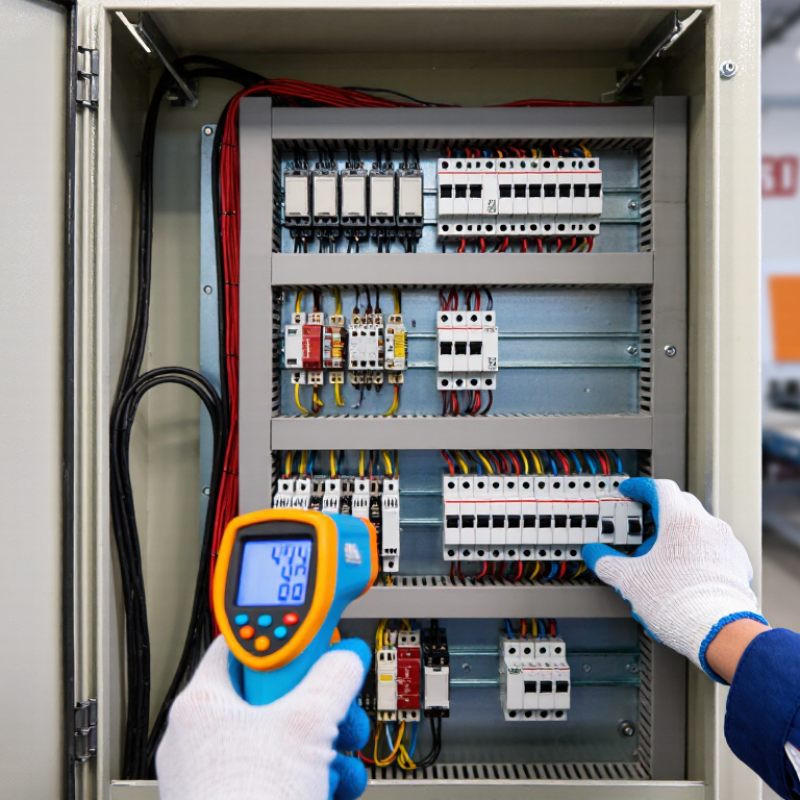
A relay rated for 40 amps may still overheat inside a crowded control cabinet. Switching frequency, inrush current, ambient temperature, load type, and cooling method all affect real performance. The U.S. Department of Energy’s Industrial Decarbonization Roadmap identifies process heating as a major industrial energy and emissions concern. Therefore, relay selection should support both operational reliability and measurable energy control. IEC 60947 and IEC 60730 guidance can help engineers evaluate switching safety, insulation, endurance, and control-device suitability. Certification requirements may also vary by installation location.
Electromechanical relays remain useful for simple, isolated loads. Solid-state alternatives can provide quieter operation and faster cycling, but they generate heat continuously and need appropriate heat sinking. Zero-cross switching may reduce electrical stress, though it is not suitable for every heater or control strategy. A practical review should compare datasheet ratings with actual cabinet temperatures, duty cycles, and maintenance records. In field conditions, assumptions often fail. This guide may not cover every unusual installation, but it highlights the decisions most likely to prevent nuisance trips, premature contact wear, and unsafe overheating. The best Electric Heat Relay is not always the largest one; it is the one correctly matched to the complete heating system.
How to Choose the Right Electric Heat Relay in 2026?
An electric heat relay switches power to a heating element in response to a control signal. In a workshop oven, it may energize a resistance coil; in a building, it may control a duct heater. The relay separates low-voltage control wiring from the higher-current heating circuit. That separation matters when a thermostat or controller cannot safely switch the load directly.
Selection starts with the heater’s voltage, current, and switching frequency. Check the relay’s resistive-load rating, not just its headline current rating. A 4 kW heater on a 240 V supply draws about 16.7 A, before considering design margins and local conditions. Frequent switching can wear mechanical contacts. Solid-state relays avoid moving contacts, but generate heat and need suitable heat sinking. Small details matter. A crowded panel can trap heat around the relay.
The International Energy Agency’s Energy Efficiency 2023 report notes that industry accounts for roughly 37% of global energy use. That figure gives context for why reliable control of industrial heating loads matters, though it does not measure relay performance. In practice, verify the heater’s duty cycle, ambient temperature, enclosure, and fault protection requirements. Match the relay to the real installation, not an idealized catalog example. I would also review whether the controller’s switching behavior is stable; rapid cycling can shorten component life, and the operating data may be less tidy than expected.
| How to Choose the Right Electric Heat Relay in 2026? — Functions and Applications | |||||
|---|---|---|---|---|---|
| Relay Type | How It Works | Typical Heating Applications | Key Advantages | Selection Considerations | Best Fit |
| Electromechanical relay (EMR) | An energized coil moves mechanical contacts to open or close the load circuit. | Small heaters, simple temperature controllers, and equipment with intermittent switching. | Low initial cost; provides physical contact separation; straightforward to understand and replace. | Check contact rating for the heater’s voltage and current, switching frequency, electrical life, and any inrush current. Contacts wear with switching. | Low-cost systems that switch relatively infrequently and do not require silent operation. |
| Solid-state relay (SSR), zero-cross type | Semiconductor devices switch AC loads near the AC voltage zero crossing when the control signal calls for operation. | AC resistance heaters in ovens, packaging equipment, plastic-processing equipment, and temperature-control systems. | No moving contacts; quiet operation; suitable for frequent cycling and proportional time-based control. | Confirm AC load compatibility, current derating, heat-sink requirements, ambient temperature, leakage current, and short-circuit protection. An SSR can fail short-circuit. | Frequently switched AC heaters where reduced mechanical wear and quiet operation are important. |
| Solid-state relay (SSR), random-turn-on type | Switches an AC load without waiting for the next voltage zero crossing, subject to the device’s control method. | AC heating systems requiring phase-angle control or other applications where switching timing matters. | Allows switching at different points in the AC waveform when used with a compatible control system. | Verify that the relay and controller support the intended control method. Phase-angle control can increase electrical noise and may require suitable filtering. | Applications needing controlled portions of the AC waveform rather than ordinary on/off switching. |
| Hybrid relay | Combines semiconductor switching with mechanical contacts; the design determines how the two elements share switching duties. | Industrial heater circuits that need frequent operation along with low steady-state conduction loss. | May combine reduced contact wear during switching with lower on-state losses than a continuously conducting semiconductor alone. | Review the manufacturer’s switching sequence, load limits, cycle rate, thermal requirements, and protection recommendations. | Systems where both switching frequency and operating losses are important design concerns. |
| Contactor or power relay | An electrically operated mechanical switching device opens or closes power contacts; control and power circuits are typically separate. | Higher-current heater banks, industrial furnaces, and multi-zone heating systems. | Available in configurations for larger loads; can provide clear mechanical switching and support coordinated control designs. | Choose according to rated operational voltage, current, utilization category, duty cycle, poles, and required short-circuit protection. A contactor is not by itself overload or short-circuit protection. | Higher-power loads or systems requiring a dedicated power-switching device. |
| DC solid-state relay | Uses semiconductor devices designed to switch direct-current loads; polarity and terminal arrangement depend on the device. | DC cartridge heaters and other DC heating loads in battery-powered or DC-bus equipment. | No moving contacts; suitable for repeated switching when correctly selected for the DC load. | Use a relay specifically rated for DC. Check maximum DC voltage, load current, polarity, heat dissipation, leakage current, and the required means of interrupting fault current. | DC heater circuits where repeated, quiet switching is needed. |
| Temperature-controller relay output | A controller’s relay output provides a switching signal or switches a load within its specified output rating; some outputs are intended only to drive another device. | Temperature control systems where a sensor and controller command a relay, contactor, or SSR. | Can integrate temperature sensing, setpoints, and control logic in one system. | Check whether the output is a dry contact, its voltage and current limits, and whether an interposing relay or power switch is required. Do not assume a controller output can directly carry heater current. | Systems needing automatic temperature-based switching and coordinated control. |
| Selection checks for any relay | Confirm heater supply type (AC or DC), nominal voltage, operating current, switching frequency, control-signal compatibility, ambient temperature, enclosure conditions, insulation and approvals required by the installation, and the fault-protection design. Size from the device’s datasheet and applicable electrical codes; current ratings depend on installation and thermal conditions. | ||||
Have a questions or want to know more about our company? We'll be expecting you.
