How to Choose a Fusion Welding Machine?
Choosing a Fusion Welding Machine requires more than comparing prices, power ratings, and attractive product photographs. The machine must match the pipe material, outside diameter, wall thickness, joint design, production volume, and working environment. A unit designed for small polyethylene repairs may struggle with large-diameter infrastructure work. That difference matters.
Industry data supports careful evaluation. Grand View Research reports that the global welding equipment market was valued at approximately USD 16.2 billion in 2023, with continued growth expected through 2030. Fortune Business Insights also identifies automation, infrastructure investment, and energy projects as major market drivers. These figures show demand, not guaranteed quality. Buyers still need evidence from real applications.
John C. Lippold, a respected welding-metallurgy authority, describes weldability as “the capacity of a material to be welded under the fabrication conditions imposed.” His principle applies directly to machine selection. A Fusion Welding Machine should provide stable temperature control, consistent pressure, accurate alignment, and traceable welding parameters. Look closely at the heating plate. Is its surface uniform? Does the clamp hold the pipe without distortion? Can operators record cycle data?
Safety features deserve equal attention. Overheating protection, emergency stops, guarded moving parts, and clear operating instructions reduce avoidable risks. Certification matters too, but certificates alone do not prove field performance. Request test welds, inspection records, service response times, and spare-parts availability.
No checklist is perfect. Real projects expose weaknesses. A smaller machine may appear economical, yet downtime can cost more than its purchase price. This guide explains how to compare capability, reliability, compliance, and long-term operating value before making a defensible decision.
Identify the Fusion Welding Machine Types and Their Applications
How to Choose a Fusion Welding Machine?
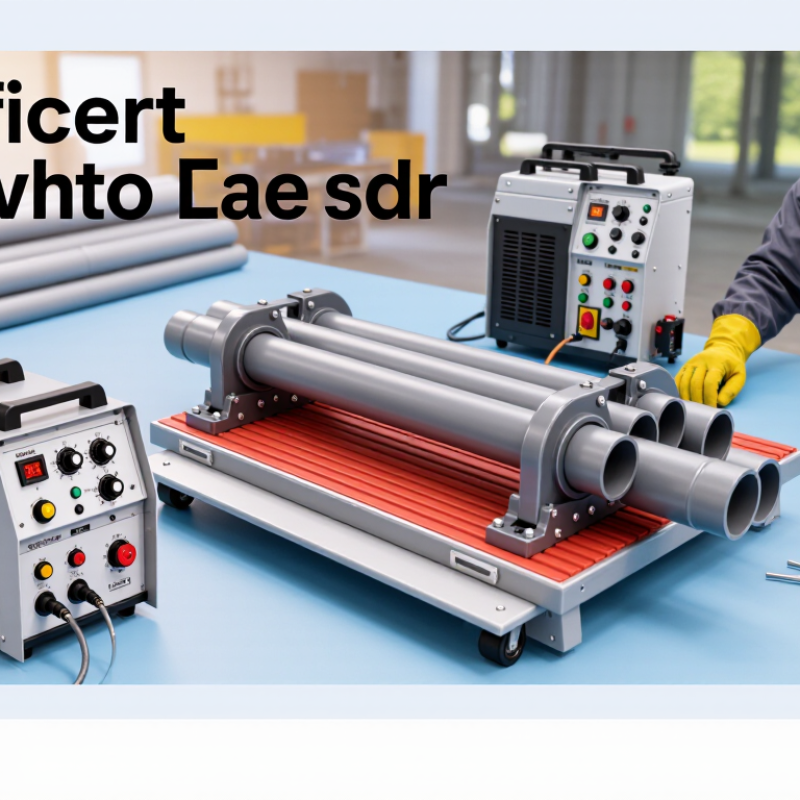
Choosing a fusion welding machine starts with identifying the joint type and work environment. Butt fusion machines heat and press pipe ends together. They suit long, straight pipeline sections and larger diameters. Socket fusion machines use heated sockets and fittings. They work well for smaller pipes, building services, and compact repair areas. Electrofusion machines use fittings with embedded heating wires. They are useful where pipes cannot move easily or trench space is limited. Saddle fusion equipment creates branch connections on existing pipelines. Each type solves a different installation problem.
Tips: Match the machine with pipe material, diameter, wall thickness, and fitting design. Check temperature control, pressure accuracy, clamping range, and power requirements. Keep heating plates clean. Small surface contamination can weaken a joint. Read the applicable welding procedure before work begins.
Experienced technicians also consider weather, access, and alignment. Wind can cool a heated surface too quickly. Uneven ground may affect clamping pressure. For remote work, a lighter machine can reduce handling risks, but it may offer less stability. No choice is perfect. A compact unit may save time yet limit future projects. Record heating time, pressure, ambient temperature, and cooling time during each job. Visual inspection helps, but it cannot replace proper process control or trained judgment. When results look unusual, stop and review the setup instead of forcing the next joint.
Assess Material, Pipe Size, and Welding Requirements
How to Choose a Fusion Welding Machine?
Assess Material, Pipe Size, and Welding Requirements
Choosing a fusion welding machine starts with the pipe, not the price. Identify the material first. Polyethylene, polypropylene, and fluoropolymer pipes require different heat ranges and handling methods. Check the resin grade and wall thickness from the pipe documentation. Two pipes with the same diameter may need different heating cycles. That detail matters.
Pipe size determines machine capacity, clamp design, and hydraulic force. Measure the outside diameter and confirm the actual range, especially for thicker walls. A stable frame should hold both ends without twisting. On site, uneven supports can shift alignment by a few millimeters. Small movement can create a weak joint. I have seen teams focus on heater temperature while ignoring pipe ovality. That was a poor assumption. Calipers, facing tools, and clean inserts deserve equal attention. Keep the heater plate free from dust and scraped plastic.
Define welding requirements before selecting controls. A municipal line may need pressure recording, traceable joint numbers, and repeatable cycle settings. A repair crew may value low weight, quick setup, and dependable power. Check whether the machine supports butt fusion, socket fusion, or specialized fittings. Review temperature accuracy, pressure control, clamp travel, and emergency shutdown features. Compare the procedure with applicable industry standards and local requirements. Ask for calibration records and clear operating instructions. Do not choose by diameter alone. It is tempting. Test a sample joint under controlled conditions before production work.
How to Choose a Fusion Welding Machine?
Assess the pipe material first, then match the machine to the outside diameter, wall thickness, joint type, and required production control.
The chart shows typical heater-plate temperature ranges used for common thermoplastic fusion applications. Always follow the qualified procedure and the applicable material standard for the exact job.
Material
Confirm whether the pipe is PE, PP, PVDF, or another thermoplastic. The material determines the heating range, tooling surface, and joining procedure.
Pipe Size
Check the complete outside-diameter and wall-thickness range. Larger or thicker pipes generally require hydraulic clamping, higher force, and greater alignment control.
Welding Requirements
For field repairs, portability may be most important. For production work, prioritize controlled pressure, accurate temperature regulation, data recording, and repeatability.
Compare Heating Methods, Power Ratings, and Control Features
Choosing a fusion welding machine starts with its heating method, not its advertised wattage. Arc systems suit steel fabrication because they concentrate heat through an electrical arc. Resistance welding heats the joint through contact resistance and usually offers fast, repeatable cycles. Induction heating produces cleaner, localized heat, but coil design and material geometry strongly affect results. For thermoplastic applications, hot-plate or infrared heating may provide better surface control. The U.S. Department of Energy’s 2022 Industrial Decarbonization Roadmap reports that process heating represents about 51% of industrial energy use. Efficiency deserves attention.
Power ratings need careful reading. A 10 kW label can mislead. Check rated output, input demand, duty cycle, and peak starting load. IEC 60974-1 requires welding power sources to state key rating information, including output and duty cycle. A machine delivering 300 amps at 60% duty cycle may outperform a larger unit rated at 30%. I have seen operators compare only maximum amperage. That choice often creates overheating, pauses, and unstable weld quality. Allow extra capacity for thick sections, long cables, cold workshops, or generator operation.
Control features separate basic equipment from dependable production equipment. Closed-loop current and voltage control can reduce arc variation. Temperature sensors, pressure monitoring, programmable ramp rates, and automatic cooling improve repeatability. Data logging helps trace a weak joint back to its cycle settings. However, more software is not always better. Operators still need clear displays, physical emergency controls, and simple calibration routines. A complicated interface can slow a skilled welder down. Sometimes, less is safer.
Evaluate Machine Quality, Safety Systems, and Operating Convenience
How to Choose a Fusion Welding Machine?
Machine quality should be judged beyond its painted housing. Inspect the frame, heating plate, clamps, cables, and temperature controller. Solid parts should move smoothly without excessive looseness. Ask for calibration records and test data, not only product photographs. Stable temperature control matters because uneven heat can weaken a joint. A machine with repeatable pressure and heating cycles supports consistent work. Still, no machine stays accurate without cleaning and scheduled inspection.
Safety systems deserve close attention. Look for over-temperature protection, pressure limits, emergency stopping, protective guards, and clear warning alarms. Electrical grounding should be documented and easy to verify. The operating manual must explain setup, faults, maintenance, and safe shutdown procedures. Short instructions help.
Operating convenience affects real productivity. A readable display, simple controls, and accessible maintenance points reduce mistakes during long shifts. Preset programs can help, but operators should understand what each setting changes. Data logging is useful when quality records matter. Test the machine with gloves on. Can you adjust the clamp without awkward reaching? Can you see the joint area clearly? A polished interface may still hide confusing menus. I would rather choose a slightly slower machine with dependable feedback than a faster one that leaves operators guessing. Consider spare parts, training, and service response before purchase. These details are easy to overlook. They often decide whether the machine remains reliable after months of daily use.
Select the Best Machine Based on Budget, Maintenance, and Support
Choosing a fusion welding machine starts with the real job, not the catalogue price. A compact manual unit may suit occasional pipe repairs. A hydraulic machine is better for repeated work, larger diameters, and controlled pressure. Check the required pipe range, heating temperature, electrical supply, and site conditions. A machine that overheats on a cold outdoor site can delay an entire installation.
Budget planning should include tooling, transport, calibration, and operator training. I once underestimated the value of spare heating elements and faced avoidable downtime. That mistake changed my purchasing checklist. Ask whether replacement parts are available locally and whether the supplier provides clear maintenance instructions. The cheapest machine may become expensive when one worn clamp stops production. It is also worth checking temperature stability, pressure gauges, alignment accuracy, and data recording features.
Maintenance should be practical for your team. Look for accessible components, durable clamps, and simple cleaning procedures. After each weld, remove plastic residue from the heating plate with approved tools. Do not scratch its coating. Scheduled inspections can reveal loose bolts, damaged cables, or inaccurate gauges before they affect joint quality. Support matters just as much. Reliable technical advice, training, warranty coverage, and fast troubleshooting reduce uncertainty on site. Ask for service response times in writing. Promises can sound better than reality. A short demonstration often reveals more than a polished brochure.


