How to Choose the Right Steel Chisel in 2026?
Choosing the right steel chisel in 2026 is more than comparing price tags or polished handles. The correct tool must match the material, impact force, workspace, and user experience.
A cold chisel for mild steel needs a hardened cutting edge and a tough body. Masonry work demands different geometry and edge durability. For fine metal shaping, a narrower Steel Chisel can offer better control around corners, grooves, and tight joints. The handle should remain comfortable after repeated hammer strikes. Small details matter. A slippery grip can ruin accuracy.
Chris Schwarz, a respected woodworking author and tool researcher, once observed, “A tool is only as good as the work it helps you accomplish.” That practical idea applies strongly to chisels. A premium model may still perform poorly when its angle, length, or steel grade does not suit the task.
Look for clearly stated material specifications, heat-treatment information, and realistic impact guidance. Inspect the cutting edge under bright light. Uneven grinding, rolled edges, or tiny cracks should raise concerns. Some manufacturers provide impressive hardness numbers, but hardness alone does not guarantee reliability. A brittle edge can fail faster than a slightly softer one.
Your own working habits also matter. I have seen users choose oversized chisels because they feel powerful, then struggle with control and fatigue. That choice is understandable, but not always wise. The best selection may feel less dramatic in the hand. It should deliver steady cuts, predictable deformation, and safe handling during real work. This guide explains how to make that decision with clearer evidence and fewer assumptions.
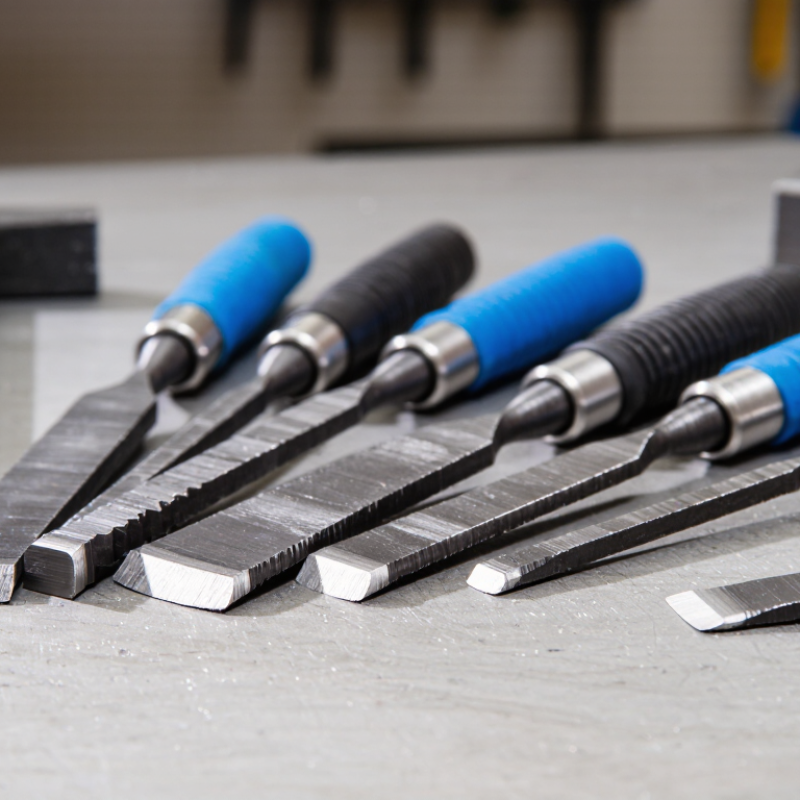
Classify the Job: Choose Cold, Masonry, Wood, or Pneumatic Chisels
How to Choose the Right Steel Chisel in 2026?
Classify the job before comparing steel grades or handle shapes. A cold chisel is designed for cutting and shaping mild steel, bolts, and other non-hardened metals. Its narrow edge bites into a steel plate with a sharp ringing impact. Do not use it on hardened material; the edge may chip. For brick, block, and concrete, choose a masonry chisel with a broader, tougher cutting edge. A cold chisel can deform quickly against aggregate. That mistake is common.
Wood chisels need a thinner, carefully ground bevel for paring joints, trimming hinges, and cleaning mortises. Strike only a chisel with a suitable impact handle, and keep the edge free from hidden nails. Pneumatic chisels suit repeated breaking, scaling, or bodywork tasks where hand impacts would become tiring. They also create more vibration and noise. The NIOSH Criteria for a Recommended Standard: Occupational Noise Exposure uses 85 dBA over eight hours as its recommended exposure limit, while OSHA permits 90 dBA for an eight-hour construction exposure. Check the tool’s measured output, not marketing language.
Material choice still matters. Chromium-vanadium or comparable alloy steel can offer useful toughness, but heat treatment and edge geometry often matter more than the label. I have seen a premium-looking chisel fail after misuse. That is worth remembering. Inspect mushroomed heads, cracked handles, and rolled edges before every job. Replace damaged tools, even when the defect seems small. A neat classification system helps, but the workpiece, strike force, and repetition can change the correct choice.
Compare Tool Steels Using ASTM A681 and ISO 4957 Grade Standards
How to Choose the Right Steel Chisel in 2026?
Choosing the right steel chisel requires more than checking hardness. I inspect the edge, striking face, and expected impact first. ASTM A681 classifies tool steels by chemical family and performance requirements. ISO 4957 serves a similar purpose, but its designations and testing details differ. Never treat an ASTM grade and an ISO grade as automatic equivalents. That shortcut causes trouble.
For a cold chisel striking mild steel, compare toughness before maximum hardness. ASTM A681 S-type shock-resisting steels may handle repeated impact. W-type water-hardening steels can provide a sharp, economical edge.
ISO 4957 includes non-alloy and alloy tool steels. Its grades may contain chromium, silicon, molybdenum, or vanadium. A grade such as 60WCrV7 may offer useful balance, but heat treatment controls the result.
Check the certificate, chemistry, hardness range, and tempering instructions. Not merely “tool steel.”
In practice, I test a sample with controlled blows. Then I inspect mushrooming, edge rolling, and cracks. Keep the working end hard, but not glass-hard. The handle and striking face also need safe geometry.
My earlier choices were imperfect. I once favored hardness and overlooked temper stability. Ask the supplier to state both standards clearly. Confirm the current edition and product form, because forged stock and finished chisels may behave differently. Standards guide selection; testing reveals uncomfortable details.
Set Edge Hardness Within the 48–58 HRC Working Range
How to Choose the Right Steel Chisel in 2026?
Set Edge Hardness Within the 48–58 HRC Working Range
A chisel’s edge needs controlled hardness, not maximum hardness. The 48–58 HRC range balances cutting strength, impact resistance, and practical sharpening. Below 48 HRC, the edge may roll against hard steel or masonry. Above 58 HRC, it can chip under sudden impact. Too hard can fail suddenly.
ASTM E18 and ISO 6508-1 define Rockwell C testing with a diamond cone and a 150 kgf major load. These standards improve comparability between suppliers and workshops. However, one hardness reading does not describe the whole tool. Test locations matter. A polished edge, shoulder, and body may show different values after heat treatment.
ASM International’s ASM Handbook, Volume 4D, links tempering control with hardness, toughness, and dimensional stability. In practical inspection, request a hardness map across the working edge. A 52 HRC edge may suit general cold-cutting work. A 56–58 HRC edge may hold a finer profile, but it demands better impact control. Watch the corners.
Do not trust a certificate blindly. Confirm the test method, sampling position, and calibration date. I have seen hardness treated as a quality guarantee, which is an incomplete assumption. Grain structure, tempering temperature, edge geometry, and surface decarburization also influence service life. A small soft zone near the bevel can matter more than the average number.
Check Guards and Handles Against OSHA 1910.242(b) Safety Requirements
Choosing the Right Steel Chisel in 2026: Check Guards and Handles Against OSHA 1910.242(b) Safety Requirements
A steel chisel should feel balanced before it enters service. Inspect the striking head for mushrooming, cracks, sharp edges, or loose metal. Check the handle for splits, soft spots, and movement around the socket. A hand guard can protect fingers from missed blows, but it must stay secure during repeated impacts. Test it carefully.
OSHA 1910.242(b) does not specifically prescribe a chisel-handle design. It addresses compressed-air cleaning. If workers use compressed air near chiseling operations, cleaning pressure must remain below 30 psi, with effective chip guarding and suitable personal protective equipment. Never use an air blast to remove chips from clothing or skin. That shortcut still appears in real workshops.
Choose a chisel with a guard that fits the user’s hand without blocking the sightline. The grip should resist oil and sweat, yet remain comfortable during cold-weather work. Replace damaged tools immediately, even when the defect looks minor. In practice, workers sometimes keep a familiar chisel too long. I have seen small head cracks become dangerous after only a few additional strikes. Record inspections, train users, and match the chisel’s width and hardness to the material. A tool that feels “nearly right” may not be right enough.


