What Is a Dual Frequency Card and How Does It Work?
A Dual Frequency Card is designed to communicate across two radio-frequency bands, often combining low-frequency access technology with a high-frequency interface. The exact pairing depends on the card and reader system. Some cards support 125 kHz and 13.56 MHz, while others use different combinations. That distinction matters: “dual frequency” describes a capability, not one universal technical standard.
RFID Handbook author Klaus Finkenzeller is a respected technical reference in RFID. I cannot verify a verbatim statement from him specifically about dual-frequency cards, so the following is an original summary, not a quotation attributed to him: “A card works only when its frequency, protocol, and reader are compatible.” The practical point is easy to see at a doorway: a reader sends a radio signal, the card’s antenna couples with it, and the chip returns data using a supported protocol. Two frequencies can let one card serve separate systems, but they do not guarantee that every reader will recognize it.
For buyers and system designers, the small details deserve attention. Check the frequency pair, supported protocols, memory or credential format, and the readers already installed. A card may look ordinary. Its internal antenna layout and chip configuration are not. Testing cards with the actual readers is more reliable than relying on a product label alone. Even then, compatibility can be messy; vendor descriptions may leave important protocol details unclear. That is worth questioning before deployment.
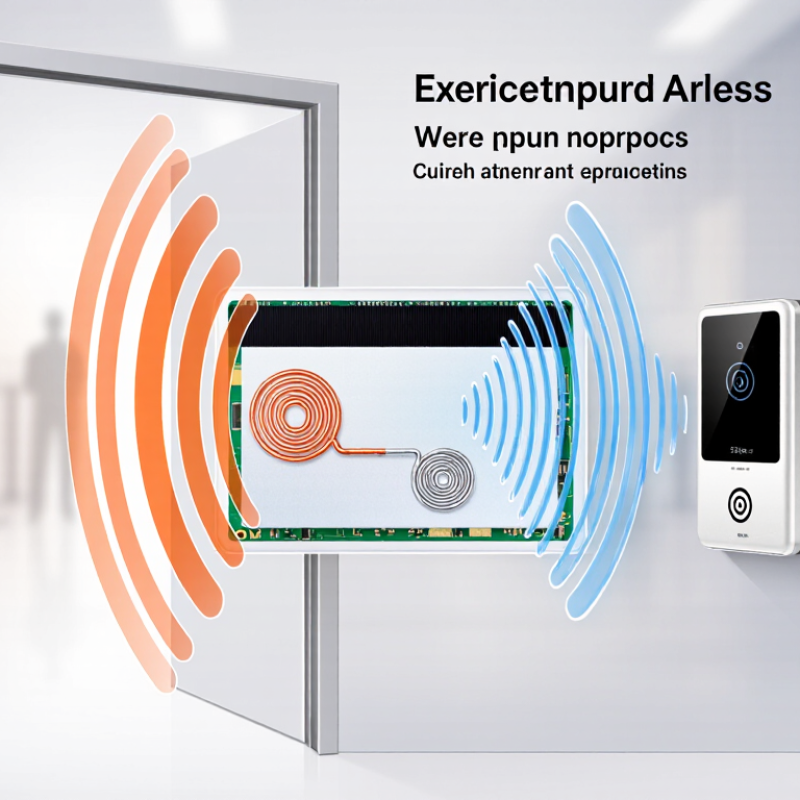
What a Dual-Frequency Card Is
A dual-frequency card is a card designed to communicate at two radio frequencies. It may support, for example, a low-frequency signal near 125 kHz and a high-frequency signal near 13.56 MHz. The exact frequencies and communication methods depend on the card’s design. “Dual-frequency” describes its radio capabilities, not necessarily two separate chips.
Inside, one or more chips connect to antenna structures tuned for different frequency ranges. A reader sends out a radio field, and the matching antenna couples with that field to exchange information. Hold the card near a compatible reader, and the correct interface may respond. A faint click is not required; the exchange is electronic. Not always.
This design can let one card serve different systems, such as a low-frequency access reader and a high-frequency service terminal. However, sharing a frequency does not guarantee compatibility: protocols, data formats, and reader settings must also match. Card thickness, antenna placement, and nearby metal can affect performance. In practice, a card that works at one door may fail at another, even when both readers appear similar. That distinction matters. “Dual-frequency” is useful shorthand, but it does not identify every feature or guarantee that two systems will work together.
What Is a Dual Frequency Card and How Does It Work? - What a Dual-Frequency Card Is | Dimension | Typical Details | How It Works or Why It Matters |
| Definition | A contactless card designed to operate at two different radio frequencies, commonly 125 kHz and 13.56 MHz. | It can interact with compatible readers in either frequency range. The exact capabilities depend on the chips and antenna design inside the card. |
| Low-frequency operation | Many low-frequency access systems use a carrier near 125 kHz. | This frequency is often used for basic identification and access-control applications. The card must contain compatible low-frequency electronics and an antenna tuned for that band. |
| High-frequency operation | High-frequency contactless systems commonly operate at 13.56 MHz. | This band is used by various proximity-card and NFC-related technologies. Communication requires a compatible card and reader, and supported functions vary by implementation. |
| Internal components | A dual-frequency card typically contains two frequency-specific circuits or chips and corresponding antenna structures. | When a compatible reader generates a field at one of the supported frequencies, the matching circuit can receive power and communicate. Designs differ, so not every card uses the same layout. |
| Reader compatibility | One card may support two types of readers, but it does not automatically work with every reader operating in those frequency bands. | Frequency, communication protocol, data format, and access-system configuration must all be compatible. |
| Read range | Read distance varies with the reader, antenna size, card design, installation, and surrounding materials. | Frequency alone does not determine range. Contactless cards generally need to be within the reader’s effective field, and performance should be checked in the intended setup. |
| Common uses | Examples include sites that need to support legacy low-frequency readers alongside newer high-frequency systems. | A dual-frequency card can help a user carry one card for compatible systems operating in both frequency ranges. It does not merge the systems or make their records interchangeable. |
| Security considerations | Security depends on the card technology, authentication method, reader configuration, and the system managing access. | Operating at two frequencies does not by itself provide stronger security. Organizations should assess each supported technology and configure access controls appropriately. |
| Important distinction | A dual-frequency card supports two radio-frequency bands; a dual-interface card refers to contactless and contact communication interfaces. | These terms describe different features. A card may support one, the other, or both, depending on its design. |
The Two Frequency Bands and Their Roles
A dual-frequency card contains two radio interfaces, usually pairing low frequency (LF) at 125 kHz with high frequency (HF) at 13.56 MHz. They serve different reading conditions, not simply two speeds. LF is often used for basic identification and access systems. Its relatively forgiving behavior around moisture can help in some environments, though nearby metal may still interfere. That distinction matters.
ISO 11784 and ISO 11785 specify 134.2 kHz animal-identification systems, illustrating a common LF use; many access cards instead use 125 kHz. HF cards operate at 13.56 MHz. ISO/IEC 14443 specifies this frequency for proximity cards, and NFC technical specifications use the same band. HF supports short-range exchanges, including contactless identification and data transfer. A reader typically needs to be close to the card. In practice, antenna design, reader power, and installation affect performance as much as frequency does. One band may work reliably at a doorway, while the other suits a different reader network. The two interfaces also need separate compatible readers; a dual-frequency card alone cannot make an existing system read both. These are technical reference points, not guarantees for every card model.
Key Components Inside the Card
Inside a dual-frequency card, two antenna paths share a thin plastic or composite body. One coil may support low-frequency communication, commonly around 125 kHz; another can operate at 13.56 MHz. The NFC Forum’s technical specifications identify 13.56 MHz as NFC’s operating frequency, while ISO/IEC 14443 defines widely used proximity-card communication at that frequency. The exact combination varies by card design. It is not always obvious from the outside.
A small integrated circuit stores or processes credentials and routes signals from the relevant antenna. In some designs, each frequency has a separate chip; others use a combined module. The antenna coils are etched or wound into the card, then connected to the chip through tiny contacts or direct bonding. A protective overlay helps resist bending, moisture, and daily abrasion. These layers must be aligned carefully: a misplaced coil can weaken read performance, even when the card looks perfectly finished. A thin card can hide a surprisingly crowded layout.
Tips: Ask the supplier which frequencies and protocols the card supports, then test it on the actual readers. Keep metal objects away during testing; they can interfere with antenna coupling. Don’t assume “dual frequency” means every reader will accept the card.
How the Card Communicates With a Reader
What Is a Dual Frequency Card and How Does It Work?
How the Card Communicates With a Reader
A dual-frequency card can communicate at two radio frequencies, often using separate circuits or antennas for each. Many such cards support low-frequency and high-frequency systems, but the exact combination depends on the card’s design. A reader must use a supported frequency and compatible communication protocol. Matching frequencies alone is not enough.
When a reader is switched on, its antenna creates an electromagnetic field. If a passive card enters that field, the energy can power its chip. The reader sends a signal, and the chip responds by changing the card’s electrical load. This change alters the field in a detectable way, carrying the card’s data back to the reader. No direct contact is needed.
In a real installation, a card may work at one reader and fail at another, even when both use the same frequency. Protocol settings, antenna design, and distance all matter. A reader several centimetres away may get a clean response; one blocked by metal may not. It is easy to assume “dual frequency” means universal compatibility. It does not. Checking the card and reader specifications before deployment is a sensible step, though field testing can still reveal surprises.
Common Uses and Practical Limitations
A dual-frequency card combines two radio systems, commonly 125 kHz low-frequency access and 13.56 MHz high-frequency or NFC technology. It can suit a workplace where one reader controls a door and another handles a staff kiosk or transit gate. The NFC Forum has cited industry estimates of about 2.4 billion NFC-enabled devices shipped in 2021, with forecasts approaching 3.4 billion by 2026. That signals a broad NFC ecosystem, not proof that every dual-frequency card will work with every reader.
Convenient, yes. Universal, no. The two frequencies usually rely on separate chip functions, and a reader must support the card’s specific protocol and credential format. A card may open the lobby door but fail at a side entrance with older hardware. Nearby readers can also create inconsistent reads, especially when cards are held against several devices at once. Testing the actual card-reader combination matters more than the frequency label.
Practical limits include card thickness, reader range, encryption support, and how credentials are issued or revoked. A second radio does not automatically improve security. Organizations should check vendor-independent technical specifications and test busy locations, such as turnstiles during morning entry. One detail is easy to miss: a card can be technically compatible yet awkward to use. That is not a flaw in the frequency itself, but it can still frustrate people.
Dual-Frequency Cards: Typical Read-Range Comparison
Dual-frequency cards support two radio bands, commonly 125 kHz (low frequency) and 13.56 MHz (high frequency). They often use separate chip and antenna designs for each band, allowing compatible readers to access different systems.
The ranges shown are approximate examples, not guaranteed specifications. Actual read distance depends on the card, reader, antenna, and surrounding materials. A dual-frequency card does not make a single-frequency reader compatible with both bands.


