en
Get in touch

How to Choose a Rotary Dryer Machine in 2026?

Choosing a rotary dryer machine in 2026 requires more than comparing prices and drum sizes. The right equipment must match your material, moisture target, production rate, and available heat source. A machine drying sand may perform poorly with biomass, minerals, or sensitive agricultural products. Small differences matter.

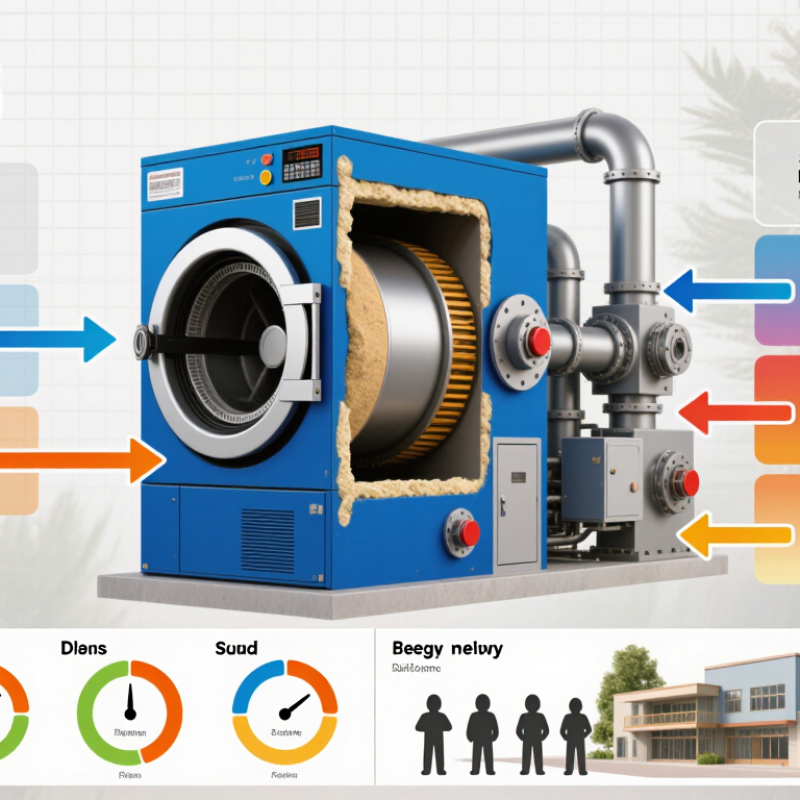
This guide examines practical selection factors used by plant operators and process engineers. It considers inlet moisture, required outlet moisture, residence time, airflow, drum diameter, lifting flights, insulation, and control accuracy. Energy consumption also deserves close attention. A well-designed system should recover useful heat, limit dust emissions, and maintain stable temperatures during changing feed conditions. Ask for test data using your actual material. Laboratory results can look impressive, yet full-scale performance may differ.

Safety and maintenance should influence the decision as much as capacity. Inspect access doors, bearing protection, temperature sensors, emergency stops, and cleaning points before signing an order. Reliable suppliers should explain service intervals, spare-part availability, installation requirements, and expected operating limits. Independent references are valuable, especially from facilities with similar feedstock and climate conditions.

No selection is flawless. Real materials vary. Feed rates fluctuate, and operators make mistakes. A careful buyer allows room for these realities instead of trusting a perfect specification sheet. By comparing measurable performance with long-term operating needs, you can choose a rotary dryer machine that supports dependable production, manageable energy costs, and safer daily work in 2026.

How to Choose a Rotary Dryer Machine in 2026?

Understanding Rotary Dryer Types and Operating Principles

Choosing a rotary dryer in 2026 starts with understanding its drying type, not its advertised capacity. A direct rotary dryer lets hot gas contact the material inside a rotating shell. Flights lift and shower solids through the gas stream, creating repeated exposure. This design suits minerals, aggregates, biomass, and other heat-tolerant feedstocks. An indirect dryer transfers heat through the shell wall, keeping combustion gases separate from the product. It can protect sensitive powders, but usually demands tighter temperature control and more complex maintenance. Countercurrent flow gives the driest product, while cocurrent flow offers gentler initial heating. That difference matters.

The operating principle is simple. Not always. Heat moves into wet particles, moisture reaches their surfaces, and vapor leaves with the exhaust air. Drum speed, slope, airflow, residence time, and flight shape control this sequence. I would measure feed moisture at several points because one sample can hide serious variation. Particle size also changes everything. Fine material may carry over with exhaust gas, while coarse material may need longer residence time. Ask for tests using your actual feed, target moisture, and expected throughput. A calculation based only on nominal capacity is risky. I have seen efficient settings produce uneven moisture when operators ignored seasonal feed changes. That lesson is easy to miss. Choose sensors, dust collection, insulation, and access panels as carefully as the drum itself.

Identifying Material Properties and Drying Requirements

How to Choose a Rotary Dryer Machine in 2026?

Identifying Material Properties and Drying Requirements

A rotary dryer should be selected from the material outward, not from capacity alone. Record feed moisture, target moisture, particle size, bulk density, stickiness, and heat sensitivity. Wet clay behaves differently from coarse mineral granules. Fine particles may travel with exhaust gas. Sticky material can form rings inside the drum. Measure these properties across several production days, because one laboratory sample can hide seasonal variation.

Small details matter.

Define the drying duty in operating terms. Note hourly feed rate, starting and final moisture, heat source, inlet temperature, outlet temperature, and required residence time. Ask whether the product may darken, fracture, oxidize, or lose active compounds. A lower outlet temperature may protect quality, but it can increase drum length or airflow. Calculate that trade-off instead of guessing. During practical trials, inspect discharge texture, dust levels, and temperature readings every hour.

A common field lesson is that capacity estimates often use ideal moisture data. The dryer may then struggle during rainy weeks. This is an uncomfortable lesson. Include a safety margin, but do not hide poor measurements behind an oversized machine. Request a controlled test with representative feed. Compare fuel use, final moisture variation, and cleaning time. Check airflow control, insulation, access doors, and dust separation. During commissioning, record performance during both wet and dry shifts.

Calculating Capacity, Heat Demand, and Residence Time

How to Choose a Rotary Dryer Machine in 2026?

Calculating Capacity, Heat Demand, and Residence Time

Choosing a rotary dryer starts with the material, not the machine shell. Record wet feed rate, initial moisture, target moisture, bulk density, and particle size. A small change in moisture can increase the required evaporation load sharply. Calculate water removal as feed rate multiplied by the moisture difference on a consistent basis. Wet basis and dry basis are not interchangeable.

Heat demand includes water evaporation, material heating, and dryer losses. A practical estimate uses evaporation energy near 2,300 kJ per kilogram of removed water, then adds sensible heat and a safety allowance. Check the exhaust temperature carefully. It may reveal excessive heat loss. However, a generous allowance can hide poor insulation or weak airflow control. That is not efficient sizing.

Residence time depends on drum length, diameter, slope, rotation speed, airflow, and material filling. Use pilot testing when the material is sticky, fragile, or irregularly sized. Observe whether particles leave with uneven moisture. They often do. A longer drum is not always the answer. Internal flights may improve lifting, but aggressive flights can create dust and breakage. In field evaluations, measured discharge moisture should guide final selection, while calculated capacity remains a starting point, not a promise.

Comparing Energy Sources, Controls, and Safety Features

How to Choose a Rotary Dryer Machine in 2026?

When comparing rotary dryers, begin with the heat source, not the advertised capacity. Gas systems often provide strong heat and fast temperature changes. Electric heating offers cleaner operation and precise adjustment, but power costs may rise during long shifts. Steam can work well where a reliable boiler system already exists. Biomass may reduce fuel expenses, although moisture variation can make control difficult. Measure actual feed moisture, discharge moisture, airflow, and hourly energy use before deciding. Estimates alone can mislead.

Controls directly affect product quality and operating costs. A practical system should monitor inlet temperature, outlet temperature, drum speed, airflow, and material residence time. Variable-speed drives help operators respond to changing feed conditions. Automatic moisture feedback is useful, but sensors need regular cleaning and calibration. I once trusted a stable temperature reading too quickly; the material was still leaving unevenly. That mistake changed my inspection routine.

Safety deserves equal attention. Look for guarded rotating parts, emergency-stop switches, high-temperature cutoffs, and alarms for blocked airflow. Dust collection, proper grounding, and controlled access reduce fire and injury risks. Interlocks should prevent the drum or burner from starting when critical guards are open. Keep inspection doors visible and easy to reach. Small details matter. Review maintenance records, test shutdown functions, and ask for documented operating limits before purchase. A dryer that saves energy but complicates safe servicing may create higher costs later.

How to Choose a Rotary Dryer Machine in 2026? - Comparing Energy Sources, Controls, and Safety Features

Energy Source Typical Dryer Configuration Main Advantages Main Limitations Emissions and Environmental Considerations Recommended Control Functions Important Safety Features Best-Fit Applications
Natural Gas Direct or indirect hot-air rotary dryer with a gas-fired burner and combustion chamber. High heat output, fast temperature response, continuous operation, and broad industrial availability. Requires a reliable gas supply, burner maintenance, combustion-air management, and suitable exhaust treatment. Produces carbon dioxide and combustion gases. Nitrogen oxide emissions depend on burner design, operating temperature, and air settings. PID temperature control, burner modulation, combustion-air control, exhaust-temperature monitoring, drum-speed control, and variable-frequency drive control. Flame failure detection, automatic fuel shutoff, high-temperature cutoff, gas-pressure monitoring, emergency stop, interlocked access doors, and exhaust monitoring. Minerals, aggregates, sand, fertilizers, biomass, chemicals, and other high-throughput materials.
Diesel or Light Fuel Oil Direct-fired rotary dryer using a liquid-fuel burner and combustion chamber. Suitable where gas infrastructure is unavailable and capable of delivering high thermal output. Fuel storage is required; fuel handling, filtration, burner cleaning, and spill prevention add operating requirements. Produces carbon dioxide, nitrogen oxides, particulate matter, and other combustion products; local air-quality requirements may apply. PID temperature control, fuel-flow regulation, burner sequencing, combustion-air control, drum-speed control, and exhaust-temperature alarms. Flame monitoring, automatic fuel shutoff, fuel-leak detection, bunded storage, high-temperature protection, emergency stop, and fire suppression provisions. Remote or mobile installations, aggregate processing, mineral processing, and facilities without natural-gas access.
Biomass Fuel Hot-air generator, furnace, or boiler supplied by wood chips, pellets, shells, or other suitable biomass fuels. Can use locally available renewable residues and may reduce dependence on fossil fuels when fuel is sustainably sourced. Fuel moisture and particle size affect heat output; storage, feeding, ash removal, and combustion control are necessary. Biogenic carbon accounting depends on fuel origin. Particulate emissions, ash, carbon monoxide, and nitrogen oxides require appropriate control. Fuel-feed control, furnace-temperature control, oxygen monitoring, fan-speed control, moisture feedback, and automatic ash-management alarms. Backfire protection, spark detection, fire dampers, over-temperature shutdown, dust-control measures, guarded fuel conveyors, and emergency stop systems. Agricultural products, wood residues, biomass pellets, animal-feed ingredients, and sites with consistent biomass availability.
Electric Resistance Heating Indirect or recirculating hot-air rotary dryer with electric heating elements. Precise temperature control, clean point-of-use operation, quiet operation, and no on-site combustion gases. High electrical demand can increase operating cost where electricity prices are high; electrical capacity may need upgrading. No direct combustion emissions at the dryer. Overall emissions depend on how the electricity is generated. Multi-stage PID control, solid-state power control, airflow regulation, drum-speed control, product-temperature feedback, and automatic power reduction. Over-temperature protection, heating-element interlocks, airflow-loss shutdown, electrical isolation, ground-fault protection, guarded terminals, and emergency stop. Food ingredients, pharmaceuticals, chemicals, laboratory-scale production, and processes requiring clean and precise heating.
Steam Indirect rotary dryer with steam tubes, coils, or a steam-heated air system. No combustion inside the dryer, good temperature uniformity, and useful integration with an existing steam system. Needs a boiler, condensate-return system, steam piping, pressure control, and protection against tube or coil corrosion. The dryer has no direct combustion emissions; emissions are associated mainly with steam generation and boiler fuel. Steam-pressure control, modulating control valves, condensate monitoring, outlet-moisture feedback, drum-speed control, and airflow control. Pressure relief valves, low-water boiler protection, steam isolation valves, condensate drainage, insulated hot surfaces, and high-temperature shutdown. Food, chemicals, minerals, and plants that already operate a reliable steam-generation system.
Waste Heat or Recovered Heat Indirect or air-heating rotary dryer connected to an engine, furnace, kiln, compressor, or other waste-heat source. Can lower additional fuel consumption and use heat that would otherwise be rejected. Heat availability may vary with upstream production; additional heat exchangers, bypasses, and backup heating may be needed. May reduce site-wide energy use, but the source process still determines the original emissions profile. Cascade control, inlet-temperature control, bypass dampers, heat-exchanger monitoring, airflow control, moisture feedback, and backup-heater sequencing. Source-process interlocks, high-temperature cutoff, heat-exchanger leak monitoring, isolation dampers, pressure monitoring, and emergency stop. Continuous plants with stable upstream heat sources, including mineral, chemical, cement-related, and industrial-processing operations.
Selection checklist: Compare the total cost of ownership rather than fuel price alone. Evaluate available energy infrastructure, required production capacity, feed-material moisture, target final moisture, allowable product temperature, emissions obligations, automation requirements, maintenance resources, and the availability of spare parts and trained operators.

Evaluating Installation Costs, Maintenance, and Supplier Support

How to Choose a Rotary Dryer Machine in 2026?

Evaluating Installation Costs, Maintenance, and Supplier Support

A rotary dryer can look affordable until installation begins. Measure foundation strength, electrical capacity, duct routes, and feed-system space before requesting final quotations. In recent plant assessments, civil work and exhaust modifications often changed the original budget. A clear layout prevents expensive surprises. Do not trust a capacity figure without checking material moisture, particle size, and inlet temperature. These details directly affect fuel use and drying time.

Maintenance should influence the purchase more than appearance. Inspect access doors, bearing locations, drum alignment points, and lubrication routes. Ask how quickly common parts can arrive in your region. A well-designed machine allows technicians to replace seals without dismantling half the system. Keep a written schedule for inspections, cleaning, vibration checks, and temperature readings. Small warning signs matter. We once underestimated dust buildup around an outlet, and production efficiency dropped noticeably. That mistake showed the value of routine housekeeping.

Supplier support deserves practical testing. Request installation drawings, commissioning procedures, operator training, and a spare-parts list before signing. Confirm who answers technical calls after normal working hours. Reliable suppliers provide measurable service terms, not vague promises. Ask for references from facilities processing similar materials. However, references can be selective. Review maintenance records and speak with operators directly when possible. A slightly higher purchase price may be reasonable if training, documentation, and troubleshooting support reduce downtime. Cost comparisons should include labor, energy, replacement parts, and lost production over several years.

We value your privacy.

By using this site you agree to the use of cookies by the company in accordance with the Privacy Policy

Have a questions or want to know more about our company? We'll be expecting you.