Top Metal Laser Machine Applications and Benefits for Various Industries?
The metal laser machine has revolutionized various industries with its precision and efficiency. This technology enables the cutting, engraving, and marking of metal with remarkable accuracy. Businesses in sectors like automotive, aerospace, and manufacturing benefit greatly from these machines.
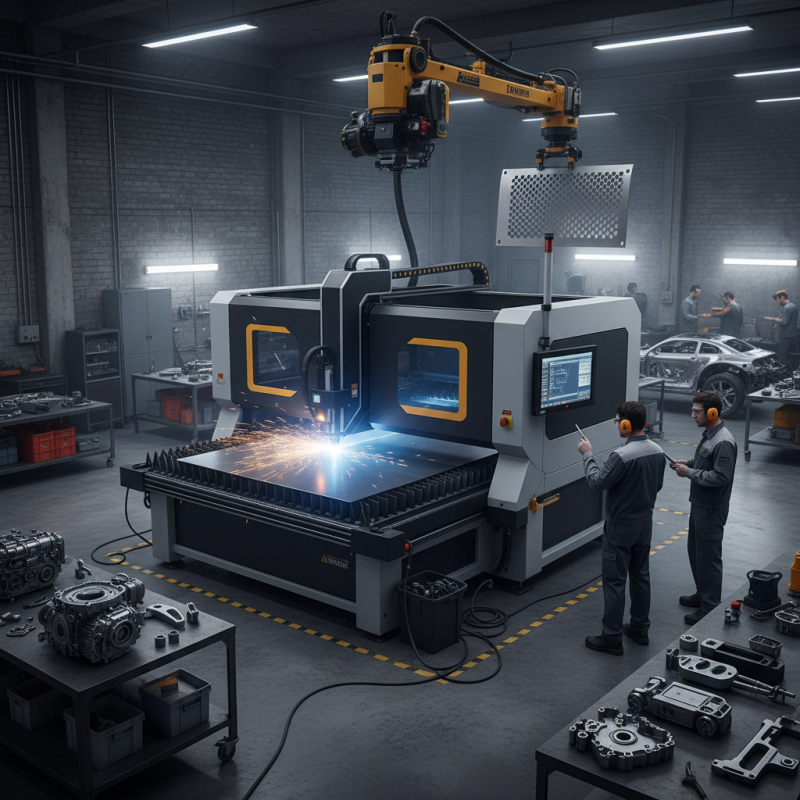
Imagine an automotive workshop where metal parts are processed with swift precision. A metal laser machine can easily cut through thick steel or aluminum, ensuring optimal fit for assembly. However, with great power comes responsibility. Operators need to ensure safety measures are in place, as high-powered lasers can pose risks.
Furthermore, while metal laser machines enhance production, they also require maintenance and skillful handling. Training staff in operating these machines is crucial. Issues such as energy consumption and initial costs can also be concerning for small businesses. The balance between innovation and practical challenges makes it essential to evaluate all aspects before adopting this technology.
Overview of Metal Laser Machines and Their Functionality
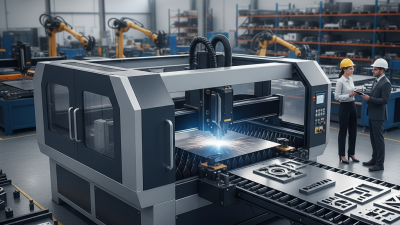
Metal laser machines are revolutionary tools in manufacturing. They utilize high-powered lasers to cut, engrave, or mark metal surfaces with precision. The laser beam is directed through optics to create an intense focal point. This capability allows for intricate designs and shapes that traditional methods struggle to achieve. The machines can handle various materials, including steel, aluminum, and copper.
The functionality of metal laser machines is impressive. They can operate in different thicknesses for various types of metals. This versatility is beneficial for many industries, from automotive to aerospace. A high-speed operation means that projects can be completed faster, reducing lead times. However, not all machines are created equal. The setup process can be complex and requires skilled operators.
While these machines offer numerous advantages, there are challenges. The initial investment for laser technology can be daunting. Regular maintenance is vital to ensure longevity. There is also a learning curve for employees unfamiliar with laser systems. Balancing these factors is crucial for a successful implementation in any manufacturing setting.
Top Metal Laser Machine Applications and Benefits for Various Industries
| Industry |
Application |
Benefits |
| Automotive |
Cutting and engraving of body parts |
High precision, reduced waste |
| Aerospace |
Fabrication of complex components |
Enhanced design flexibility, weight reduction |
| Medical |
Manufacturing surgical instruments |
High hygiene standards, precise manufacturing |
| Construction |
Structural steel processing |
Increased efficiency, time-saving |
| Energy |
Fabrication of energy components |
Sustainability, lower costs |
| Electronics |
Creating circuit boards |
Accuracy, reduced assembly time |
| Art and Design |
Custom metal signage and sculptures |
Unique designs, improved aesthetics |
Key Applications of Metal Laser Machines Across Different Industries
Metal laser machines have become essential across various industries due to their precision and efficiency. In the automotive sector, for instance, laser cutting technology allows for high-speed fabrication of parts with tight tolerances. According to a report from MarketsandMarkets, the automotive segment is projected to account for over 35% of the laser cutting market by 2025. This growth reflects the increasing demand for lightweight, high-performance materials and components.
In aerospace, laser systems are used for intricate designs and structures. They enhance productivity by reducing material waste. The global aerospace industry is expected to reach $800 billion by 2028, partly driven by advancements in laser technology. However, the intricacies of metal laser machines can pose challenges. Operators must have specialized training to optimize the machines, which can lead to downtime if issues arise.
The medical device industry also benefits significantly. Laser cutting allows for the creation of complex shapes that traditional methods struggle to achieve. A report from Grand View Research highlights that the surgical instruments market is projected to expand at a CAGR of 5.2% until 2027, driven by innovations in laser processing. Yet, the integration of this technology might require significant upfront investment, leading to financial hesitation for some manufacturers.
Benefits of Using Metal Laser Machines in Manufacturing Processes
Metal laser machines have transformed manufacturing processes across industries. They offer precision cutting and engraving capabilities. These machines utilize focused laser beams to achieve intricate designs on various metals. This technology is beneficial for sectors like aerospace, automotive, and medical device manufacturing. Being highly accurate, these machines reduce material waste significantly.
In addition to precision, metal laser machines provide versatility. They can easily switch between different metal types, accommodating diverse project needs. This flexibility is critical for manufacturers who must adapt quickly. However, the initial investment in laser technology can be daunting. Companies must weigh the long-term benefits against upfront costs.
Moreover, the maintenance of these machines requires skilled technicians. Downtime due to repairs can disrupt production schedules. Yet, the advantages often outweigh the challenges. Enhanced efficiency and output can lead to greater profitability over time. Each application demonstrates the influence of laser technology in modern manufacturing. It's a journey worth considering for the future of production.
Comparative Analysis: Metal Laser Machines vs. Traditional Methods
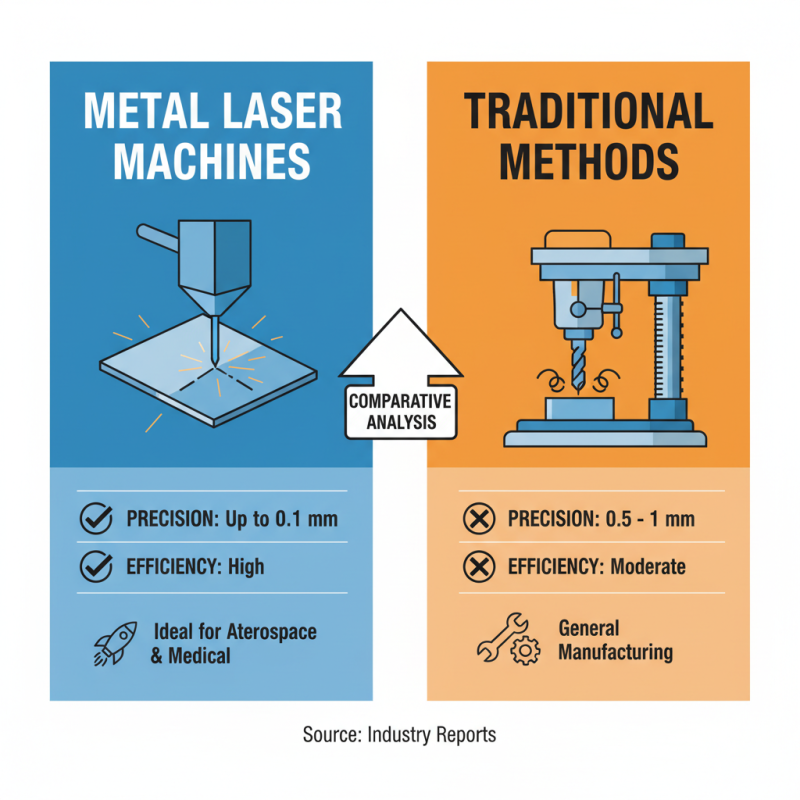
When comparing metal laser machines to traditional machining methods, several critical differences emerge. Laser machines are known for their precision and efficiency. Reports suggest that laser cutting accuracy can reach up to 0.1 mm, whereas traditional methods often range from 0.5 mm to 1 mm. This precision shift allows for intricate designs that are increasingly important in aerospace and medical industries.
The speed of operation is another area where laser machines excel. According to industry data, laser cutting can complete projects up to 50% faster than conventional processes. This efficiency reduces labor costs and improves productivity levels. However, laser machines require significant upfront investment, which could be a barrier for small manufacturers.
Furthermore, the flexibility of laser machines allows them to handle diverse materials, including metals, plastics, and composites. Many can switch between cutting, engraving, and drilling tasks easily. Traditional methods, such as milling, may struggle with versatility. Yet, laser technology might not suit every application, particularly for thicker materials over 20 mm. This limitation raises questions about the best choice for specific projects.
Future Trends in Metal Laser Technology and Industry Adaptation
The landscape of metal laser technology is rapidly evolving. Industries are watching these trends closely. The integration of AI with metal laser systems is one significant development. This allows for real-time adjustments during the cutting process. It improves precision and reduces waste, making operations more efficient.
Another trend is the increase in automation within laser cutting systems. Companies are seeking to minimize human intervention. This shift raises questions about workforce dynamics and training needs. While automation can speed up processes, it might lead to skill gaps. Furthermore, there's a growing interest in sustainability. Laser technology uses less energy and produces minimal waste compared to traditional methods.
As industries adapt, they must confront challenges. Upgrading existing machines can be costly. Not all facilities can afford the latest technology. Additionally, keeping up with rapid advancements is daunting. Will companies prioritize innovation over stability? The balance between adopting new technologies and maintaining efficiency is crucial.
Top Metal Laser Machine Applications and Benefits