By using this site you agree to the use of cookies by the company in accordance with the Privacy Policy
Residential Lighting is the planned use of light inside homes for safety, comfort, and visual appeal. It includes ceiling fixtures, wall sconces, table lamps, under-cabinet strips, and smart controls. Each element serves a different purpose. A kitchen needs clear task lighting near worktops. A bedroom usually benefits from softer, warmer illumination. Hallways require even light that reduces shadows and trip risks.
The system begins at the electrical supply, where circuits deliver power to switches, dimmers, and fixtures. The fixture then converts electricity into visible light, often through energy-efficient LED technology. Brightness is measured in lumens, while color temperature describes whether light looks warm or cool. Good design combines ambient, task, and accent lighting instead of relying on one harsh ceiling lamp. Small changes matter. A dimmer can make a dining room feel calmer within seconds.
In practical projects, I have found that glare is often overlooked. A beautiful pendant may still shine directly into someone’s eyes. Placement, beam angle, surface color, and bulb quality all influence the result. Smart lighting can improve convenience, but it may also create compatibility problems between devices. That detail deserves attention.
Professional installation should follow local electrical codes and manufacturer instructions. A licensed electrician can assess wiring, load capacity, grounding, and moisture exposure. Residential Lighting is not simply decoration; it is a coordinated system involving technology, architecture, and human behavior. Even experienced planners make mistakes. Testing each scene at night remains one of the most reliable ways to refine the final design.
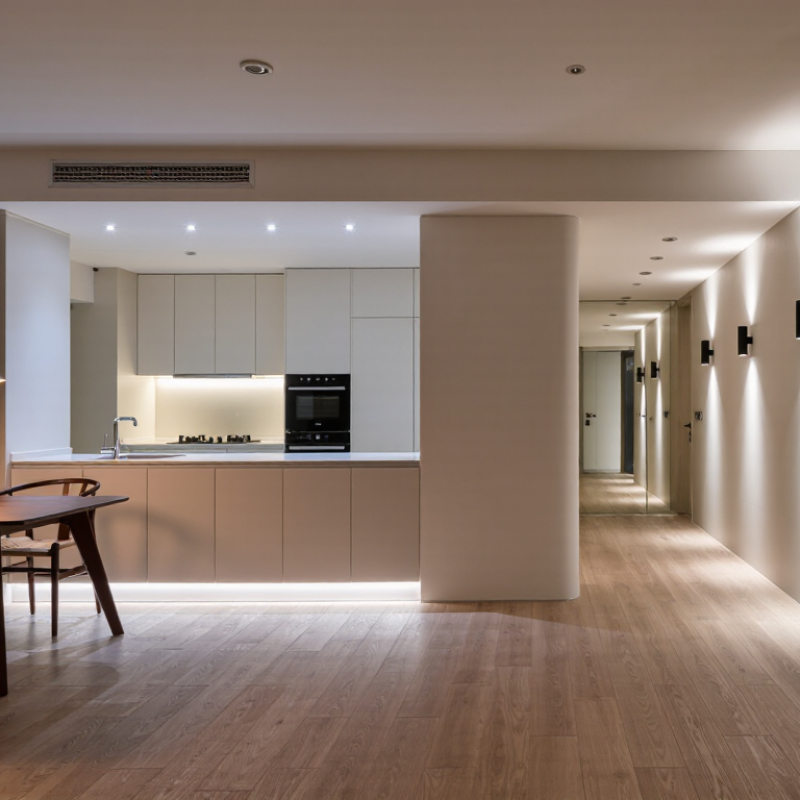
Residential lighting is the planned use of electric or daylight sources inside a home. Its purpose is practical: helping people see, move safely, read, cook, and recognize surfaces. It also influences comfort, privacy, and sleep routines. A ceiling fixture, wall sconce, cabinet strip, or table lamp serves different visual tasks. The system works through a power source, wiring, controls, and a light source. Dimmers and occupancy sensors adjust output. Good design starts with the room, not the bulb.
The U.S. Department of Energy reports that LED lamps use at least 75% less energy and last up to 25 times longer than incandescent lamps (DOE Energy Saver, 2024).
The International Energy Agency estimates that lighting represents about 15% of global electricity use (IEA, Lighting Analysis, 2024).
This matters in homes where lights operate daily, especially in kitchens and hallways. Residential demand is only part of that figure, but it shows why efficient sources matter. In practice, replacing a lamp is not enough. Beam angle, color temperature, glare, and placement can change the result.
A 3,000-kelvin lamp may feel warm in a bedroom, while a cooler source can support detailed work. However, these labels are imperfect guides. A bright room can still have shadows beneath cabinets. Sensors may switch off when someone sits quietly.
Designers should check illuminance, contrast, and user behavior, then revise the plan after real use. Residential lighting remains both an electrical system and a human-centered environmental tool.
Residential lighting combines several layers, each serving a different purpose. Ambient lighting provides general visibility throughout a room. Ceiling fixtures, recessed lights, and wall-mounted fixtures often create this base layer. In practical planning, even illumination reduces glare and supports safer movement. However, excessive brightness can make a living room feel cold.
Task lighting directs light toward activities requiring accuracy. Under-cabinet lights help with food preparation, while desk lamps support reading and computer work. Bathroom mirrors need even light from both sides to reduce facial shadows. A small mistake matters here. One overhead fixture may leave hands or faces poorly lit.
Accent lighting highlights architectural details or valued objects. Adjustable spotlights can draw attention to artwork, shelving, or textured walls. Decorative lighting, including pendant and table lamps, adds character and visual warmth. Warmer light suits bedrooms, while neutral white light can support concentration in kitchens or studies. Dimmers let residents adjust brightness without replacing fixtures. Smart controls add convenience, but reliable switches remain useful during network or power problems. Room size, ceiling height, surface colors, and personal habits all affect performance. Dark flooring can absorb more light than expected. I underestimated that once, and the room needed extra fixtures. A brief evening test would have prevented the decision. Proper installation and suitable wiring remain essential, especially when circuits are modified.
Residential lighting systems work through a simple chain: power, controls, wiring, and fixtures. Electricity travels from the service panel through dedicated circuits. A wall switch then opens or closes that circuit. The fixture receives power and produces light.
Modern systems often use LED lamps because they consume less energy and generate less heat. Dimmers adjust brightness by controlling electrical output. Motion sensors can activate hallway lights when someone enters. Timers and smart controls add scheduling, but they also depend on correct installation and stable connections.
Behind a ceiling fixture, several wires meet inside an electrical box. The live wire carries power, while the neutral wire completes the circuit. A grounding wire helps reduce shock risk during faults. Poor connections may cause flickering, buzzing, or warm switches. These signs should not be ignored.
In my experience, lighting problems often look more complicated than they are. A loose connection can imitate a failing fixture. However, diagnosing live wiring without proper training is unsafe. Qualified electricians test circuits, inspect load limits, and follow local electrical codes. They also check whether older wiring can support new controls.
Lighting design is not only about brightness. A kitchen may need clear task lighting over a counter, while a bedroom benefits from softer, indirect light. Glare, shadows, and switch placement affect daily comfort. Even careful planning can miss something. Furniture moves, routines change, and a perfect layout rarely stays perfect.
| Lighting Dimension | How It Works | Typical Residential Application | Common Technical Data | Design Considerations |
|---|---|---|---|---|
| Ambient Lighting | Provides the general level of illumination needed to move through and use a room safely. | Ceiling fixtures, recessed downlights, flush mounts, and indirect cove lighting. | Usually designed as the room’s base illumination; output is commonly specified in lumens rather than watts. | Use even distribution and limit glare, especially in living rooms, bedrooms, and circulation areas. |
| Task Lighting | Directs additional light toward a specific activity or work surface. | Kitchen counters, desks, reading chairs, bathroom mirrors, and hobby areas. | Many residential tasks require approximately 300–500 lux on the working plane, depending on the activity and user needs. | Position the light to reduce shadows from the user’s head, hands, or nearby cabinets. |
| Accent Lighting | Uses focused or directional light to emphasize an object, architectural feature, or display. | Artwork, shelving, textured walls, fireplaces, plants, and cabinets. | Often uses adjustable spotlights or wall-washing fixtures with narrow or medium beam angles. | Shield the light source where possible to control glare and avoid reflections on glass or glossy surfaces. |
| Decorative Lighting | Acts as a visual design element while also contributing some illumination. | Pendant fixtures, chandeliers, wall sconces, and statement lamps. | Light output varies widely; decorative fixtures may provide ambient, task, or accent light depending on placement. | Check fixture scale, mounting height, heat management, and compatibility with the selected lamp or LED module. |
| Light Source | Converts electrical energy into visible light. Residential sources include LEDs, fluorescent lamps, and incandescent or halogen lamps. | General household fixtures, portable lamps, under-cabinet systems, and outdoor residential lighting. | LEDs generally offer high efficiency, long service life, instant starting, and dimming options when properly specified. | Confirm the source type, rated voltage, dimmer compatibility, heat limits, and replacement method. |
| Luminous Flux | Describes the total visible light emitted by a source or fixture. | Used to compare the amount of light produced by lamps and integrated fixtures. | Measured in lumens (lm). Higher lumens indicate more total visible light, but not necessarily better distribution. | Compare lumens together with beam spread, mounting height, room size, and surface reflectance. |
| Illuminance | Measures how much light reaches a surface used by occupants. | Evaluating kitchen worktops, desks, floors, stairs, and bathroom counters. | Measured in lux (lx), where 1 lux equals 1 lumen per square metre. | Uniformity matters: excessive differences between bright and dark areas can cause visual discomfort. |
| Color Temperature | Indicates whether the light appears warm, neutral, or cool. | Warm light for bedrooms and living rooms; neutral light for kitchens and bathrooms; cooler light for selected work areas. | Measured in kelvins (K). Typical residential choices include approximately 2700–3000 K for warm white and 3500–4000 K for neutral white. | Use consistent color temperature within connected spaces unless a deliberate transition is part of the design. |
| Color Rendering | Describes how accurately a light source reveals the colors of objects compared with a reference light source. | Important in kitchens, bathrooms, dressing areas, art displays, and rooms with colored finishes. | Color Rendering Index (CRI) is commonly used; CRI 80 or higher is a common residential baseline, while higher values can improve color appearance. | For strong red appearance, also consider the source’s R9 performance rather than relying only on the general CRI value. |
| Beam Angle | Defines how widely light spreads from a directional fixture. | Narrow beams for accenting; wider beams for general coverage and wall washing. | Narrow, medium, and wide beam categories are commonly used, although exact angle ranges vary by fixture design. | Select the beam angle according to ceiling height, target size, spacing, and desired overlap between fixtures. |
| Controls | Regulate when lights operate and how much light they produce. | Wall switches, dimmers, occupancy sensors, timers, daylight sensors, and connected control systems. | Dimming performance depends on the driver, control method, minimum load, wiring, and fixture compatibility. | Separate ambient, task, and accent circuits so each layer can be controlled independently. |
| Electrical Path | Delivers power from the household electrical system through switches, controls, drivers, and the light source. | All fixed residential lighting installations. | Many homes use nominal 120 V or 230 V alternating-current supply, depending on the country; LED fixtures may use an internal driver to regulate current. | Fixed wiring, circuit protection, grounding, and installation methods must follow applicable electrical codes. |
| Energy Performance | Indicates how efficiently a lighting system converts electrical power into useful light. | Comparing fixture operating cost and energy use over time. | Lighting efficacy is measured in lumens per watt (lm/W). Actual system performance includes the light source, driver, optics, and controls. | Use only the light output required for the task and combine efficient sources with occupancy or daylight controls where appropriate. |
| Heat Management | Moves heat away from the light source and electrical components to maintain performance and service life. | Recessed fixtures, enclosed luminaires, high-output lamps, and compact ceiling spaces. | LEDs produce less heat than incandescent sources for the same light output, but they still require adequate thermal management. | Do not exceed enclosure ratings or cover fixtures unless they are specifically approved for that installation condition. |
| Safety and Placement | Ensures lighting supports visibility while the equipment remains suitable for its environment. | Stairs, bathrooms, kitchens, entrances, bedrooms, and outdoor residential areas. | Fixtures may have location-specific ingress protection, damp-location, or wet-location ratings. | Keep switches accessible, illuminate changes in level, and use appropriately rated equipment in areas exposed to moisture. |
A home lighting system has four practical parts: light sources, fixtures, controls, and electrical distribution. Light sources include LEDs, compact fluorescents, and incandescent lamps. In the U.S. Department of Energy’s Residential Lighting End-Use Consumption Study, LEDs represented about 47% of installed residential lamps in 2020. This shift reflects better efficiency, longer service life, and lower heat output.
Fixtures shape and direct the light. A ceiling fitting spreads general illumination, while a recessed fitting creates a cleaner, narrower beam. Wall lights can reduce harsh shadows near mirrors or stairways.
Wiring, switches, junction boxes, and circuit protection deliver power safely. Dimmers and occupancy sensors add control, but compatibility matters. A dimmer may flicker or hum when paired with the wrong lamp.
Real homes are rarely textbook-perfect. Room color, ceiling height, and furniture also change perceived brightness.
Tips: Start with tasks, not decoration. Use brighter, focused light over kitchen counters and softer layers in living areas. The U.S. DOE reports that LEDs can use up to 75% less energy and last up to 25 times longer than incandescent lamps. Still, efficiency is not the whole decision. Check color temperature, beam angle, dimming performance, and replacement access. I sometimes over-light a room at first; testing one fixture overnight reveals more than a showroom impression.
Residential lighting shapes how people see, move, and feel inside a home. It combines daylight, fixtures, controls, and reflective surfaces. A practical design balances ambient, task, and accent lighting. Ambient light fills a room. Task lighting supports reading, cooking, grooming, or working. Accent lighting highlights artwork, shelving, or textured walls. In real homes, these layers overlap and sometimes behave unpredictably.
Room purpose strongly influences lighting choices. A kitchen needs clear light on worktops, while a bedroom usually benefits from softer, lower-level illumination. Room size, ceiling height, window placement, and daylight direction also matter. Pale walls reflect more light, while dark finishes absorb it. User needs are important too. Older residents or people with sensitive vision may require brighter, more evenly distributed light with reduced glare. Light color affects comfort; warmer tones often suit resting areas, while neutral tones can support detailed tasks. Color rendering also matters because poor-quality light can distort food, skin, and fabric colors.
Electrical safety requirements, heat management, and energy use should guide fixture selection. Dimmers and separate controls allow one room to serve several purposes. A plan can look precise on paper and still feel harsh. Testing light levels at different times is useful. Temporary lamps or sample fixtures reveal shadows that drawings miss. I have found that furniture placement can change the result significantly. A chair may block a reading light, or a glossy table may create distracting reflections. Small adjustments often matter more than adding another fixture.
By using this site you agree to the use of cookies by the company in accordance with the Privacy Policy
Have a questions or want to know more about our company? We'll be expecting you.