By using this site you agree to the use of cookies by the company in accordance with the Privacy Policy
China’s CNC machining sector serves industries that need repeatable parts, steady production, and close dimensional control. A Cnc Screw Machine can produce components such as pins, bushings, fittings, and threaded parts in efficient cycles. Yet machine capability alone does not guarantee reliable results. Tooling choices, material handling, inspection methods, and operator experience all shape the finished part.
This guide introduces ten Chinese manufacturers associated with CNC screw machining. It is intended as a practical starting point, not a certified ranking or factory audit. Company capabilities and product ranges can change, so buyers should confirm details directly. Ask about bar capacity, supported materials, tolerances, batch sizes, and inspection equipment. A clear drawing review can reveal more than a polished product page. Ask for sample parts, measurement reports, and details about how the supplier manages repeat orders. Small details matter.
Price is only one factor. A low quotation may exclude tooling, finishing, packaging, or freight. Not every shop fits. Compare response quality, production scope, and after-sales communication alongside cost. Also check whether the manufacturer can explain its process in terms your engineering team understands. That conversation may feel less impressive than a showroom tour, but it is often more useful. The list can help narrow your search; careful verification should guide the final decision.
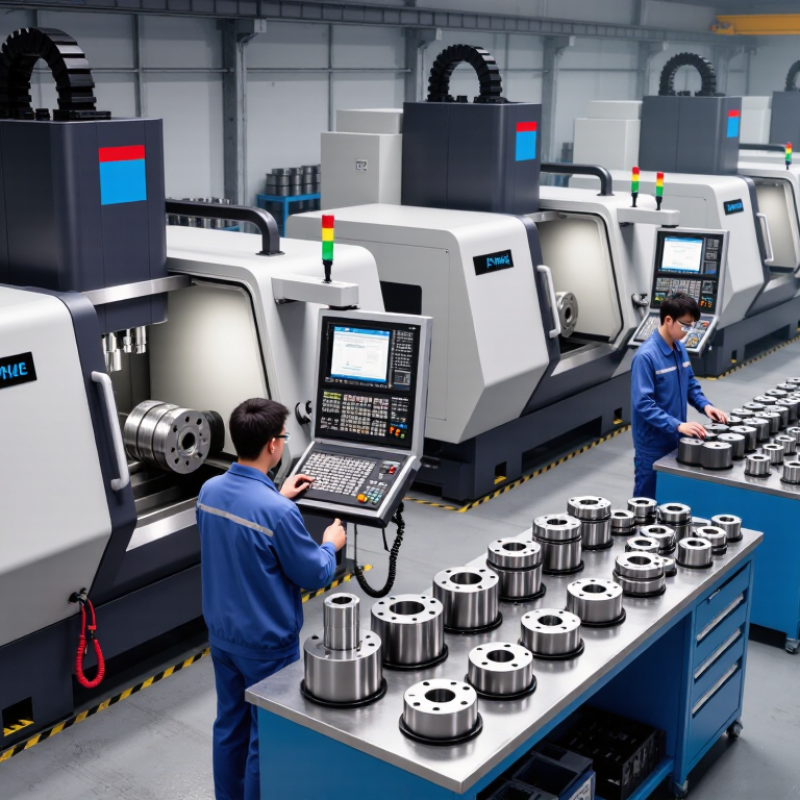
A CNC screw machine is an automatic turning system that makes repeated parts from rotating bar stock. Programmed tools cut the material while the spindle turns. A bar feeder advances fresh stock through the machine, reducing manual loading between cycles. The process suits components such as stainless-steel pins, brass sleeves, and small threaded fittings. Cycle time matters, but so do tool changes and chip control.
Swiss-type design places a guide bushing close to the cutting tools. This support helps limit deflection when machining long, slender parts. It can be valuable for narrow shafts with tight dimensional requirements. Not every part needs this layout. Short, wider components may run more economically on a conventional turning machine, depending on the operation and material.
The term “automatic” can sound simpler than the shop-floor reality. Setups still require suitable tooling, stable bar stock, and inspection during production. A practical supplier discussion should cover part drawings, material, tolerance, surface finish, and expected batch size. Ask how bar feeding is configured and how the machine handles chips. Spindle speed alone tells little.
One detail is easy to overlook: a machine may meet a tolerance during a trial, yet need process adjustments for consistent production. Judge capability through relevant samples and documented measurement methods.
A Swiss-type CNC screw machine’s bar capacity describes the stock diameter it can feed and machine, not the finished part’s maximum size. Typical configurations cover roughly 12–38 mm, but capacity varies by model and setup. Check the guide bushing, collet, and bar feeder together; one mismatch can cause vibration or poor support. Small details matter.
Spindle speed also needs context. Many machines offer maximum speeds around 6,000–10,000 rpm, while some configurations run faster. Maximum rpm alone is a weak comparison. Aluminum may benefit from higher cutting speeds, whereas tougher alloys often need lower speeds and adequate torque. Tool geometry, part length, and surface-finish requirements also shape the usable range. Ask for the speed-and-torque data, not only the headline figure. Then compare it with your actual bar diameter and material. A 20 mm part may run smoothly at one speed on a short setup, yet chatter on a long, slender component. That happens. Even well-chosen specifications can disappoint if the bar is inconsistent or the setup is rushed.
Illustrative Swiss-type machine specification benchmarks. Values are representative reference points, not a manufacturer ranking; actual specifications vary by model and configuration.
Bar capacity is shown in millimeters on the left axis; representative maximum spindle speed is shown in revolutions per minute on the right axis. Typical bar capacity spans approximately 12–38 mm, with spindle speeds commonly ranging from about 5,000 to 12,000 rpm across these reference classes.
China’s CNC screw machine manufacturers serve workshops producing precision parts in steady volumes. Their product ranges commonly include automatic lathes, multi-axis machines, bar feeders, and control systems. Some models suit compact components, such as brass fittings or stainless-steel pins. Others handle longer shafts and more complex machining cycles. Small details matter: spindle capacity, tool positions, and chip removal can affect daily output.
Across the market, manufacturers often focus on automotive components, electronics, medical instruments, and general engineering. Their machines may be designed for batch production, where repeatability and quick setup changes are important. A buyer should compare stated tolerances with sample-part results, not rely on brochure figures alone. Ask about service response, spare-part availability, and operator training. These vary by supplier and destination.
A catalog can look impressive, but it rarely tells the whole story. Factory visits or live machining demonstrations can reveal vibration, noise, and how easily operators access the work area. Request a clear specification sheet and a test cut using your material. Rankings also deserve caution: “top ten” may refer to output, export reach, or technical range, and those measures are not interchangeable. Even a capable machine may need adjustment before it fits a particular production line.
The table summarizes common CNC screw-machine product and market segments in China. The entries are anonymous segment profiles, not named companies or a verified ranking of individual manufacturers; actual capabilities vary by supplier.
| Profile | Machine Type | Typical Product Focus | Common Workpieces | Typical Market Focus |
|---|---|---|---|---|
| 1 | Swiss-type sliding-headstock CNC lathe | Long, slender precision turning with support close to the cutting area | Small shafts, pins, sleeves, and threaded components | Medical devices, electronics, instruments, and precision hardware |
| 2 | Fixed-headstock CNC turning machine | Bar-fed turning for parts suited to conventional chuck or collet holding | Bushings, connectors, fittings, and short turned parts | General engineering, fluid systems, electrical equipment, and hardware |
| 3 | CNC multi-spindle automatic lathe | Concurrent operations across multiple spindles for higher-volume production | Repeated small-to-medium turned components | Automotive supply chains, fasteners, appliances, and general production |
| 4 | Gang-tool CNC lathe | Compact turning layouts with tools arranged for short-cycle work | Small pins, spacers, bushings, and simple precision parts | Electronics, instrumentation, small hardware, and job shops |
| 5 | Bar-fed CNC turning center | Automatic feeding and repeatable production of turned parts from bar stock | Shafts, studs, threaded parts, and cylindrical fittings | Automotive components, machinery, construction hardware, and subcontract machining |
| 6 | CNC chucking lathe | Turning of individual blanks or pre-cut workpieces held in a chuck | Flanges, discs, knobs, and larger-diameter components | Machinery, pumps and valves, industrial equipment, and custom production |
| 7 | Micro-turning CNC machine | Fine-feature turning of small components, often with miniature tooling | Micro pins, miniature connectors, and small instrument parts | Medical instruments, optical equipment, electronics, and precision instruments |
| 8 | CNC mill-turn lathe | Turning combined with milling or drilling operations in one setup | Parts with cross-holes, flats, slots, or milled features | Aerospace supply chains, medical components, machinery, and precision subcontracting |
| 9 | High-volume CNC screw machine | Repeat production of standardized parts with automated part handling options | Fasteners, fittings, and recurring production components | Automotive, appliances, electrical hardware, and industrial components |
| 10 | Custom-configured CNC automatic lathe | Machine layouts and tooling selected for a specific part family or process | Application-specific turned parts and mixed-feature components | Contract manufacturers, specialized component makers, and custom production lines |
When comparing China’s CNC screw machine manufacturers, axis count is useful only when tied to the part geometry. A three-axis machine may suit straightforward turned components; extra axes can support cross-drilling or milling without repeated setups. More axes also mean more programming and validation. Small differences matter. Ask manufacturers for sample-part cycle times, tool-change details, and the actual operations completed in one clamping.
Positioning claims need test conditions. ISO 230-2:2014 specifies methods for measuring positioning accuracy and repeatability of numerically controlled axes. Request test results that identify axis travel, measurement method, and machine condition—not just a single accuracy figure. A spec sheet still leaves questions. For automation, check bar-feeder compatibility, workpiece transfer, chip handling, and recovery after a fault. The International Federation of Robotics reported 4,281,585 industrial robots operating worldwide in 2023, up 10% from 2022, in World Robotics 2024. That signals growing automation adoption, but it does not prove a particular machine cell will run unattended. Ask for a witnessed production trial using your material and tolerance requirements. And document the results.
When comparing China’s CNC screw machine manufacturers, start with the bar diameter your parts actually require. A machine’s maximum capacity matters, but so does its ability to feed your chosen material steadily. Ask for the supported diameter range, bar-feeder details, and examples using similar stock. A small mismatch can cause frequent changeovers or unstable feeding. That detail is easy to overlook.
Then define the dimensional requirements using the relevant ISO 286 tolerance grades. A tighter grade can demand more careful tooling, process control, and inspection, so confirm which dimensions need it. Share a drawing with tolerances and ask how the supplier measures critical features, such as a shaft diameter or shoulder. Request sample inspection data, not just a general statement of capability. Output figures need the same scrutiny: ask whether the quoted rate is a sustained production rate or a short trial result. Compare cycle time, setup assumptions, and expected scrap under your material and part geometry. I would not choose the fastest quotation automatically; a slower, repeatable process may suit a tight tolerance better. Verify the details with a production trial.
By using this site you agree to the use of cookies by the company in accordance with the Privacy Policy
Have a questions or want to know more about our company? We'll be expecting you.