en
Get in touch

What Are the 2026 Top Aeration Diffuser Types?

What Are the 2026 Top Aeration Diffuser Types?

Choosing the right Aeration Diffuser now requires more than comparing bubble size. Operators examine oxygen-transfer efficiency, fouling resistance, airflow stability, cleaning demands, and lifetime cost. A diffuser may perform beautifully in a laboratory tank, yet struggle beside a greasy industrial inflow. Conditions matter.

Dr. George Tchobanoglous, a respected wastewater-treatment authority, has stated, “Aeration is often the largest energy consumer in a wastewater treatment plant.” That observation still guides practical diffuser selection in 2026. Fine-bubble disc diffusers remain popular because they release small bubbles and provide strong oxygen transfer. Fine-bubble tube diffusers offer flexible layouts and useful coverage in long basins. Coarse-bubble diffusers produce larger bubbles, which can improve mixing and reduce clogging risks. Ceramic diffusers remain relevant where chemical resistance and durability matter, although their maintenance requirements deserve closer attention.

Performance is not only about efficiency.

A plant treating food-processing wastewater may need tougher membranes and easier cleaning access. A municipal basin may prioritize stable oxygen delivery, low blower demand, and predictable replacement cycles. Smart aeration controls are also changing diffuser design decisions. Sensors can adjust airflow, but poor diffuser placement can still waste energy.

No single type wins everywhere. That assumption can fail.

This guide examines the leading Aeration Diffuser types expected to shape 2026 projects. It compares their operating principles, strengths, weaknesses, and practical applications. The discussion also considers an uncomfortable reality: published efficiency figures may not match aging equipment, uneven air distribution, or neglected maintenance. Reliable selection begins with honest site data, not attractive specifications.

What Are the 2026 Top Aeration Diffuser Types?

What Aeration Diffusers Are and How They Work

What Are the 2026 Top Aeration Diffuser Types?

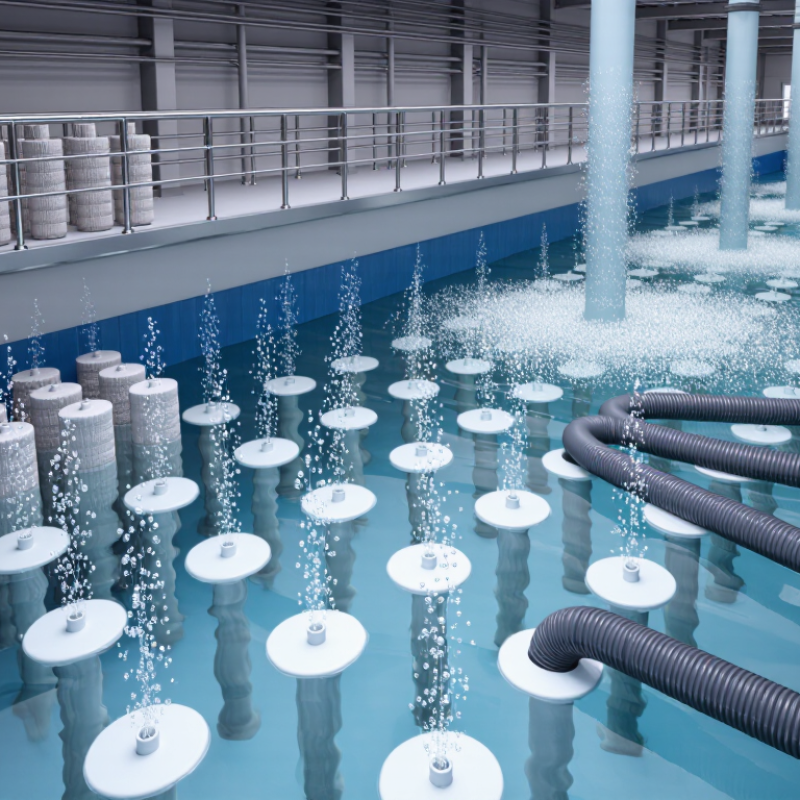
Aeration diffusers transfer oxygen into wastewater through small air bubbles. A blower sends air through a porous membrane or rigid element. The diffuser releases bubbles across the tank floor. Microorganisms then use dissolved oxygen to break down organic matter. Simple in theory.

Fine-bubble disc and tube diffusers remain strong choices for 2026 systems. Their smaller bubbles provide more surface area for oxygen transfer. The U.S. Environmental Protection Agency reports that fine-pore aeration can reduce energy demand compared with coarse-bubble systems. However, membranes can foul when grease, minerals, or biological solids collect on their surfaces. Performance may decline quietly.

Coarse-bubble diffusers produce larger bubbles and stronger mixing. They suit grit chambers, equalization tanks, and wastewater with heavier solids. They usually resist clogging better, though oxygen transfer is less efficient. The U.S. Department of Energy reports that aeration can consume 45% to 75% of a wastewater plant’s electricity. That figure makes diffuser selection an operating decision, not just an equipment choice. Variable-air systems, ceramic elements, and tubular membranes also deserve attention. Yet no diffuser works perfectly in every tank. Actual results depend on water depth, airflow, cleaning schedules, and diffuser spacing. Field testing still matters more than a catalogue rating.

Which Aeration Diffuser Types Lead the 2026 Market

What Are the 2026 Top Aeration Diffuser Types?

Which Aeration Diffuser Types Lead the 2026 Market

Fine-bubble membrane diffusers lead the 2026 aeration market, especially in municipal wastewater plants. Their small bubbles transfer oxygen efficiently and can reduce blower energy. Disc and tube designs remain the most common choices. Disc diffusers suit open basins, while tube diffusers support long lanes and easier layout changes. Flexible membranes also handle intermittent operation better than many rigid alternatives.

Coarse-bubble diffusers still matter. They provide stronger mixing in grit chambers, equalization tanks, and systems with heavy solids. Ceramic diffusers serve demanding environments, but their cleaning and replacement costs need careful review. Market leadership does not mean universal suitability. Basin depth, wastewater loading, fouling risk, and maintenance access can change the best choice.

Tips: Compare oxygen transfer under real operating conditions, not showroom airflow alone. Check membrane material, bubble distribution, pressure loss, and cleaning requirements. Watch the basin after installation. Uneven bubbling often reveals poor leveling, clogging, or incorrect air balancing.

Smart aeration controls are also influencing diffuser selection. Sensors and variable-speed blowers can match oxygen delivery with daily demand. However, automation cannot repair a poorly designed diffuser grid. That point is easy to underestimate. In practice, lifecycle energy use usually matters more than the initial equipment price. Still, field data can be incomplete, so operators should verify assumptions through airflow tests, dissolved oxygen readings, and routine inspections.

How Fine-Bubble and Coarse-Bubble Diffusers Compare

What Are the 2026 Top Aeration Diffuser Types?

How Fine-Bubble and Coarse-Bubble Diffusers Compare

Fine-bubble diffusers remain the efficiency leader for many municipal treatment plants. Their small pores create dense clouds of bubbles. More surface area usually means better oxygen transfer. The U.S. EPA reports that aeration can consume 45–75% of a wastewater plant’s electricity. That makes diffuser selection financially important. WEF Manual of Practice No. 8 identifies fine-pore systems as the stronger choice when oxygen efficiency is the main goal. Typical clean-water testing places fine-bubble standard oxygen transfer efficiency near 2–6% per meter of submergence, depending on design and operating conditions.

Coarse-bubble diffusers release larger bubbles through tubular, disc, or ceramic openings. They transfer less oxygen, but provide stronger mixing and better resistance to grease, solids, and uneven loading. Industry guidance commonly places their transfer efficiency near 1–3% per meter. In a grit chamber, equalization basin, or high-solids tank, that trade-off can be practical. WEF data also warns that fouling can reduce fine-bubble performance over time. A clean diffuser may look excellent on paper.

Field experience complicates the comparison. Fine pores need reliable air filtration and periodic cleaning. Coarse bubbles often use more blower power, yet they may maintain mixing with fewer maintenance interruptions. The 2026 choice should follow oxygen demand, tank depth, solids concentration, and cleaning access. I would not select fine bubble solely from laboratory SOTE. Real wastewater is less cooperative. Even diffuser spacing can change basin performance. Industry test reports should be checked against actual airflow, submergence, and fouling conditions.

What Are the 2026 Top Aeration Diffuser Types?

How Fine-Bubble and Coarse-Bubble Diffusers Compare

Fine-bubble diffusers typically produce smaller bubbles and higher oxygen transfer efficiency because they provide more gas–liquid contact area. Coarse-bubble diffusers generally transfer less oxygen per meter of water depth but offer stronger mixing and better resistance to fouling. The values shown are representative clean-water midpoints from commonly reported engineering ranges; actual performance varies with diffuser design, airflow, water quality, depth, and maintenance.

How to Choose the Best Diffuser for Each Aeration System

What Are the 2026 Top Aeration Diffuser Types?

How to Choose the Best Diffuser for Each Aeration System

Fine-bubble disc diffusers remain strong choices for municipal wastewater tanks. They release small bubbles and transfer oxygen efficiently. Fine bubbles suit deep basins with stable airflow and reliable air filtration. However, their narrow pores can collect grease, minerals, or biological growth. Coarse-bubble diffusers produce larger bubbles and stronger mixing. They work well in equalization tanks, grit chambers, and systems with heavy solids. Tube diffusers offer long aeration patterns, while ceramic diffusers can tolerate demanding conditions. Selection should follow actual water quality, not only catalogue oxygen ratings.

Tips: Check tank depth, airflow range, solids concentration, and cleaning access. Ask for oxygen-transfer data under similar wastewater conditions. A diffuser designed for clean water may perform poorly after installation. Also inspect the blower’s turndown range. Uneven airflow can damage membranes or create dead zones. Keep spare elements available before the first replacement is needed.

In practical system reviews, maintenance access often matters more than a small efficiency gain. Disc layouts are easier to zone and control, but tube layouts may simplify coverage in narrow tanks. Coarse bubbles can waste energy in deep treatment zones, yet they may prevent settling during peak loads. This trade-off deserves honest attention. A perfect diffuser does not exist. The best choice balances oxygen demand, fouling risk, cleaning labor, operating pressure, and future expansion. Pilot testing is wise when wastewater changes seasonally.

What Design and Maintenance Factors Affect Diffuser Performance

What Are the 2026 Top Aeration Diffuser Types?

Fine-bubble disc, tube, and panel diffusers remain strong choices for efficient oxygen transfer. Their small bubbles expose more surface area to water. However, bubble size is only part of performance. Diffuser material, pore structure, spacing, and tank depth also matter.

A dense layout can improve oxygen distribution, but it may increase pressure loss. Shallow tanks need careful selection because excessive airflow can waste energy. Coarse-bubble diffusers support mixing and resist some clogging risks. They may suit tanks with heavy solids or demanding cleaning conditions.

Design should match the wastewater, basin geometry, airflow range, and blower capacity.

Maintenance decides whether a diffuser keeps its original output. Organic films, mineral scale, and biological growth can block pores. I have seen airflow rise while oxygen transfer fell. That warning is easy to miss.

Operators should record pressure, airflow, dissolved oxygen, and energy use during normal operation. A gradual pressure increase often signals fouling. Cleaning methods must match the diffuser material and deposit type.

Harsh treatment can damage pores, even when the surface looks clean. Inspection should also check loose fittings, uneven bubbling, cracked supports, and dead zones. Performance assumptions sometimes fail in real tanks.

Tips: Keep baseline readings after installation. Compare zones, not only the total basin. Clean before blockage becomes severe. Confirm airflow with calibrated instruments. Review results after every major process change. Small records prevent expensive guesses.

We value your privacy.

By using this site you agree to the use of cookies by the company in accordance with the Privacy Policy

Have a questions or want to know more about our company? We'll be expecting you.