What Are the Top Hookah Diffuser Types?
A Hookah Diffuser is a small part with a noticeable effect on bubbling, sound, and airflow. Most designs attach to the lower end of the stem. They use openings to divide large bubbles into smaller ones. The result depends on hole size, placement, and fit. Small parts matter. Common options include fixed, removable, and adjustable diffusers, though product names are not always consistent. This guide compares their design and practical differences, rather than treating marketing labels as technical standards.
Health context matters, too. The CDC reports that one hookah session may expose a user to nearly nine times the carbon monoxide and 1.7 times the nicotine of one cigarette. These estimates can vary with session length and other conditions. The World Health Organization’s 2015 technical report also explains that water does not remove all harmful substances from smoke. A diffuser changes bubbling and draw; it should not be presented as a safety device. That distinction is easy to miss.
The sections ahead examine how fixed, removable, and adjustable types differ in compatibility, cleaning, materials, and airflow. A close look at the stem connection can prevent a poor fit. So can checking whether small openings are easy to clean. There is no single, widely accepted dataset ranking diffuser types by performance, so comparisons should be treated cautiously. A quieter bubbling sound may feel smoother, but it does not prove better filtration or reduced exposure. That is worth remembering.
What Is a Hookah Diffuser?
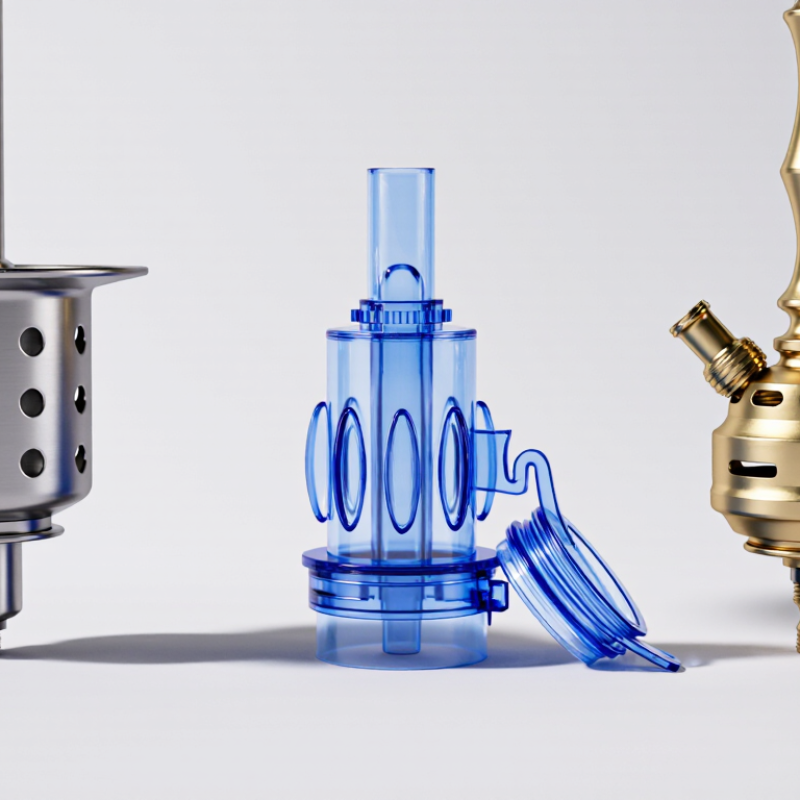
A hookah diffuser is a perforated piece fitted to the submerged end of the stem. It breaks one large stream of bubbles into many smaller ones. Common types include fixed multi-hole diffusers, removable snap-on models, and adjustable designs with openings that can be partly covered. Their main job is to change bubbling and airflow—not to clean smoke.
You can hear and feel the difference. Smaller bubbles often make bubbling quieter and the draw feel smoother, but tiny or clogged openings can make airflow tight. The World Health Organization’s 2015 Advisory Note on Waterpipe Tobacco Smoking reports that a one-hour session may involve inhaling 100–200 times the smoke volume of one cigarette. That comparison concerns volume, not equal toxin levels. A diffuser does not make smoke safe. I still think “smoother” can be misleading.
Tip: Check that the diffuser fits securely, then rinse its holes after use; residue can restrict airflow. Compare the draw at the same water level. If it feels unusually tight, clean the openings and check the fit.
How Does a Hookah Diffuser Work?
What Are the Top Hookah Diffuser Types?
How Does a Hookah Diffuser Work?
A hookah diffuser sits at the lower end of the downstem, where it meets the water. Small openings split one stream of air into many smaller bubbles. This can soften the bubbling sound and make each pull feel less forceful. More, smaller bubbles increase contact with water, while the diffuser helps airflow spread through the base. Not a safety device. It does not remove all smoke particles or make inhalation safe.
Common types include built-in perforated downstems, removable silicone sleeves, and threaded attachments. A built-in model fits its matching stem, while a sleeve is easy to install but may shift if loose. Threaded types offer a firmer connection, though sizes and thread patterns vary. Fit matters. Check that the diffuser stays submerged without blocking the stem opening. If airflow feels unusually tight, the holes may be clogged or the fit may be wrong. Rinsing helps, but tiny openings can still hold residue. Results vary with water depth and equipment, so quieter bubbling does not always mean a better draw. A little trial and error may be needed.
How Do Diffuser Designs Differ in Fit and Materials?
Hookah diffusers differ mainly in how they attach and spread water flow. Slip-on models fit over a stem end, while threaded or clipped versions need matching connections. Check the stem’s outer diameter and submerged length before buying; even a small mismatch can cause wobble or poor seating. Some designs are removable for cleaning. Others are built into the stem.
Material affects weight, upkeep, and resistance to wear. MatWeb engineering material records list polypropylene at roughly 0.90–0.91 g/cm³, 6061 aluminum at about 2.70 g/cm³, and 304 stainless steel near 8.0 g/cm³. These figures help explain why polymer diffusers feel light, while steel parts feel substantially heavier. Density alone does not prove strength or service life. That distinction matters.
For a home setup, inspect the edges and openings: sharp burrs can snag a cleaning brush, while narrow slots may collect residue. A loose slip-on part can shift during handling; a tight fit can be difficult to remove. There is no universal stem size, so measure the actual piece rather than relying on “standard” wording. I’d also recheck fit after cleaning; small parts are easy to misplace.
How Do You Choose a Diffuser for Your Hookah Setup?
A hookah diffuser changes how air moves through the water. Common types include perforated caps, slotted designs, and adjustable models that let you control how much of the downstem is covered. Perforated versions create many small bubbles, while wider slots usually produce fewer, larger ones. The difference can affect sound and draw, but it does not automatically improve the overall setup. Quiet bubbling is not the only goal.
Choose a diffuser that fits your downstem securely. Check its diameter and attachment style before buying; a loose fit can wobble, while a tight one may be difficult to remove. Then consider your preferred draw. More openings can make bubbling feel smoother, though the result also depends on water depth and hose resistance. Small details matter. If easy cleaning is important, look for a simple shape with openings you can rinse without a brush. Silicone models may fit several stem sizes, but flexibility does not guarantee a stable seal. I have found that advertised “smoother” performance can be hard to judge from descriptions alone. Compare the fit and airflow with your own setup, and be ready to adjust the water level slightly.
What Are the Top Hookah Diffuser Types?
Compare common diffuser designs by their typical features. Choose based on your preferred airflow and whether you want to remove the diffuser for cleaning.
A check means the feature is typical of that design, not guaranteed for every product. Before buying, confirm that the diffuser fits your downstem and can be removed if easy cleaning matters to you.


