
By using this site you agree to the use of cookies by the company in accordance with the Privacy Policy

Finding a dependable supplier for a Mobir Air Thermal Imaging Camera takes more than comparing prices. Thermal imaging can help maintenance teams spot unusual heat patterns in electrical panels, motors, and building systems. Yet camera performance depends on the application, operating conditions, and the quality of technical support. Details matter.
Suppliers worldwide may differ in product availability, delivery times, warranty terms, and access to service. Before choosing one, buyers should confirm the camera’s specifications against their needs, including temperature range, image resolution, measurement accuracy, and analysis software. Ask for current documentation and clear information about calibration, training, and after-sales assistance. A polished product page is useful, but it cannot answer every practical question.
This guide introduces factors to consider when comparing Mobir Air Thermal Imaging Camera suppliers across regions. It also explains how to assess product information, supplier experience, and support commitments without relying on broad claims alone. Some details may vary by configuration or market, so direct confirmation is sensible. That takes extra time. It can prevent costly mismatches later. A supplier that communicates clearly and provides verifiable technical details is often a stronger choice than one offering the lowest quote. Still, no single supplier will suit every buyer. The right decision depends on the inspection task, budget, and service requirements.
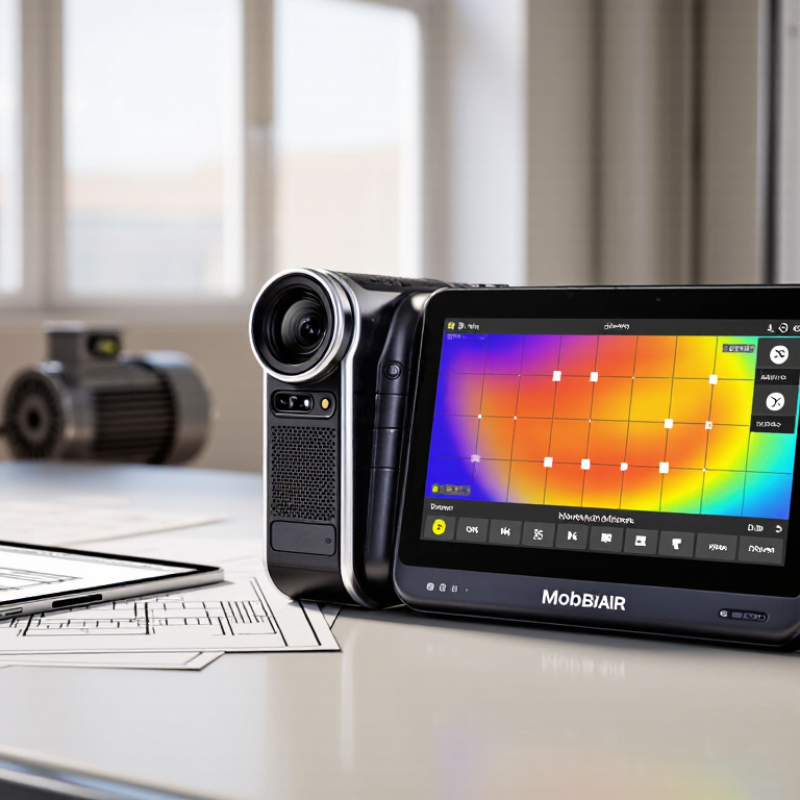
Understanding an air thermal imaging camera begins with what it measures: infrared energy from surfaces, converted into a visual temperature map. This can help locate a hot electrical connection, uneven insulation, or a warm bearing. It does not see through walls, and reflective metal may show surrounding heat instead of its own temperature. Readings also depend on detector resolution, lens field of view, focus, distance, and emissivity settings. Small details matter.
MarketsandMarkets’ 2023 Thermal Imaging Market report estimated the global market at US$4.4 billion in 2023, with a projected rise to US$6.3 billion by 2028. This growth reflects wider use across inspection, maintenance, and monitoring. Still, a larger market does not guarantee a camera suits every task. Compare thermal sensitivity and image resolution, then check whether the display and controls work well outdoors. A sharp-looking image can still hide measurement limits.
Tips: Let the camera adjust to the environment before measuring. Keep a steady distance, focus carefully, and compare readings with a known reference when possible. Treat unusual readings as clues, not proof; site conditions can mislead.
Supplier comparison framework: the specifications below are general selection references, not verified specifications or rankings for any particular supplier or product.
| Evaluation Dimension | Common Specification or Reference | Why It Matters | What to Verify with a Supplier |
|---|---|---|---|
| Thermal detector resolution | Common formats include 160 × 120, 256 × 192, 384 × 288, and 640 × 512 pixels. | More pixels can reveal smaller thermal details at the same distance, though lens and viewing distance also affect image detail. | Ask for the native detector resolution, not an interpolated or digitally enlarged image size. |
| Thermal sensitivity | NETD is commonly specified in millikelvin (mK); lower values indicate the ability to distinguish smaller temperature differences under stated test conditions. | Higher sensitivity can help show subtle temperature patterns, particularly when the scene has low thermal contrast. | Request the NETD value and the test conditions, including lens, temperature, and measurement method. |
| Spectral response | Many uncooled long-wave infrared cameras operate in approximately the 8–14 μm band. | The detector’s spectral band affects the radiation measured and suitability for different inspection environments. | Confirm the stated spectral range and whether the intended target material is suitable for infrared measurement. |
| Temperature measurement range | Ranges vary by camera model and may be divided into separate measurement bands. | The required range depends on whether the camera is used for building surveys, equipment inspections, or higher-temperature processes. | Check the calibrated range, accuracy across that range, and whether additional range settings are available. |
| Measurement accuracy | Manufacturers commonly express accuracy as a temperature deviation or as a percentage of the reading; the specified conditions differ by product. | A published accuracy figure is meaningful only when its reference conditions and operating limits are understood. | Request the accuracy specification, calibration information, and any ambient-temperature or target-temperature limitations. |
| Field of view and lens | Field of view depends on the lens and detector format; narrower lenses cover less scene area and can frame distant targets more closely. | Choosing the right lens helps ensure the target occupies enough pixels for useful inspection. | Confirm the lens focal length, field of view, focus method, and suitability for the working distance. |
| Image frequency | Thermal image frequency is stated in frames per second (Hz); available rates depend on the device and applicable market requirements. | Higher rates can make it easier to observe moving targets and changing thermal events. | Check the actual thermal frame rate, recording options, and any regional restrictions that apply. |
| Emissivity and reflected temperature | These are measurement settings used to account for a surface’s infrared emission and reflected surroundings. | Incorrect settings can lead to inaccurate surface temperature readings, especially on reflective materials. | Verify that the camera allows relevant measurement parameters to be set and documented. |
| Data export and analysis | Common workflow needs include radiometric image files, temperature points or areas, and report export. | Radiometric data can preserve temperature information for later analysis, while ordinary image exports may not. | Ask which file formats retain measurement data and whether analysis software or licenses are included. |
| Environmental protection | Ingress protection is described using IP ratings under IEC 60529; the required rating depends on the operating environment. | Protection against dust and water can be important for outdoor and industrial inspections. | Request the tested IP rating and check the permitted temperature, humidity, and storage conditions. |
| Quality and calibration documentation | ISO 18434-1 provides guidance for thermography in condition monitoring; calibration documentation should be checked for the specific instrument. | Documented procedures and traceable calibration support consistent inspection and reporting. | Ask for available calibration certificates, quality-system documentation, and the recommended calibration interval. |
| Supplier support and delivery | Support, lead time, warranty terms, training, and service coverage are supplier-specific rather than universal camera specifications. | After-sales support can affect device uptime and the long-term cost of ownership. | Compare written warranty terms, repair location, spare-part availability, training, and quoted delivery time. |
Have a questions or want to know more about our company? We'll be expecting you.
