Top 10 Photoelectric Sensors for Industrial Applications?
In industrial automation, Photoelectric Sensors play a crucial role in enhancing efficiency. Over the past years, the market for these sensors has expanded significantly. According to the Global Industrial Sensors Market Report published in 2021, the photoelectric sensor segment is projected to grow at a compound annual growth rate (CAGR) of 7.4% by 2028. This growth reflects the rising demand for advanced sensors in various applications.
Photoelectric Sensors are versatile devices used in factories, warehouses, and logistics. They provide non-contact detection of objects, improving safety and accuracy in operations. These sensors can detect different materials, including transparent and opaque items. However, the selection of the right sensor can be challenging. Factors like environmental conditions, mounting types, and sensing ranges require careful consideration. Despite advancements, some industries still struggle to implement these technologies effectively.
Many often overlook the importance of regular maintenance and calibration. Neglecting these aspects could lead to sensor failure, resulting in operational downtime. Thus, understanding the right applications and limitations of Photoelectric Sensors is essential for maximizing their benefits. In this context, we will explore the top ten photoelectric sensors suitable for various industrial applications, helping professionals make informed decisions.
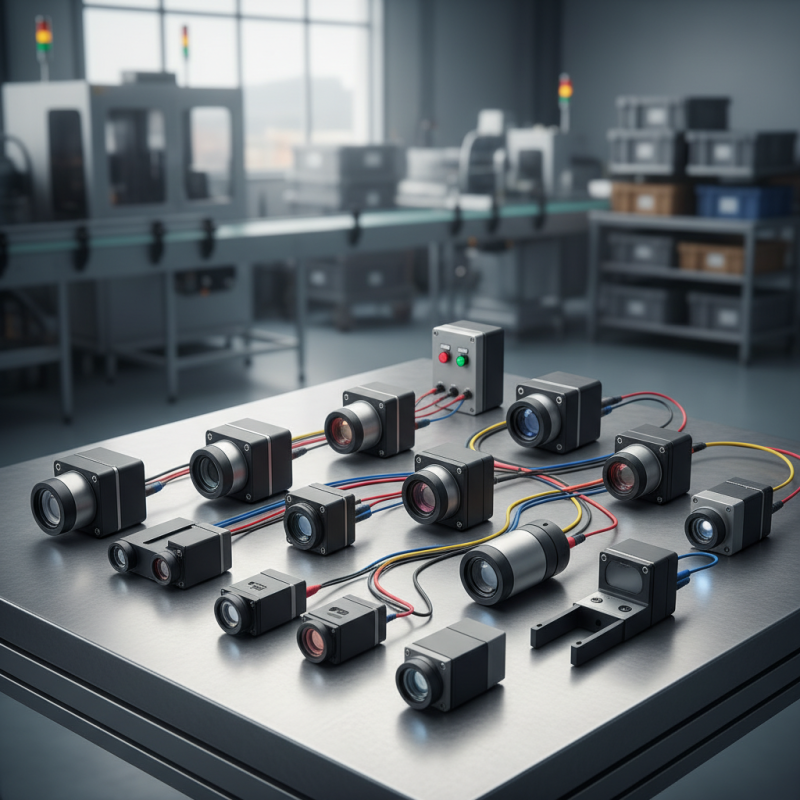
Overview of Photoelectric Sensors in Industrial Settings
Photoelectric sensors play a crucial role in industrial automation. They detect objects, measure distances, and perform quality control. This technology works by using light to sense changes in the environment. In various settings, these sensors help streamline operations and improve safety. Their versatility makes them ideal for warehouses, factories, and assembly lines.
When choosing a photoelectric sensor, consider the type: through-beam, reflective, or diffuse. Each type has unique benefits. Through-beam sensors offer long-range detection. Reflective sensors are useful in tight spaces. Diffuse sensors are cost-effective for short distances. Pay attention to detection range and environmental conditions. Dust, liquid, or extreme temperatures can affect performance.
**Tip:** Regular maintenance helps ensure reliable operation. Clean lenses and check alignment periodically. This can prevent false readings. Understand the limitations of your sensors. They may not work accurately in certain materials or lighting. Always test sensors in real-world scenarios before deploying them. This way, you can catch potential issues early.
Top 10 Photoelectric Sensors for Industrial Applications
| Sensor Type | Sensing Range | Output Type | Response Time | Application |
| Through-beam | Up to 10 meters | NPN/PNP | < 1 ms | Package detection |
| Retro-reflective | 1 to 5 meters | NPN/PNP | < 1 ms | Object presence |
| Diffuse Reflective | 0.1 to 2 meters | NPN/PNP | < 1 ms | Belt speed monitoring |
| Fiber Optic | Up to 50 meters | NPN/PNP | < 0.5 ms | Small part detection |
| Photoelectric Switch | 1 to 10 meters | Solid-state relay | < 2 ms | Process control |
| Laser Photoelectric Sensor | Up to 20 meters | NPN/PNP | < 0.3 ms | High-precision applications |
| Very Long Distance Sensor | Up to 150 meters | NPN/PNP | < 2 ms | Warehouse management |
| Ultrasonic Sensor | 0.2 to 6 meters | NPN/PNP | < 0.3 ms | Level detection |
| 3D Sensor | 3D Measurements | Ethernet/IP | < 5 ms | Quality control |
Types of Photoelectric Sensors and Their Functions
Photoelectric sensors have transformed industrial automation. These devices detect objects and measure distances using light. Understanding their types and functions is vital for effective implementation.
There are three main types of photoelectric sensors: through-beam, retroreflective, and diffuse. Through-beam sensors emit a continuous beam of light. When an object interrupts this beam, the sensor triggers an action. Retroreflective sensors rely on a reflector to bounce the light back to the sensor. They are generally easier to install and require less space. Diffuse sensors, on the other hand, emit light and detect objects based on the light reflected directly back.
Each type has unique advantages and limitations. Through-beam sensors offer high precision but require careful alignment. Retroreflective sensors are versatile, yet they may be affected by ambient light. Diffuse sensors are easy to use, but their range is often shorter. It's essential to assess the specific needs of the application to choose the right sensor. Experimentation can uncover unexpected insights but may lead to challenges.
Key Features to Consider When Choosing Photoelectric Sensors
When selecting photoelectric sensors for industrial applications, several key features are essential. Range and sensitivity matter significantly. According to recent industry data, sensors with adjustable ranges can detect objects from a few millimeters to several meters. This flexibility allows for diverse applications, from small parts counting to large machinery safety. Sensitivity adjustment can minimize false readings, which can happen in dusty or reflective environments.
Another crucial aspect is the sensor's response time. A faster response time enhances operational efficiency. Reports indicate that sensors with response times of less than 2 milliseconds can improve production line speed. However, if the response time is too quick, it may lead to misreads, causing delays or errors. Thorough testing in your specific environment is needed to find the right balance.
Environmental resistance is also a critical consideration. Sensors must withstand factors like temperature, humidity, and dust. Devices with higher IP ratings often perform better in harsh conditions. Despite advancements, not all sensors handle extreme conditions well. It’s vital to evaluate these aspects thoroughly. Sensor failure in difficult settings can lead to expensive downtimes. The right choice hinges on understanding the specific operational environment and requirements.
Top 10 Photoelectric Sensors for Various Industrial Applications
Photoelectric sensors play a crucial role in industrial automation. They convert light into an electrical signal and help detect objects without any physical contact. These sensors are widely used in packaging, material handling, and presence detection applications. According to industry reports, the global photoelectric sensors market is projected to reach over $2.5 billion by 2026, demonstrating their increasing demand.
In various industrial applications, photoelectric sensors offer reliability and efficiency. They excel in environments with dust, dirt, or vibrations, where mechanical sensors might fail. Inductive sensors often struggle with non-metal targets, while photoelectric sensors can detect various materials. The accuracy is impressive, with some models achieving detection ranges up to 25 meters. However, installation can be tricky. Misalignment may lead to errors and failures.
Factory settings vary widely. Differences in light conditions and obstacles can impact sensor performance. Some sensors struggle under direct sunlight. Reflective surfaces can also confuse the detectors. Despite technological advancements, challenges remain in optimizing sensor choices for specific applications. Continuous improvement and adequate training are essential for operators to maximize efficiency and address potential shortcomings.
Top 10 Photoelectric Sensors for Industrial Applications
Best Practices for Installing and Maintaining Photoelectric Sensors
Proper installation and maintenance of photoelectric sensors is crucial for optimal performance in industrial settings. Begin by selecting the right type of sensor for your application. Consider factors like range and environmental conditions. Misalignment can lead to inconsistent readings. Ensure sensors are mounted securely to avoid vibrations that may affect sensitivity.
Tips: Adjust the sensor's sensitivity settings according to the surroundings. Test regularly to check for any dust or contamination. Keep the sensor surface clean. Even a tiny speck can cause disruptions.
Regular maintenance checks are key. Schedule inspections every few months. Look for physical damage or wear. If the sensor isn't functioning as expected, consider if it's installed correctly. Sometimes, the simplest solutions are overlooked. It's worth revisiting the installation manual for guidance. Proper practices can greatly extend the life of your photoelectric sensors.


