By using this site you agree to the use of cookies by the company in accordance with the Privacy Policy
Prototype Molding is becoming a practical bridge between product design and reliable production. Global buyers now expect faster samples, tighter tolerances, and clearer cost control. They also want suppliers that can manage tooling, material selection, inspection, and international delivery.
The Wohlers Report 2024 reported that the global additive manufacturing industry reached approximately $20.0 billion in 2023, growing 13.5% from the previous year. Although additive manufacturing differs from injection molding, the trend signals stronger demand for digital prototyping and faster product development. Grand View Research also identifies rapid prototyping as a high-growth market, supported by automotive, medical, consumer, and industrial applications.
Terry Wohlers, a respected additive manufacturing analyst, has repeatedly emphasized that “the future of manufacturing is digital.” His point matters here. Prototype molding increasingly depends on digital drawings, simulation, rapid tooling, and measurable quality systems.
Seven companies stand out for global buyers because they combine technical capability with practical communication. Their strengths may include CNC-machined molds, aluminum tooling, silicone molding, bridge production, or low-volume injection molding. Not every supplier fits every project.
That is the difficult part.
A company may offer impressive equipment but lack dependable export support. Another may provide low pricing but limited engineering feedback. This guide compares prototype molding companies through manufacturing range, material knowledge, quality controls, lead times, certifications, and buyer experience. These factors create a more useful picture than marketing claims alone.
The comparison is not perfect. Supplier performance can vary by project, region, and specification. Buyers should still verify samples, inspection reports, tooling ownership, and delivery terms before placing an order.
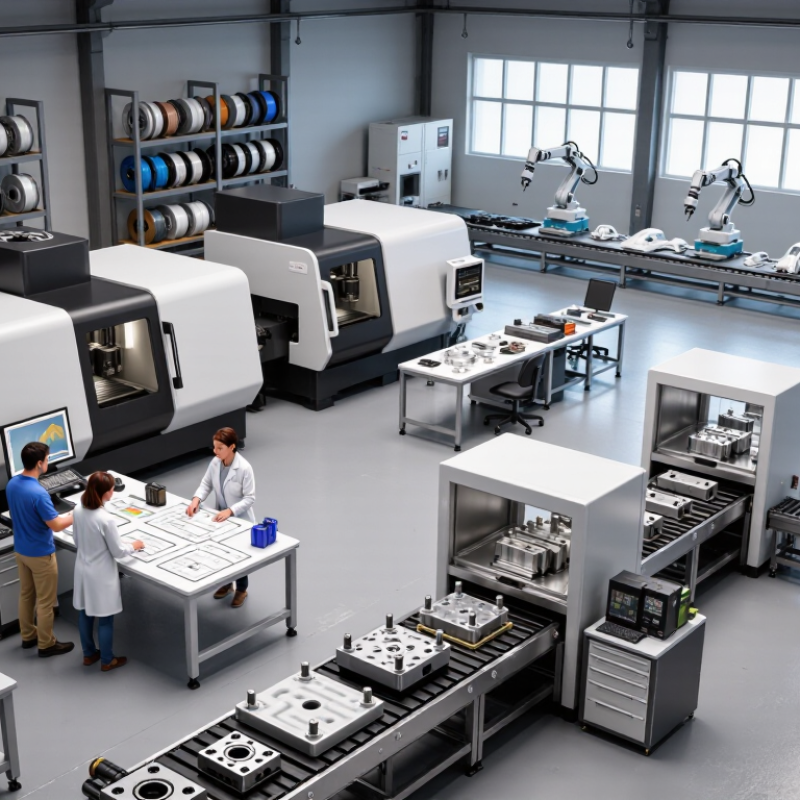
Prototype molding demand is rising as manufacturers shorten development cycles and test products earlier. In 2024, automotive, medical equipment, consumer electronics, and industrial automation created strong purchasing activity. Market estimates vary because some reports include rapid tooling and low-volume production. This makes direct comparisons imperfect.
For global buyers, 2025 demand is moving toward faster quotes, smaller batch sizes, and more flexible materials. Many projects require production-like parts within two to six weeks. Silicone, urethane, aluminum tooling, and engineering thermoplastics remain common choices. Buyers also expect digital design reviews, dimensional reports, and clear inspection records. These details reduce costly rework across time zones. Still, speed can hide weaknesses. A fast sample may not represent stable process control.
Tips: Ask for recent project evidence, not only promised lead times. Confirm material certificates, mold-life estimates, tolerance data, and export documentation. Request a sample inspection report before placing a larger order. Check whether the supplier can manage design changes without restarting the entire mold. Small details matter.
Global purchasing teams should also examine communication quality. A technically capable supplier may still fail through unclear revision control. Time-zone overlap helps, but written approval records matter more. I have seen schedules slip because one drawing used an outdated hole size. That mistake was avoidable, yet common. Comparing seven prototype molding companies requires balanced scoring across quality, tooling cost, delivery reliability, engineering support, and after-sales response.
7 Best Prototype Molding Companies for Global Buyers?
When comparing prototype molding companies, tolerance claims deserve practical verification. A ±0.005-inch tolerance can be achievable, but not across every material, cavity, or geometry. Ask for inspection reports from similar parts. Confirm measurement equipment, datum references, and sampling methods. Experienced suppliers should explain risks before quoting.
Lead time also needs careful definition. Does it include design review, mold fabrication, sampling, inspection, and shipping? A quoted ten-day schedule may begin only after final approval. Request a stage-by-stage timeline. ISO 9001 certification is useful, but certification alone does not guarantee consistent prototypes. Review corrective-action records, process controls, and communication habits. Details matter.
Tips: Send a dimensioned 3D model, critical-tolerance list, resin specification, and expected quantity. Ask whether ±0.005 inches applies after molding or after secondary operations. Discuss warpage near ribs, bosses, and thin walls. A supplier that raises difficult questions may be more reliable than one promising everything. I have seen schedules fail because approval feedback was assumed, not documented. Leave time for one realistic correction cycle. Perfect forecasts are uncommon.
This chart presents practical screening benchmarks for global prototype molding buyers: a dimensional tolerance of ±0.005 inch, a target lead time of 10 business days or less, and ISO 9001 certification as a quality-management requirement. These are procurement reference criteria rather than performance claims about any specific company.
Seven Prototype Molding Companies Compared by Capacity and Certifications
A practical comparison of seven prototype molding companies should begin with machine capacity. Company A focuses on small parts, using presses from 50 to 180 tons. Company B reaches 450 tons and handles larger automotive housings. Company C offers nearly 1,600 tons, but its prototype scheduling appears less flexible. Company D combines 80–350 ton equipment with rapid tooling support. That can suit electronics enclosures and laboratory components.
Company E reports strong engineering depth and supports multi-cavity molds. Its documented ISO 9001 system adds useful process control. Company F lists ISO 13485, making it more relevant for medical development projects, although buyers should verify its current audit scope. Company G emphasizes automotive work and references IATF 16949 procedures. Certification matters, but the certificate alone proves little. Ask for the issuing body, expiration date, and covered production site.
Capacity figures can mislead. A 1,000-ton press does not guarantee accurate thin-wall molding. Buyers should examine tolerance records, resin experience, inspection equipment, and trial-shot reports. Request sample dimensional data. Ask how engineers manage warpage, sink marks, and mold steel changes. One weakness in this comparison is limited visibility into actual on-time delivery performance. That deserves independent checking. A factory tour, video inspection, or small paid trial may reveal more than a polished capability sheet.
7 Best Prototype Molding Companies for Global Buyers?
Material selection often decides whether a prototype survives beyond the sample stage. Global buyers should request ASTM test data for plastics, not only a material name. ASTM D638 can verify tensile strength, while ASTM D648 helps assess heat deflection. Impact-sensitive parts may require ASTM D256 testing. These reports reveal practical limits under load, heat, and handling.
Mold steel also affects repeatability. P20 steel suits many short prototype runs and offers balanced machinability. H13 steel handles higher temperatures and repeated molding cycles. Stainless steel grades can help when moisture or corrosion is a concern. Still, the best grade depends on resin, pressure, production volume, and cooling design. A perfect-looking sample can hide weak documentation.
Tips: Ask for the exact resin grade, ASTM method, steel certificate, and hardness value. Confirm whether “polished” means a measured finish or a general visual description. Specify roughness targets, textured areas, parting-line limits, and ejector-mark locations. A fine polish may improve appearance but increase tooling time. Textures can conceal minor marks, yet they may complicate cleaning and release. One common mistake is treating surface finish as decoration only. It also influences friction, gloss, sealing, and part release. Review a physical finish sample before approval, especially when several suppliers use different vocabulary.
When comparing seven prototype molding companies, global buyers should examine process evidence, not polished promises. Ask for a DFM review before production begins. Engineers should identify thin walls, sharp corners, draft problems, and difficult ejector locations. A clear DFM report can prevent expensive mold changes later.
Quality inspection needs measurable details. Request material certificates, first-article reports, dimensional records, and photographs from the inspection area. Confirm which tools measure critical features and how sampling is controlled. MOQ also deserves careful attention. A low prototype MOQ may hide higher unit costs, setup charges, or limited material choices. Shipping terms must be written clearly. Confirm packaging, delivery responsibility, insurance, customs documents, and the exact handover point. Small wording differences can create large costs.
Tips: Send a dimensioned drawing, 3D file, tolerance table, and expected annual volume. Ask each supplier to quote tooling, parts, inspection, and freight separately. Check two recent references, if available. Do not rely on one sample. A supplier may pass a visual check while missing a critical tolerance. No checklist is perfect. Buyers should review their own assumptions, especially when schedules are tight. A short video call with the tooling and quality teams often reveals more than a sales presentation. Keep decisions documented, because memory becomes unreliable across time zones.
| Anonymous Supplier Profile | Typical Regional Coverage | Prototype Molding Capability | DFM and Engineering Review | Quality Inspection Evidence to Request | Typical Prototype MOQ | Indicative Tooling Lead Time | Common Shipping Terms | Best Buyer Fit |
|---|---|---|---|---|---|---|---|---|
| Profile 1 — Rapid Soft-Tooling Specialist | East and Southeast Asia; international parcel and freight support | Aluminum or soft-steel molds; injection molding for small and medium plastic parts; limited die-casting options | 2D/3D drawing review, draft-angle check, wall-thickness analysis, gate and ejection recommendations | FAI report, dimensional inspection, material certificate, color sample approval, and retained samples | Usually 10–100 pieces for the first molding trial; confirm part-size limits | Approximately 2–5 weeks after design approval | EXW, FOB, or courier delivery; air freight is common for prototype quantities | Start-ups and engineering teams needing fast functional samples |
| Profile 2 — Multi-Process Prototype Partner | Asia, Europe, and North America through approved production partners | CNC machining, vacuum casting, 3D printing, silicone tooling, and low-volume injection molding | Manufacturing-route comparison, tolerance review, material substitution advice, and assembly assessment | Inspection plan, first-article report, surface-finish records, process photos, and nonconformance procedure | Often 1–20 pieces for non-molded prototypes; 20–200 pieces for molded trials | About 1–4 weeks for prototypes; molded parts depend on tool complexity | EXW, FCA, FOB, or DAP; use DAP only after confirming duties and import responsibility | Buyers comparing design alternatives before committing to production tooling |
| Profile 3 — Precision Engineering Molder | Central Europe and nearby export markets | Precision thermoplastic injection molding, insert molding, overmolding, and small technical components | Tolerance stack-up, mold-flow assessment, steel-safe recommendations, and critical-dimension review | Calibrated CMM records, gauge calibration status, traceability records, and documented corrective actions | Commonly 50–250 pieces for prototype or pilot runs | Approximately 4–8 weeks for precision tooling, depending on steel and cavity count | FCA, DAP, or scheduled road freight; confirm whether export documentation is included | Medical, industrial, and technical buyers requiring documented dimensional control |
| Profile 4 — High-Volume Transition Supplier | East Asia with established ocean-freight export channels | Prototype-to-production injection molding, multi-cavity tooling, hot-runner systems, and automated assembly | Production-volume forecast, cavity-balance review, cycle-time estimate, mold-maintenance plan, and automation feasibility | Pre-shipment inspection, process-capability data, approved sample, packaging test, and batch traceability | Usually 100–500 pieces for pilot orders; production MOQ may be substantially higher | Roughly 5–10 weeks for production-intent tooling | FOB or CIF for ocean freight; air freight available for pilot lots at higher cost | Global buyers planning a direct path from prototype to repeat production |
| Profile 5 — Low-Volume Custom Parts Supplier | North America and cross-border regional fulfillment | Bridge tooling, urethane casting, CNC-machined molds, and low-volume thermoplastic molding | Part-orientation review, shrinkage allowance, cosmetic-surface review, and production-risk summary | Dimensional report, visual standard, material batch record, lot identification, and customer approval sample | Typically 5–100 molded parts, subject to material and tool choice | Approximately 2–6 weeks for bridge tooling or soft tooling | Domestic ground freight, FCA, or DAP; local delivery may reduce customs complexity | Product developers prioritizing short logistics routes and small quantities |
| Profile 6 — Cost-Competitive Export Molder | South Asia and Middle East export corridors | General-purpose injection molding, silicone tooling, compression molding, and basic insert molding | Basic DFM review, draft and wall-thickness checks, material availability review, and quotation assumptions | Pre-production sample, dimensional checklist, raw-material documentation, carton count, and packing photos | Often 25–200 pieces for prototype orders; negotiate pilot quantities in writing | Approximately 4–8 weeks, depending on tooling outsourcing and approval cycles | FOB, CFR, or CIF; verify port, insurance scope, and customs-document responsibility | Buyers with price-sensitive projects and sufficient time for supplier validation |
| Profile 7 — Regulated-Product Prototype Supplier | Multiple regions through audited manufacturing and inspection networks | Engineering thermoplastics, clean assembly, insert molding, overmolding, and controlled-environment production where required | Risk-based DFM, material compliance review, tolerance analysis, validation-plan input, and change-control procedure | Quality manual, calibration records, traceability, inspection plan, deviation approval, and audit-rights documentation | Commonly 50–300 pieces; minimums vary with validated materials and controlled processes | Approximately 6–12 weeks when documentation, validation, or special materials are involved | FCA, DAP, or controlled courier shipment; define chain of custody and import records before dispatch | Buyers needing stronger documentation for safety-critical or regulated applications |
By using this site you agree to the use of cookies by the company in accordance with the Privacy Policy
Have a questions or want to know more about our company? We'll be expecting you.