Why Do You Need a Granulating Machine?
A granulating machine turns fine powders into larger, more uniform particles that are easier to handle, store, and process. The change is visible: dusty material becomes granules with more consistent size and flow. That can help reduce segregation and improve feeding into downstream equipment. It is not a cure-all. Results depend on the material, moisture level, machine settings, and process design.
Granulation researcher James Litster is a relevant authority on particle-processing principles. I cannot verify a direct quotation from him on this specific question, so the line below is an editorial summary, not his attributed words: “Good granulation starts with understanding the material, not simply choosing a machine.” That distinction matters. A suitable granulating machine should match the powder’s behavior, required capacity, target granule size, and cleaning needs. Operators may need to adjust binder addition, mixing time, or screen choice to reach a stable result. Small changes can matter. This introduction outlines why manufacturers use granulating machines, what benefits to expect, and which practical limits deserve attention before investment. It also leaves room for a necessary question: will granulation solve the actual production problem, or merely move it elsewhere?
What Is a Granulating Machine?
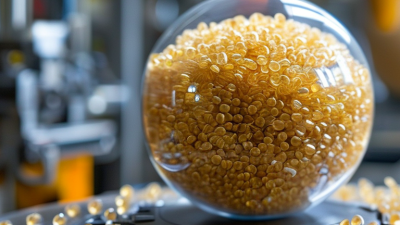
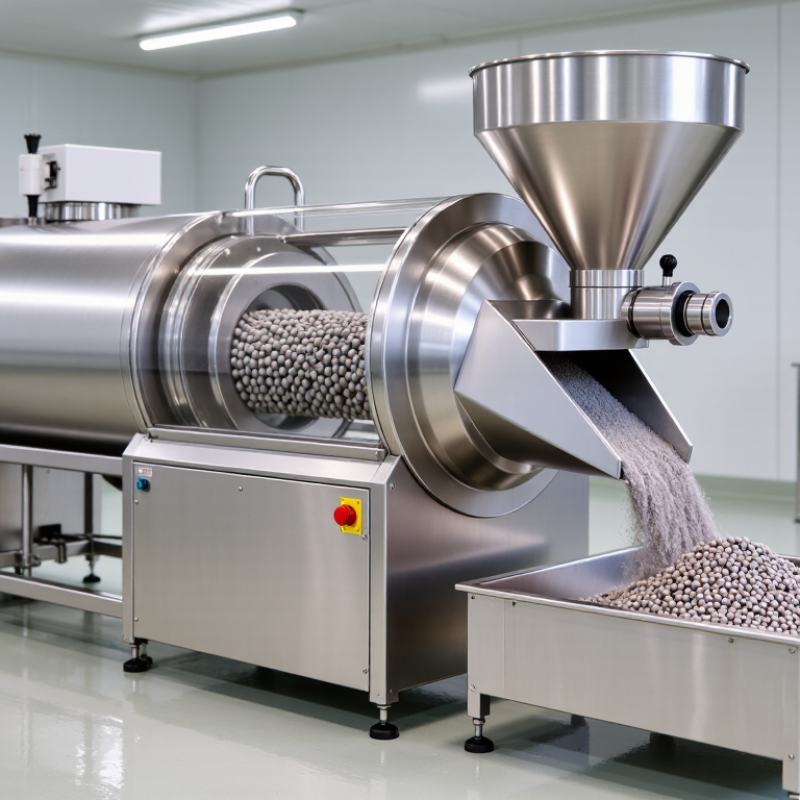
A granulating machine converts fine powders into larger, more uniform granules using wet, dry, or melt processing. Granules can flow more predictably, create less dust, and feed more steadily into mixers, presses, or filling lines. Operators monitor moisture, mixing speed, and screen size; small changes can shift particle size and density. The machine does not guarantee quality. Process settings matter.
In pharmaceutical production, granulation can help improve powder handling and support consistent dosing, but results depend on the formulation and validated controls. The FDA’s 2011 Process Validation guidance emphasizes ongoing, evidence-based process control—not simply choosing equipment. For context, Grand View Research estimated the global pharmaceutical manufacturing market at USD 516.5 billion in 2023, in its Pharmaceutical Manufacturing Market Size report. That figure covers the wider sector, not granulation equipment. It shows the scale of manufacturing where reliable powder handling matters. Some powders still resist neat solutions.
Tips: Test a small, representative batch first. Record moisture, mixing time, and granule size, then check flow and compression behavior. Keep samples from each trial. They can reveal process drift.
Why Do You Need a Granulating Machine? – What Is a Granulating Machine?
| Granulation Method |
How It Works |
Why It May Be Needed |
Common Applications |
Key Considerations |
| Wet granulation |
A liquid binder is added to powder to form larger, cohesive particles. The wet mass is then shaped or sized and dried. |
Can improve powder flow, reduce segregation, and help a powder blend form tablets or other compacted products. |
Pharmaceutical formulations, food powders, and selected chemical products. |
Requires control of liquid addition and drying. It may not suit ingredients that are sensitive to moisture or heat. |
| Dry granulation |
Powder is compacted into ribbons or slugs without adding a granulating liquid, then milled into granules. |
Can improve handling and flow while avoiding a wetting and drying step. |
Moisture-sensitive or heat-sensitive pharmaceutical and chemical formulations. |
Compaction pressure and milling conditions affect granule size and properties. The process is not suitable for every powder blend. |
| Fluid-bed granulation |
Air suspends powder particles while a binder liquid is sprayed onto them; particles grow as the liquid forms bonds and dries. |
Can combine granule formation and drying in one process vessel, depending on equipment configuration. |
Pharmaceutical and other powder-processing applications where fluid-bed processing is suitable. |
Airflow, spray rate, and drying conditions need to be controlled to achieve consistent granules. |
| Melt granulation |
A meltable binder softens or melts during processing and binds powder particles as the mixture cools. |
Can form granules without using water or a separate solvent-based binder solution. |
Selected pharmaceutical, food, and specialty chemical formulations. |
Materials must tolerate the process temperature, and the binder must have suitable melting and solidification properties. |
| Size reduction and screening |
Some granulating machines cut, crush, or screen material to produce particles within a target size range. |
Can make oversized or irregular material easier to handle and support more consistent downstream processing. |
Food, fertilizer, polymer, chemical, and recycling processes, depending on the machine design. |
Screen openings, rotor design, feed rate, and material characteristics influence the resulting particle-size distribution. |
How Does the Granulation Process Work?
A granulating machine turns loose powder into uniform, manageable granules. This improves flow, reduces dust, and supports more consistent filling or mixing. The process begins with a careful inspection of the raw material. Particle size, moisture, and bulk density can change the final result.
In wet granulation, powder enters a mixing chamber while a measured liquid binder is added. The impeller spreads moisture across the powder, and small particles begin forming larger agglomerates. The wet mass then passes through a screen or cutting unit. Granules leave with a more even size. They are dried with controlled air until the moisture level meets the process requirement. Too much liquid creates sticky lumps. Too little produces weak granules.
Dry granulation uses pressure instead of liquid. Rollers or a compaction system compress the powder into sheets or dense pieces. A milling screen then breaks them into granules. This method suits materials that react poorly to moisture or heat. In practice, the first batch is rarely perfect. That matters. An experienced operator checks screen openings, temperature, torque, and granule appearance during production. A simple hand inspection can reveal soft edges or excessive fines before testing is complete.
Cleaning is also part of the process, not an afterthought. Residue around the screen can alter particle size and create cross-contamination risks. Reliable production depends on calibrated sensors, documented settings, and regular sampling. Granulation looks mechanical, but small adjustments often decide whether the material flows smoothly or bridges inside the equipment.
What Materials and Industries Use Granulating Machines?
Why Do You Need a Granulating Machine? What Materials and Industries Use Granulating Machines?
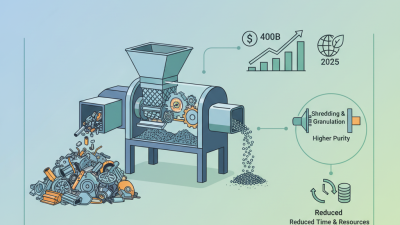
Granulating machines reduce bulky materials into controlled, usable particles. They handle plastic sheets, rigid parts, pipes, rubber scraps, wood residues, and selected mineral materials. In recycling plants, granulators prepare cleaner, more uniform feedstock for washing, sorting, extrusion, or molding. The Global E-waste Monitor 2024 reported 62 million tonnes of electronic waste generated worldwide in 2022. Properly dismantled cables, housings, and polymer components can enter size-reduction systems. However, batteries and hazardous components require separate, regulated treatment. A granulator cannot solve poor sorting.
Agriculture and chemical processing also use granulators. Fertilizer producers form powders into consistent granules for easier storage, spreading, and dosing. Feed manufacturers use similar equipment to improve particle size and handling. The Food and Agriculture Organization identifies feed quality and processing control as important factors in efficient livestock production. Biomass operators granulate sawdust, crop residues, and other dry fibers into denser fuel forms. Moisture matters greatly. Material that looks suitable may clog the chamber or produce weak particles.
Food, pharmaceutical, and construction industries use specialized granulation systems under strict hygiene or quality controls. The World Bank’s What a Waste 2.0 report estimated global municipal solid waste at 2.01 billion tonnes annually. That figure shows the scale of the opportunity, but not every waste stream suits granulation. Operators must test hardness, moisture, contamination, and heat sensitivity before choosing rotor speed or screen size. In practice, many projects underestimate cleaning time and maintenance. That mistake is expensive.
What Benefits Do Granulating Machines Provide?
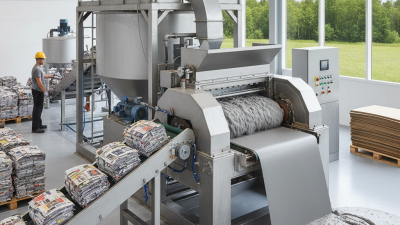
A granulating machine turns bulky or irregular material into particles that are easier to handle. In plastics recycling, a granulator can create more consistent flakes for washing, conveying, and later processing.
That matters.
The OECD’s Global Plastics Outlook (2022) estimated that only 9% of plastic waste was ultimately recycled worldwide in 2019. Size reduction alone cannot change that figure, but it can support reliable sorting and feed preparation when paired with effective process controls.
A steadier particle size can help equipment downstream receive material more evenly. Operators may also find it easier to store, weigh, and blend the processed material. In a production room, this can mean fewer oversized pieces blocking a feed chute and less manual handling.
Results depend on the material, screen size, blade condition, and feed rate. Wet or contaminated input can still cause trouble.
Not magic.
A poorly matched machine may use excess energy, produce too many fines, or need frequent cleaning. The OECD report also highlights how limited collection and sorting constrain recycling, so granulation works best as one step in a broader system.
Measure throughput, particle-size distribution, energy use, and maintenance time during trials. One detail is easy to overlook: operators’ observations often reveal jams and inconsistent output before routine data does.
What Factors Guide Granulating Machine Selection?
A granulating machine turns fine powder into more uniform, manageable particles. That can reduce dust, improve flow, and support consistent filling or compression. Selection starts with the material, not the machine catalogue. Is the powder heat-sensitive, sticky, abrasive, or prone to absorbing moisture? A wet granulator uses liquid binder and may suit materials that need stronger granules. A dry compactor avoids added liquid, but can create more fines. Small differences matter. Grand View Research estimated the global pharmaceutical excipients market at about US$8.4 billion in 2023, with continued growth projected through 2030. That market figure is not a machine-sizing rule; it does signal why reliable processing and repeatable batches matter.
Next, match capacity and granule properties to the real production task. Define the required batch size, throughput, target particle-size range, and acceptable moisture level. Ask suppliers for trials using your own powder. Check whether the granules hold together after drying, transfer, and handling—not just when they leave the machine. Also consider cleaning access, changeover time, energy use, and room for future capacity. Test before buying. One detail is easy to miss: a higher output rate may not help if downstream screens or dryers become bottlenecks. Record the trial settings and results, then review them with production and quality staff. A spreadsheet helps, but it cannot predict every sticky batch.