What Is the Best Dewatering Screw Press Machine in 2026?
Choosing the best dewatering screw press machine in 2026 starts with the material it must handle. A press that performs well on municipal sludge may struggle with fibrous food-processing waste. Feed solids, flow rate, polymer demand, cake dryness, and available floor space all shape the right choice. So does the cleaning routine. A compact machine can look ideal on a drawing, then become awkward beside real pipes and washdown areas.
“Judge the press by its performance on your own feed, not by a brochure number.” This is an editorial rule of thumb, not a verified quotation from a named expert. No source material or verifiable expert quotation was provided, so assigning it to a real person would be misleading. A credible named quotation should be confirmed before publication.
This guide compares screw press designs through practical questions: Can the machine maintain steady throughput when feed conditions shift? How accessible are the screen, screw, and seals during inspection? What cake consistency can operators expect across a normal shift? Look beyond a single dryness figure. Ask for test data using representative sludge, and check how the supplier defines capacity and operating conditions. Small details matter. A guarded access panel, clear wear-part schedule, and reachable wash connections can save time every week.
No single model is best for every plant. The strongest choice is the one that fits your feed, staffing, and maintenance limits—and performs reliably outside the showroom. Even then, selection involves trade-offs. This guide helps make those trade-offs visible.
What Is a Dewatering Screw Press, and How Does Its Process Work?
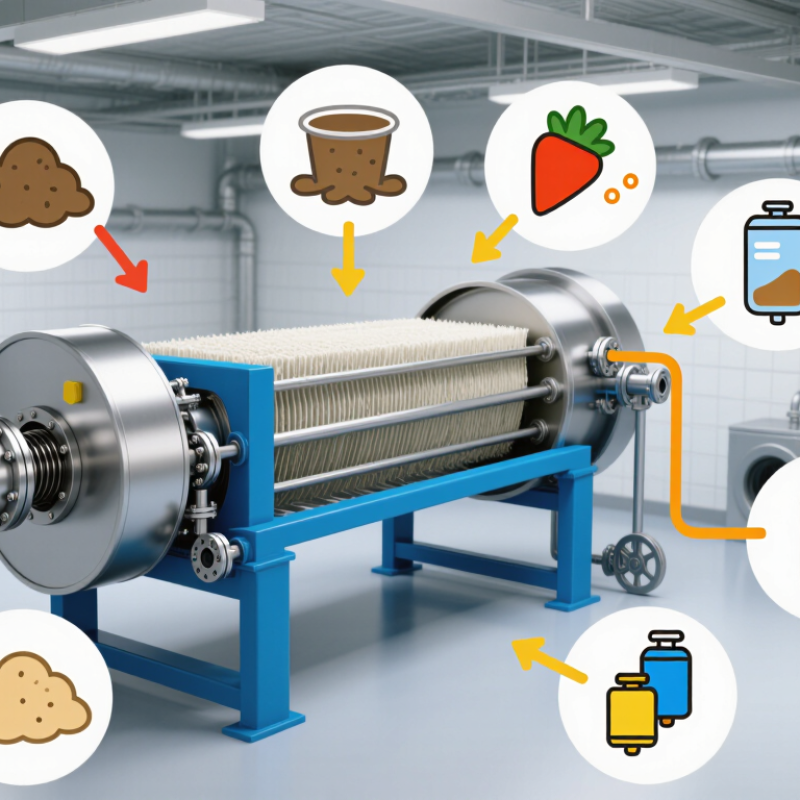
A dewatering screw press separates liquid from sludge by conveying and compressing solids inside a screened chamber. Feed enters a hopper, and a rotating screw moves it toward a narrower outlet. As space decreases, pressure rises and water drains through openings in the surrounding screen. The screw’s low speed can limit shear, noise, and energy use compared with some high-speed equipment. Not magic, though. Many systems condition sludge with polymer before pressing, helping fine particles form larger flocs. Polymer choice and dose depend on the feed. A setting that works one day may fail after rain or process changes.
The pressed solids, called cake, leave at the discharge end, while separated liquid, or filtrate, flows into a collection channel. Operators can adjust feed rate, screw speed, back-pressure, and conditioning to balance throughput and cake dryness. Too much feed may produce wetter cake; excessive pressure can clog screens or increase wear. Daily checks help: inspect screen openings, seals, and cake texture, and record flow and moisture readings. Clear filtrate is useful, but appearance alone does not confirm effective separation. When evaluating a machine, compare sludge type, solids loading, washdown access, and maintenance capacity—not just rated throughput. Pilot testing with representative sludge provides more dependable expectations than a brochure figure.
What Is a Dewatering Screw Press, and How Does Its Process Work?
A screw press separates water from sludge or other wet solids. Feed enters a screened chamber, where a rotating screw conveys and compresses it; drained liquid passes through the screen, and dewatered cake exits at the discharge end.
Typical indicative total-solids ranges: feed sludge about 0.5–5%, and dewatered cake about 15–30%. Actual results vary substantially with the material, conditioning, and press design; these ranges are not a machine-performance guarantee.
How Do Screw Presses Produce Cake at 15–30% Dry Solids?
A screw press turns dilute sludge into cake by combining polymer conditioning, drainage, and gradual compression. Polymer helps fine particles form larger flocs, which release water as they travel along a rotating screw inside a screened cylinder. The screen openings retain solids while filtrate drains away. At the outlet, a restriction cone adds backpressure. The operator adjusts feed rate, polymer dose, and outlet pressure to balance dryness against throughput. Small changes matter.
The target of 15–30% dry solids is realistic for some feeds, not a guaranteed screw-press result. The U.S. EPA’s Biosolids Technology Fact Sheet: Belt Filter Press reports a broad cake-solids range around 12–30% for that dewatering technology. It is a useful industry benchmark, not a screw-press performance guarantee. Sludge type, temperature, polymer choice, and upstream thickening can shift results sharply. At 20% dry solids, one tonne of wet cake contains about 200 kilograms of dry material; the rest is mostly water. Operators should verify performance with representative feed tests and routine cake sampling. A dry-looking surface can mislead. The less comfortable truth is that higher dryness may reduce capacity or increase polymer use, so the best setting depends on the plant’s actual priorities.
Which Performance Metrics Matter: 90–98% Solids Capture and Polymer Dose?
A dewatering screw press should be judged by solids capture and polymer use together, not by cake dryness alone. A 90–98% capture target can be useful, but results depend on sludge type, feed concentration, and operating settings. The U.S. EPA’s 2000 Biosolids Technology Fact Sheet for Belt Filter Presses reports typical solids capture of about 95–99%. That is a useful comparison point, not a guaranteed screw-press result. Measure capture with a solids mass balance, including solids that escape in the filtrate. Clear-looking water is not proof of high capture.
Track polymer dose in kilograms of active polymer per dry tonne of solids, and record the polymer product and dilution strength. EPA guidance gives belt-press polymer use of roughly 3–10 kg per dry metric tonne; treat this as a reference range, not a screw-press specification. Test the actual sludge across several doses, then compare capture, cake solids, throughput, and filtrate quality. Small dose changes matter. A low dose may send fine solids through the screen; too much can raise costs without improving cake. Results can shift after rain, seasonal changes, or an upstream process adjustment. A tidy trial spreadsheet can still mislead if feed conditions were not recorded.
How Can Buyers Compare Energy Use, Maintenance, and Lifecycle Cost in 2026?
What Is the Best Dewatering Screw Press Machine in 2026? Buyers should compare verified operating costs, not just purchase prices. The U.S. EPA’s 2013 Energy Efficiency in Water and Wastewater Facilities report estimates that wastewater treatment facilities use about 30 billion kilowatt-hours annually. That figure covers entire facilities, not screw presses. Still, it shows why small differences in operating demand deserve attention.
Request a trial using your own sludge. Record electricity use per tonne of dry solids, polymer consumption, cake dryness, solids capture, and throughput. Compare results at similar output quality. Check maintenance records, too: ask how often screens need cleaning, when screw components typically need replacement, and how many labor hours servicing requires. Real logs help. One caveat: sludge changes with season and process conditions, so a single test may not reflect a full year.
Build lifecycle cost from the same operating assumptions. Include equipment price, electricity, polymer, water, replacement parts, labor, downtime, and cake hauling or disposal. Use your site’s energy tariff and expected operating hours, then test how costs shift if energy or polymer prices rise. A cheaper press can cost more over time. The comparison is imperfect unless the trial reflects normal feed conditions, but stating that uncertainty is better than hiding it.