By using this site you agree to the use of cookies by the company in accordance with the Privacy Policy
Choosing the best ss laser cutting machine requires more than comparing power ratings or purchase prices. Stainless steel reacts differently to thickness, grade, heat input, and cutting speed. A machine that produces clean edges on 1 mm sheet may struggle with 8 mm plate. The right choice must match your actual production range.
Start with material requirements. Identify the stainless steel grades you cut most often, such as 304 or 316L. Record common thicknesses, sheet sizes, and daily cutting hours. A fiber laser usually offers efficient processing and precise results for many stainless steel applications. However, laser power alone does not guarantee quality. Beam stability, cutting-head accuracy, assist-gas control, and cooling performance matter just as much.
Look closely at the working area and motion system. The frame should remain stable during long cutting cycles. Inspect acceleration, positioning accuracy, nesting software, and automatic focusing. Ask suppliers for samples made from your own material. Examine the cut face under bright light. Check for dross, discoloration, taper, and uneven corners. Small flaws matter.
Service reliability deserves equal attention. Confirm installation support, operator training, spare-part availability, and response times. A low-cost machine can become expensive when production stops for several days. Still, sales promises should not replace evidence. Request test reports, customer references, and a clear warranty.
There is no perfect machine.
Budget also needs honest review. The cheapest option may limit future growth, while excessive power can waste energy and money. Compare the full operating cost, not only the initial quotation. A careful decision connects machine capability with measurable production needs, realistic maintenance plans, and the quality your customers actually expect.
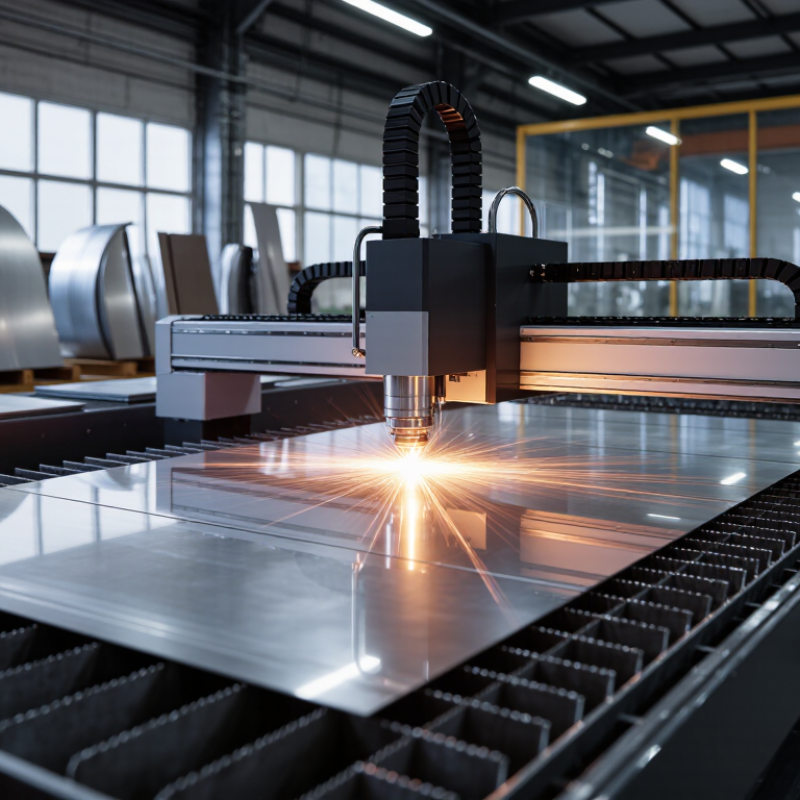
Define the job before comparing machine specifications. List the stainless grades you actually cut, such as 304 or 316, and record minimum and maximum thickness. Include sheet dimensions, daily volume, required edge quality, and acceptable tolerance. A machine suited to thin decorative panels may struggle to meet the throughput needs of thicker production parts. Small details matter. Note whether parts need burr-free edges or a clean surface ready for welding.
The market is broad: worldstainless reported global stainless-steel melt-shop production of 58.4 million tonnes in 2023 in its Stainless Steel in Figures 2024 report. That figure does not define your machine, but it underlines why grade and application should guide the specification.
Ask suppliers to run test cuts using your own material and thickness range. Check kerf width, dross, heat tint, and repeatability—not just the cut speed on a brochure. Also confirm available floor space, loading method, assist-gas supply, and expected maintenance needs. Measure twice. One imperfect step is assuming the thickest sheet represents everyday work; actual production mix should drive the decision.
For stainless steel, laser type strongly affects speed, edge quality, and operating cost. Fiber lasers are usually the practical choice because they focus efficiently on reflective metal. They also cut thin and medium stainless sheets quickly. CO2 lasers can still perform well, but they often require more maintenance and energy.
Power must match your regular workload. A 1.5–2 kW machine can handle many thin sheets, such as 1–3 mm stainless steel. For thicker material, higher power may improve cutting speed and reduce production delays. More power is not automatically better. It can increase heat input, burrs, and electricity use when settings are poorly matched. Check the machine’s tested thickness range, not only its advertised maximum.
Tips: Compare real sample cuts. Ask for 304 and 316 stainless samples at your common thicknesses. Inspect the edge under bright light. Look for discoloration, dross, taper, and uneven corners. Nitrogen usually produces a cleaner, brighter edge than oxygen, but gas costs can be higher. Cutting speed, nozzle design, focus position, and assist-gas pressure work together. Changing only the laser power may not solve a rough edge. In shop testing, a small speed adjustment sometimes improved results more than adding power. I have also seen impressive trial cuts fail during long production runs. Thermal stability, autofocus accuracy, and service support deserve equal attention. No setting is perfect.
Choosing an SS laser cutting machine starts with accuracy, not the advertised wattage.
The 2024 World Robotics report recorded 541,302 industrial robot installations worldwide in 2023. This growth reflects tighter production expectations. Check repeatability, beam stability, and positioning accuracy under continuous operation. A practical test should cut a 1 mm stainless-steel sheet, then measure slot width, corner squareness, and burr height. Do not trust one sample.
Speed must be judged against thickness and cut quality.
A machine may cut thin SS quickly, yet slow noticeably on 6 mm plate. The 2023 Industrial Laser Solutions market review identifies fiber lasers as the dominant industrial cutting technology because of their efficiency and flexible power range. Ask for cutting charts based on nitrogen or oxygen, nozzle size, and gas pressure. These details matter. Published speed alone is incomplete.
Material compatibility also requires careful testing.
Stainless steel grades differ in chromium, nickel, thickness, and surface finish. ISO 9013 provides a recognized framework for evaluating thermally cut edge quality, including roughness and perpendicularity. Request samples from your actual grades, especially reflective sheets or brushed surfaces. Inspect heat tint, dross, and warped edges.
I have seen impressive test cuts fail during long production runs. That weakness should be part of the evaluation, not hidden. A slightly slower setting may deliver more reliable dimensions and fewer rejected parts.
How to Choose the Best SS Laser Cutting Machine?
Check Automation, Software, Safety, and Maintenance Features
Automation should reduce handling, not only display impressive specifications. Look for automatic focusing, nozzle centering, sheet detection, and pallet changing. These features shorten setup time for stainless steel sheets with different thicknesses. The International Federation of Robotics recorded 553,052 industrial robot installations worldwide in 2022, a 5% annual increase. This trend shows why connected automation deserves practical attention. Ask for cycle-time records from similar SS jobs, not laboratory demonstrations. A sales video can hide delays.
Software affects daily profitability. Choose nesting software that controls remnant sheets, kerf compensation, and heat-affected zones. It should also store cutting parameters and export production data. Integration with MES or ERP systems helps track material, operator, and job history. Access permissions and audit trails matter when several shifts share one machine. Keep the interface simple. An advanced system is useless if operators bypass it. I would test the software with real drawings before purchasing, because interface problems often appear late.
Safety requires more than an emergency-stop button. Confirm enclosure interlocks, light curtains, fume extraction, warning indicators, and automatic fault shutdowns. Risk assessment should follow ISO 12100, while safety-related control systems should align with ISO 13849-1. Maintenance features deserve equal attention. Inspectable optics, quick-change protective windows, lubrication reminders, remote diagnostics, and spare-parts availability reduce downtime. No machine is maintenance-free. Record cleaning intervals and lens replacements during a trial period. If the supplier cannot provide clear service procedures, reconsider the purchase.
| Evaluation Area | What to Check | Why It Matters for Stainless Steel Cutting | Evidence to Request or Test | Priority |
|---|---|---|---|---|
| Cutting capacity | Confirm the usable sheet size, supported material thickness range, and maximum workpiece weight. | Capacity must match the stainless-steel grades, gauges, and sheet formats used in production; stated limits depend on the machine configuration and process settings. | Review the technical specification and run a sample cut using representative material and thicknesses. | Essential |
| Cut quality and process capability | Assess edge condition, dimensional accuracy, repeatability, and the amount of dross or heat discoloration on sample parts. | Results vary with material grade, thickness, assist gas, optics, cutting parameters, and machine condition. | Inspect cut samples from your own drawings and record the settings and material used for each test. | Essential |
| Sheet loading automation | Check whether the system supports manual loading, assisted loading, automatic loading, or an integrated storage tower. | Automation can reduce handling effort and improve material flow, but its value depends on throughput, available floor space, and staffing. | Observe a full loading and unloading cycle, including how the system handles the sheet formats you use. | High |
| Workpiece handling | Review unloading, sorting, part-removal, scrap-handling, and support for small or delicate parts. | Cutting speed alone does not determine output; bottlenecks can occur when parts are difficult to separate or remove. | Ask for a timed demonstration with a representative nest and confirm operator access during normal operation. | High |
| Control and nesting software | Verify compatibility with the company’s CAD/CAM workflow, supported file formats, nesting tools, and job management features. | Reliable data transfer and practical nesting features can help reduce programming effort and sheet offcuts. | Import a sample drawing, generate a nest, and confirm that dimensions, lead-ins, and cut paths can be reviewed before production. | Essential |
| Operator usability | Check the control interface, parameter management, alarms, access levels, and availability of local-language documentation. | Clear controls and understandable alarms can support consistent operation and reduce avoidable setup errors. | Have a prospective operator complete a basic setup and job change using the supplied training materials. | High |
| Safety enclosure and interlocks | Confirm the enclosure, access doors, interlocks, warning indicators, emergency stops, and laser-safety provisions. | Laser systems require risk controls appropriate to their laser class and intended installation; compliance requirements depend on local regulations. | Request the machine’s safety documentation, risk assessment information, and applicable conformity documents; inspect safeguards during a site review. | Essential |
| Fume and particulate extraction | Review the extraction connection, filtration arrangement, airflow requirements, filter monitoring, and maintenance access. | Cutting can generate fumes and fine particles. Extraction should be designed for the process and the facility’s ventilation requirements. | Request the extraction specifications and confirm the proposed setup is suitable for the materials and operating conditions. | Essential |
| Optics and consumables | Identify routine inspection and replacement needs for protective windows, nozzles, ceramic parts, filters, and other consumables. | Contaminated or worn components can affect cut quality and may lead to avoidable downtime. | Review the maintenance schedule, consumables list, inspection procedure, and recommended spare-parts stock. | High |
| Preventive maintenance | Check scheduled service tasks, lubrication points, calibration procedures, access panels, and maintenance records. | Planned maintenance helps keep motion, cutting, and safety systems in a known operating condition. | Request a sample maintenance checklist and clarify which tasks are operator-level and which require qualified service personnel. | High |
| Diagnostics and support | Ask about fault logging, remote diagnostics, software updates, service response arrangements, and technician availability. | Effective troubleshooting can shorten interruptions, subject to connectivity, service coverage, and the facility’s security policies. | Confirm support hours, escalation steps, required network access, and the process for obtaining replacement parts. | High |
| Utilities and installation | Verify electrical supply, compressed gas requirements, cooling, foundation or floor conditions, and installation clearances. | Site conditions can affect installation cost, commissioning time, and reliable operation. | Use a written site-preparation checklist and have the facility team confirm each utility and access requirement before delivery. | Essential |
| Training and documentation | Confirm commissioning, operator and maintenance training, operating manuals, safety instructions, and troubleshooting guides. | Training helps operators use the machine safely and follow consistent setup and maintenance practices. | Request a training plan that specifies topics, duration, trainee roles, and available documentation. | High |
| Total operating cost | Estimate energy, assist gas, consumables, extraction filters, maintenance, training, and expected service costs. | Purchase price alone does not show the cost of operating the machine over its service life. | Compare written estimates using the same production hours, material mix, and maintenance assumptions. | High |
When comparing an SS laser cutting machine, look beyond its purchase price. The total cost includes installation, operator training, electricity, assist gas, replacement lenses, and routine maintenance. Ask for a written estimate covering these items. A low quote can become expensive if essential components or setup support are excluded. Check what the warranty actually covers, and how long common parts take to arrive.
Supplier support affects daily production. Ask who responds when a cut edge turns rough or the machine loses alignment. A useful supplier can explain parameter adjustments, review sample cuts, and provide clear maintenance guidance. Request a demonstration using stainless steel similar in grade and thickness to your own work. Watch how the cut edges look, how quickly settings change, and whether the operator can answer practical questions. Small details count.
Consider long-term value in terms of reliable output, not just speed. A machine that holds consistent tolerances may reduce scrap and rework across repeated jobs. Ask about service schedules and whether training is available for new operators. Keep room in the budget for wear parts; they will need attention. It is easy to overestimate future production, too. Estimate workload carefully, then check whether the machine’s capacity fits real orders rather than optimistic forecasts. I would revisit those estimates after a few months of operation.
By using this site you agree to the use of cookies by the company in accordance with the Privacy Policy
Have a questions or want to know more about our company? We'll be expecting you.