
By using this site you agree to the use of cookies by the company in accordance with the Privacy Policy

Choosing a dewatering screw press machine is not simply a matter of comparing prices or stainless-steel grades. Real performance depends on sludge type, polymer response, feed concentration, torque control, and daily operating habits. A municipal plant may handle thickened waste activated sludge at 2% solids, while a food-processing facility may face fibrous, oily material. The same machine can behave very differently in those conditions.
John T. Novak, a recognized biosolids researcher, captured this uncertainty with the practical observation: “Dewatering is more art than science.” That warning still matters. Even a well-designed press can produce wet cake when conditioning is poor, screen flushing is neglected, or the operator pushes feed volume too aggressively. Small details count. Polymer mixing time matters. So does the discharge setting.
This guide examines leading dewatering screw press machine manufacturers through a more useful lens than advertising claims. It considers engineering experience, material quality, automation, after-sales support, spare-part access, testing procedures, and documented field results. Manufacturer rankings should remain provisional, however. A supplier with excellent municipal references may not suit a paper mill or livestock operation. Buyers should request sample testing with their own sludge, not rely only on catalogue data. Ask for cake dryness, filtrate clarity, power consumption, and noise measurements. Also inspect the machine in operation when possible. A polished brochure cannot reveal every maintenance burden. That is where careful comparison begins.
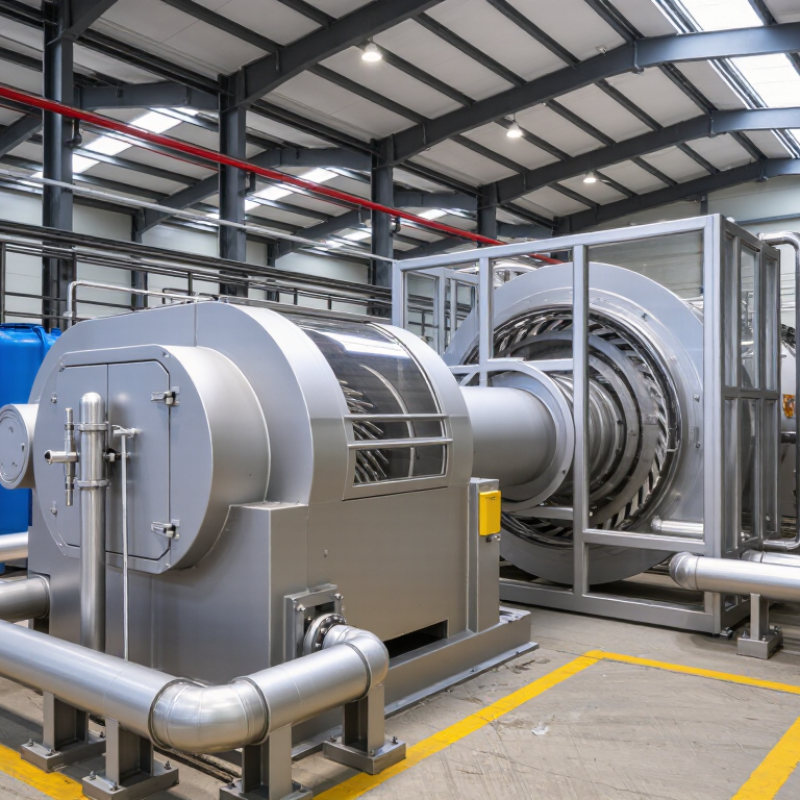
A dewatering screw press machine separates water from sludge, wastewater solids, and other wet materials. It uses a slowly rotating screw inside a perforated screen. As material enters, the screw moves it forward while pressure gradually increases. Free water drains through the screen openings. The compacted solids leave through an adjustable discharge outlet.
The process is simple, but machine performance depends on several details. Feed consistency matters. A thin, watery feed may pass through without forming a stable solids plug. Excessive pressure can raise energy use and produce unnecessarily wet discharge. Operators usually adjust screw speed, outlet pressure, polymer dosage, and wash-water flow. Small changes can affect cake dryness within minutes. The machine often runs quietly, which makes abnormal vibration easier to notice.
In practical installations, stainless steel parts resist moisture and cleaning chemicals better. A reliable unit should provide easy access to the screen, bearings, and spray bar. Screen openings must match the material, not just the advertised capacity. Field experience shows that maintenance is often underestimated. A blocked screen can reduce output before anyone notices. No press performs perfectly under every condition. Sludge temperature, fiber content, and seasonal changes may require new settings. Careful testing with the actual feed is safer than relying only on catalog figures.
| Data Dimension | Typical Information | Practical Selection or Operating Notes |
|---|---|---|
| Equipment Definition | A dewatering screw press machine is a continuous solids–liquid separation system that uses a rotating screw inside a cylindrical screen to compress and dewater sludge or other wet solids. | It is commonly selected when continuous operation, relatively low energy use, and reduced wash-water demand are more important than achieving the lowest possible cake moisture. |
| Primary Applications | Municipal wastewater sludge, industrial wastewater sludge, food-processing waste, agricultural residues, paper-mill fiber, and digestate. | The feed material should have sufficient fibrous or flocculated solids to form a permeable compression plug inside the press. |
| Typical Feed Solids Concentration | Approximately 0.5% to 3% total suspended solids for many sludge applications; higher concentrations may be suitable depending on material characteristics and machine design. | Actual performance depends on sludge viscosity, particle size, organic content, flocculation, and the proportion of free water. |
| Typical Cake Solids Content | Often about 15% to 30% total solids for municipal and industrial sludge, with results varying by feed type and polymer conditioning. | Fibrous materials may produce drier cake than highly biological or gelatinous sludges. Cake dryness should be confirmed through testing. |
| Separation Mechanism | Free water drains through the screen, while the screw conveys and gradually compresses the solids toward an adjustable outlet or back-pressure cone. | Progressive compression helps provide continuous discharge without the high hydraulic pressure used by some alternative dewatering systems. |
| Main Components | Drive motor, gearbox, rotating screw, wedge-wire or perforated screen, feed inlet, filtrate collection zone, polymer-mixing section, and cake-discharge outlet. | Important construction details include screen accessibility, screw flight design, corrosion resistance, sealing, and ease of replacement. |
| Common Screen Openings | Fine screen openings are commonly selected in the approximate range of 0.10 to 0.50 mm, depending on the feed material and required filtrate quality. | Smaller openings can improve solids capture but may increase blinding risk and cleaning requirements. |
| Operating Speed | Many screw presses operate at a slow screw speed, commonly around 1 to 10 revolutions per minute. | Lower speed generally increases retention and compression time, while higher speed may increase throughput but can reduce cake dryness. |
| Throughput Range | Small units may process several kilograms of dry solids per hour, while larger units can process hundreds of kilograms of dry solids per hour. | Capacity should be specified on a dry-solids basis rather than only by wet-sludge volume, because feed concentration significantly affects hydraulic flow. |
| Polymer Requirement | Polymer conditioning is often used to agglomerate fine particles before dewatering. Typical dosage may range from approximately 2 to 10 kilograms of active polymer per tonne of dry solids. | The optimum dosage must be established by laboratory jar testing or pilot trials because overdosing can increase cost and worsen filtrate quality. |
| Energy Consumption | Electrical demand is generally low compared with many high-pressure mechanical dewatering systems; actual consumption depends on motor size, feed rate, and sludge resistance. | Energy figures should be evaluated together with polymer use, wash-water consumption, maintenance, and cake-disposal costs. |
| Water Consumption | Automatic screen rinsing is normally required to prevent clogging. Water use is typically intermittent rather than continuous, depending on the control program and feed characteristics. | Using treated effluent or recycled process water may reduce potable-water consumption when local regulations and water quality permit it. |
| Filtrate Quality | The filtrate commonly contains fine suspended particles and dissolved pollutants, so it is normally returned to the wastewater-treatment process or sent for further treatment. | Filtrate total suspended solids depend on screen opening, polymer selection, sludge properties, and operating stability. |
| Automation Features | Typical systems may include variable-frequency drive control, automatic screen washing, overload protection, torque monitoring, level control, and polymer dosing control. | Automation can stabilize cake quality, reduce operator workload, and protect the drive system from excessive torque or blockage. |
| Material of Construction | Common wetted materials include stainless steel grades such as 304 or 316, with the selection influenced by chloride concentration, acidity, temperature, and chemical exposure. | More corrosion-resistant materials may be justified for saline wastewater, chemical-processing applications, or aggressive cleaning conditions. |
| Advantages | Continuous operation, compact footprint, relatively low noise, low energy demand, limited wash-water use, and suitability for unattended or semi-automatic operation. | The machine is particularly useful where space is limited and a moderate level of cake dryness is acceptable. |
| Limitations | It may be less effective with very low-solids, highly gelatinous, oily, or poorly flocculated sludge. Cake dryness may also be lower than that achieved by some high-pressure systems. | Feed screening, grit removal, polymer optimization, and pilot testing are important before final equipment selection. |
| Pre-Treatment Requirements | Typical pre-treatment includes coarse screening, grit removal where necessary, sludge homogenization, and polymer conditioning. | Removing rags, stones, metal, and other abrasive or oversized materials helps prevent screen damage and screw wear. |
| Maintenance Items | Routine tasks include inspecting screen openings, checking screw and gearbox wear, cleaning the washing system, lubricating bearings where applicable, and verifying torque protection. | Maintenance intervals should follow operating hours, feed abrasiveness, corrosion conditions, and the equipment supplier’s service instructions. |
| Selection Criteria | Key factors include dry-solids loading, feed concentration, desired cake solids, sludge characteristics, available installation space, corrosion conditions, automation level, and disposal requirements. | Comparable quotations should state capacity, test conditions, polymer dosage, cake solids, filtrate quality, power demand, wash-water use, and included accessories. |
| Recommended Verification Method | Laboratory testing, bench testing, or pilot-scale trials should be used to confirm throughput, polymer demand, cake dryness, filtrate quality, and operating torque. | Performance guarantees are meaningful only when the feed properties and testing conditions are clearly documented and representative of the intended application. |

Have a questions or want to know more about our company? We'll be expecting you.
