
By using this site you agree to the use of cookies by the company in accordance with the Privacy Policy

In 2026, choosing a metal laser machine means matching the process to the work, not chasing the newest model. A fiber laser cutter may suit sheet steel, while a welding system handles seams and joints. Marking machines create durable part identification; cleaning systems remove surface coatings with controlled pulses. These categories overlap in real workshops, but they solve different problems. A bright showroom sample does not reveal everything.
Laser pioneer Theodore Maiman is often credited with the line, “The laser is a solution looking for a problem.” It is a useful caution here: define the production need before comparing machines. This guide examines the leading machine types, their common uses, and the trade-offs buyers should check. Look at material thickness, cut-edge quality, cycle time, maintenance, and operator training. Ask for a test using your own metal and part geometry. Watch the cut edge. Inspect the weld. Check how easily the machine handles a real production file. Manufacturer specifications help, but they do not replace a shop-floor trial. Performance varies with material, settings, and process setup, so broad rankings can mislead. That comparison is not perfectly tidy. Still, clear criteria make the options easier to judge—and help separate a useful investment from impressive-looking equipment.
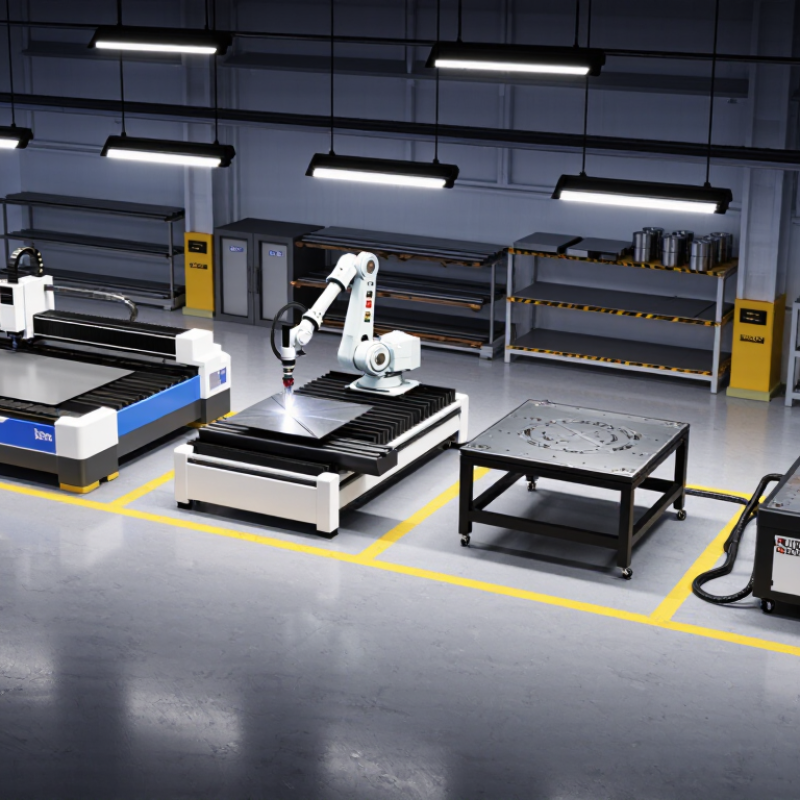
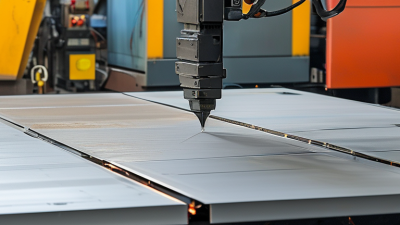
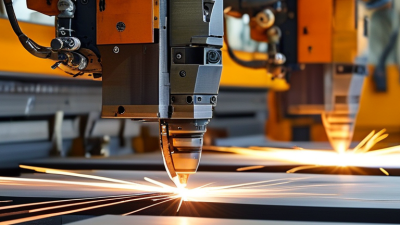
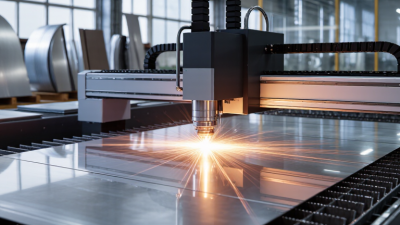
Fiber laser cutters use ytterbium-doped sources, commonly operating around 1.06–1.08 μm. Their short wavelength is absorbed efficiently by many metals, while the beam can be delivered through a flexible fiber. Typical machine ratings span 1–30 kW, but more power does not automatically mean better cuts. A 1 kW system may suit thin sheet and detailed parts; thicker plate often needs more power, suitable assist gas, and stable motion control. Watch the edge, not only the speed.
Grand View Research estimated the global laser-cutting-machine market at about USD 5.2 billion in 2023, with projected annual growth of 9.3% through 2030. That market includes multiple laser types, not fiber cutters alone, so it signals demand rather than proving a specific machine’s performance. In shop trials, compare cut quality at the same material, thickness, and feed rate. Check kerf width, dross on the underside, and heat tint near corners. Small details matter. A 30 kW source can cut quickly, yet poor gas delivery or worn optics may leave rough edges. I would also question any “maximum thickness” claim unless the test material and finish standard are stated.
| Typical Output-Power Class | Fiber-Laser Wavelength | Common Workload | Typical Materials | Process Characteristics | Key Selection Consideration |
|---|---|---|---|---|---|
| 1–3 kW | Approximately 1.06–1.08 μm | Thin-sheet cutting, prototypes, job shops, and general fabrication | Mild steel, stainless steel, aluminum, and other compatible metals | Well suited to many thin- and medium-gauge applications; assist-gas choice and cutting parameters affect edge quality and speed. | Match the power to the usual material mix and production volume rather than occasional maximum-thickness work. |
| 4–6 kW | Approximately 1.06–1.08 μm | Higher-throughput sheet production and mixed-gauge fabrication | Mild steel, stainless steel, and aluminum | Provides additional cutting capacity and productivity headroom compared with lower-power classes, subject to the machine configuration. | Check the cutting-head rating, motion system, assist-gas supply, and electrical requirements as a complete system. |
| 8–12 kW | Approximately 1.06–1.08 μm | High-volume production and work involving a broader range of sheet thicknesses | Mild steel, stainless steel, aluminum, and selected non-ferrous metals | Higher output can increase processing rates and expand the usable thickness range, but does not guarantee a particular cut quality or speed. | Evaluate operating cost, gas consumption, extraction capacity, and the percentage of work that benefits from higher power. |
| 15–20 kW | Approximately 1.06–1.08 μm | Heavy-duty fabrication and demanding production schedules | Carbon steel, stainless steel, aluminum, and other machine-approved metals | Designed for high-output cutting; performance depends on material grade, thickness, nozzle, gas, focus, and machine dynamics. | Confirm that the machine structure, cutting head, chiller, power supply, and fume system are rated for the intended duty. |
| 24–30 kW | Approximately 1.06–1.08 μm | Very high-throughput production and applications requiring substantial power headroom | Typically used on compatible ferrous and non-ferrous sheet or plate applications | Can support demanding cutting conditions, but the highest power is not automatically the most economical choice for every material or thickness. | Use application trials and total-cost analysis; verify the manufacturer's documented limits for each material and process. |
Note: Power bands and wavelength are representative of industrial fiber-laser cutting systems. Cutting speed, maximum thickness, edge quality, and operating cost vary with material grade, machine design, assist gas, consumables, and process settings.
Have a questions or want to know more about our company? We'll be expecting you.
