en
Get in touch

China Top 10 Laser Metal Cutting Machine Manufacturers?

Choosing a laser metal cutting machine is rarely as simple as comparing prices and power ratings. A reliable machine must cut accurately, maintain stable performance, and fit the buyer’s production environment. This guide introduces ten leading Chinese manufacturers and explains why they deserve attention in a competitive global market.

The comparison considers practical factors, including laser source quality, cutting-head technology, frame construction, software compatibility, automation, and after-sales support. Sheet thickness matters. So do materials, factory workload, tolerance requirements, and available technical skills. A machine cutting thin stainless steel for signage faces different demands from one processing thick carbon steel for industrial parts.

Real-world details often reveal more than polished brochures. Check sample-cut consistency, edge smoothness, nesting efficiency, maintenance access, and response times from service teams. Ask whether replacement lenses, nozzles, and protective windows are easy to obtain. These small components can stop production when overlooked.

No ranking is permanently correct. That deserves emphasis. Manufacturers change technologies, prices, and service policies over time. Some companies excel at high-volume systems, while others provide flexible solutions for smaller workshops. Buyers should verify certifications, test reports, warranty terms, installation support, and customer references before signing a contract.

This article does not treat “top” as a universal guarantee. Instead, it offers a careful starting point for comparing capability, reliability, and value. The final choice should follow documented testing and your actual production needs, not marketing language alone.

China Top 10 Laser Metal Cutting Machine Manufacturers?

What Are Laser Metal Cutting Machines?

What Are Laser Metal Cutting Machines?

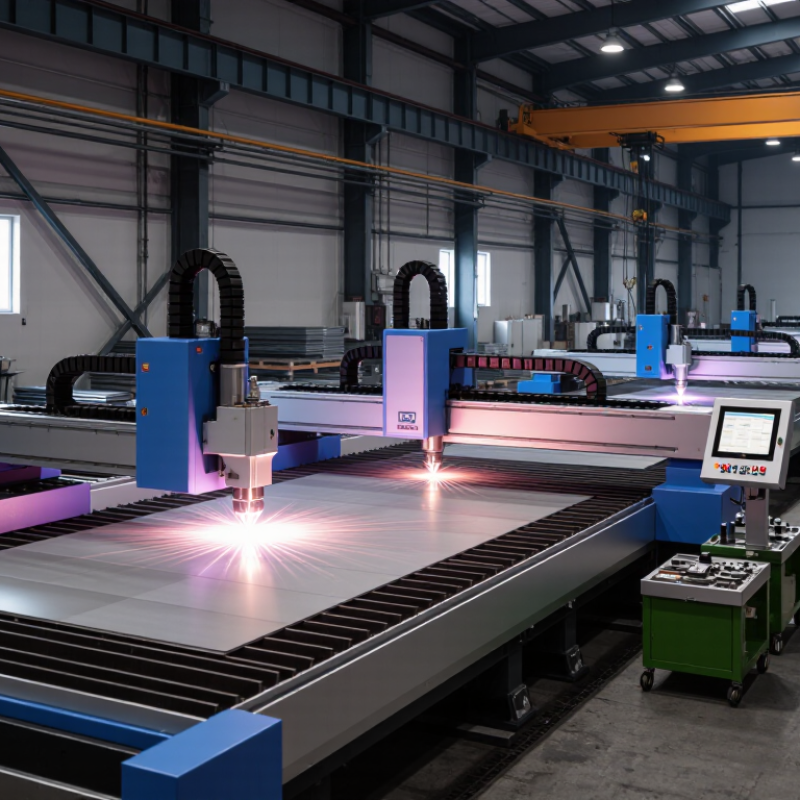
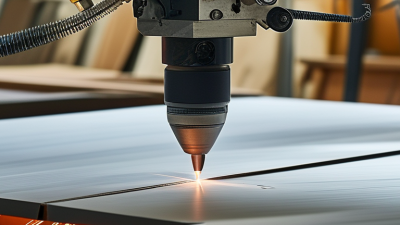
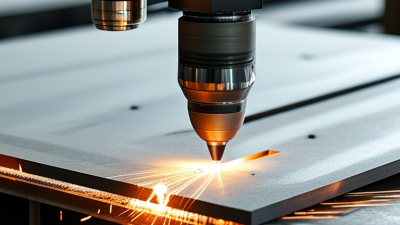
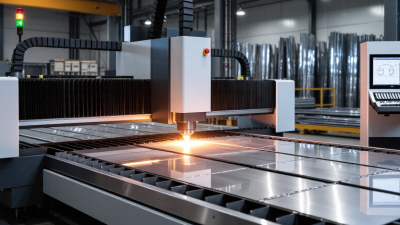
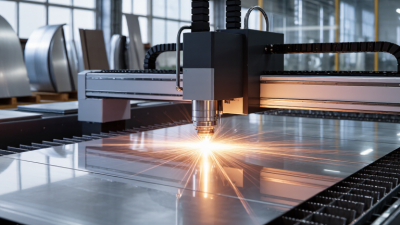
Laser metal cutting machines use a focused light beam to cut steel, aluminum, copper, and other conductive materials. The beam creates intense heat at a tiny point, while oxygen, nitrogen, or compressed air removes molten metal. A CNC controller moves the cutting head along programmed paths. The result can be a clean edge, narrow kerf, and limited material waste.

Fiber laser systems are now widely used because they support fast cutting and efficient energy transfer. A 2024 report from Grand View Research estimated the global laser cutting machine market at over USD 5 billion in 2023, with continued growth expected through 2030. MarketsandMarkets also projects strong expansion, driven by automation, electric vehicles, and sheet-metal fabrication. These figures are estimates, not guarantees. Different reports use different market definitions.

In a workshop, performance depends on more than laser power. A 3 kW source may cut thin stainless steel quickly, but thick plate requires slower movement and careful gas control. Nozzle alignment matters. So does lens cleanliness. I have seen small setup errors leave rough, dark edges that require grinding. That weakens the productivity argument. Operators should verify cut quality, assist-gas consumption, duty cycles, and maintenance records before choosing equipment. The machine must fit the material mix, not just the advertised speed.

How China’s Leading Manufacturers Are Evaluated

Evaluating China’s leading laser metal cutting machine manufacturers requires more than comparing catalogue power ratings. A reliable review combines factory evidence, operator experience, technical records, and customer results. Strong candidates explain how their machines perform on stainless steel, carbon steel, and aluminum. They also provide cut samples, measured tolerances, and energy data under defined conditions. Details matter.

A practical assessment starts with engineering capability. Reviewers should inspect the machine bed, motion system, laser integration, and thermal management. Weld quality, calibration routines, and software stability often reveal more than polished brochures. Ask for maintenance schedules, component traceability, and documented safety testing. Independent certifications support credibility, but certificates alone cannot prove daily productivity. An on-site demonstration offers stronger evidence.

Service quality separates a supplier from a dependable manufacturing partner. Evaluation should cover installation, operator training, spare-parts availability, remote support, and response times. Speak with users who cut similar materials and thicknesses. Their comments may expose downtime, slow troubleshooting, or inconsistent autofocus performance. Cost deserves careful review, including consumables, power demand, software updates, and long-term repairs. No scorecard is perfect. A low-cost quote can hide expensive delays, while a premium specification may not suit every workshop. The evaluation should remain practical, transparent, and open to revision.

China Top 10 Laser Metal Cutting Machine Manufacturers: Evaluation Framework

This chart presents a transparent, non-brand-specific scoring framework for evaluating leading Chinese laser metal cutting machine manufacturers. The weights reflect the main purchasing criteria used by industrial buyers and total 100%.

Buyers should verify technical specifications, cutting samples, ISO 9001 quality procedures, machine safety compliance, after-sales coverage, spare-parts availability, and total operating cost before making a final selection.

China’s Top 10 Laser Metal Cutting Machine Manufacturers

China’s Top 10 Laser Metal Cutting Machine Manufacturers

China’s top 10 laser metal cutting machine manufacturers compete through power range, automation, and after-sales support. According to Fortune Business Insights’ 2024 report, the global laser cutting machine market reached roughly US$7 billion in 2023. Demand is rising in automotive, sheet metal, appliances, and energy equipment. Chinese suppliers increasingly offer fiber-laser systems from 1 kW to above 20 kW. However, higher power does not always mean better production. Material thickness, gas control, heat distortion, and operator skill remain decisive.

From practical factory evaluations, three details deserve attention: cutting-edge quality, repeatability, and service response. Ask for sample cuts using your own steel grades. Review kerf width, dross, piercing time, and hourly output. ISO 230-4 provides a useful reference for positioning accuracy tests. Meanwhile, ISO 11145 clarifies laser-related technical terms. A reliable manufacturer should provide test records, maintenance schedules, training plans, and realistic tolerance data. A polished brochure is not proof. I have seen impressive sample parts hide slow piercing and expensive lens replacement.

Tips: Compare total operating cost, not only machine price. Check laser source availability, nozzle consumption, software updates, and technician coverage. Request references from factories with similar workloads. MarketsandMarkets identifies automation and high-power processing as major growth drivers, but implementation quality varies widely. A top-ten list can guide research, yet it should not replace an on-site trial, technical audit, and careful contract review.

Key Technologies and Product Differences

China’s laser metal cutting machine market covers a wide range of technologies and product designs. Fiber lasers dominate because they cut steel, aluminum, and stainless steel efficiently. However, laser power alone does not determine performance. Beam quality, cutting head stability, and motion accuracy also affect edge quality.

A machine with a high-power source may cut thick plate quickly, but it can waste energy on thin sheet. Lower-power equipment may deliver cleaner results for precision parts. The control system matters too. Reliable autofocus, automatic nozzle calibration, and real-time monitoring reduce operator errors. Assist-gas control is another key difference. Oxygen, nitrogen, and compressed air produce different cutting speeds, colors, and edge conditions.

Test the machine with your own materials. A small test matters. Examine corner quality, piercing time, slag, and heat distortion. The working table and fume extraction system also influence daily productivity. Some machines appear similar in brochures, yet their drive systems and software respond differently during continuous production. From practical evaluations, maintenance access often matters more than impressive specifications. This point is easy to overlook. Even experienced buyers can overvalue maximum power and undervalue service training, spare-part availability, and software updates. Product differences become clearer when measured against actual thickness ranges, tolerance requirements, and production hours.

China Top 10 Laser Metal Cutting Machine Manufacturers? - Key Technologies and Product Differences

Anonymized comparison of representative Chinese manufacturer profiles and commonly available machine configurations

Profile Typical Machine Positioning Laser Type Typical Power Range Working Area Material Capability Maximum Mild-Steel Capacity* Drive and Motion System Key Technology Main Product Difference
Profile 01 Entry-level sheet metal cutting Fiber laser 1–3 kW 1,500 × 3,000 mm Carbon steel, stainless steel, aluminum 12–20 mm Rack-and-pinion, dual drive Auto-focus cutting head Compact footprint and lower initial investment for general fabrication.
Profile 02 General-purpose industrial sheet cutting Fiber laser 3–6 kW 1,500 × 3,000 mm or 2,000 × 4,000 mm Carbon steel, stainless steel, aluminum, brass 20–25 mm Servo motors with helical rack drive Automatic nesting and height sensing Balanced speed, thickness range, and operating cost for mixed production.
Profile 03 High-speed thin-sheet production Fiber laser 4–8 kW 1,500 × 3,000 mm Carbon steel, stainless steel, aluminum 20–25 mm High-acceleration linear guide system High-speed piercing and optimized gas control Prioritizes cycle time and productivity on thin and medium-gauge sheets.
Profile 04 Large-format plate processing Fiber laser 6–12 kW 2,000 × 6,000 mm or larger Carbon steel, stainless steel, aluminum 30–40 mm Heavy-duty gantry with dual servo drive Long-bed compensation and plate-edge detection Designed for long plates, structural parts, and reduced sheet repositioning.
Profile 05 Sheet-and-tube combination cutting Fiber laser 3–6 kW 1,500 × 3,000 mm sheet; tube length up to 6,500 mm Round, square, rectangular tube and sheet 20–25 mm Rotary chuck with servo synchronization Automatic tube centering and profile compensation Combines two applications in one platform where floor space is limited.
Profile 06 Dedicated tube and profile cutting Fiber laser 2–6 kW Tube length 6,000–9,000 mm Round, square, rectangular, channel and angle profiles 16–25 mm equivalent wall thickness Four-jaw pneumatic or electric chuck Rotary-axis interpolation and automatic remnant handling Optimized for furniture, construction, fitness equipment, and frame production.
Profile 07 High-power thick-plate cutting High-power fiber laser 12–20 kW 2,000 × 6,000 mm Carbon steel, stainless steel, aluminum 40–60 mm, depending on process conditions Reinforced gantry and high-load linear guides High-pressure oxygen and nitrogen cutting control Provides higher throughput for thick carbon steel and large structural components.
Profile 08 Automated production-line cutting Fiber laser 3–12 kW 1,500 × 3,000 mm or 2,000 × 4,000 mm Carbon steel, stainless steel, aluminum 25–35 mm Shuttle table with automatic loading and unloading Pallet exchange, nesting software, and production monitoring Reduces manual handling and supports higher machine utilization.
Profile 09 Precision cutting for thin and reflective metals Fiber laser 1–4 kW 1,500 × 3,000 mm Stainless steel, aluminum, brass, copper 8–15 mm Precision rack drive with closed-loop servo control Piercing monitoring and reflective-metal process parameters Emphasizes edge quality, small features, and stable cutting of non-ferrous metals.
Profile 10 Heavy-duty customized cutting systems Fiber laser 20–30 kW 2,500 × 8,000 mm or customized Carbon steel, stainless steel, aluminum and selected alloys 50–70 mm, depending on material and gas Heavy-duty dual-drive gantry with reinforced bed Multi-stage piercing, adaptive focus, and thermal deformation control Built for demanding plate work, customized automation, and high material throughput.

*Actual cutting capacity varies with laser power, material grade, thickness tolerance, assist gas, nozzle selection, focal position, and required edge quality. The profiles are anonymized technical categories rather than verified company rankings.

How to Choose the Right Chinese Manufacturer

Choosing among China’s top laser metal cutting machine manufacturers requires more than comparing prices. Start with your actual workload: material type, sheet thickness, cutting area, daily hours, and required edge quality. A 3 kW fiber laser may suit thin steel, while thicker stainless steel can demand higher power and stronger cooling. Ask the manufacturer to perform test cuts using your own drawings and material samples.

Visit the factory or request a live video inspection. Check the assembly floor, calibration tools, storage conditions, and final inspection records. A polished showroom proves little. Ask for measurable data, including positioning accuracy, repeatability, cutting speed, and expected consumable life.

Review electrical certificates, safety documentation, software compatibility, and export experience for your destination market. Reliable manufacturers explain limitations instead of promising perfect results.

Service quality often decides the machine’s real value. Confirm response times, spare-part availability, remote diagnostics, installation support, and operator training. Speak with recent customers, preferably those using similar materials and production volumes.

I have found that vague warranty language creates expensive delays later. Small details matter. For example, clarify who pays for travel, how faults are verified, and whether technical manuals match the delivered machine.

Price still matters, but an unstable cutting head or weak after-sales team can erase the initial savings quickly. My own judgment may change after testing, and that is reasonable; documented performance should outweigh confident sales claims.

We value your privacy.

By using this site you agree to the use of cookies by the company in accordance with the Privacy Policy

Have a questions or want to know more about our company? We'll be expecting you.